Topic: Defense

522 chapters across the catalog

As he prepares for his final broadcast from the current studio, Jones reflects on his career and the legal battles surrounding his platform. He mentions that his legal team, which includes a former Fortune 500 counsel, has become "obsessed" with uncovering CIA and FBI involvement in his cases. Jones reiterates his claim that the Connecticut and Texas trials were scripted "stage shows" designed for political impact.
Zachary Rehl discusses his decision to represent himself after his attorneys were hesitant to aggressively pursue the witness recantation. He argues that highlighting the political nature of the prosecution was essential for securing either a dismissal or a pardon. Rehl describes the risk of going pro se and his ultimate success in getting the recanted testimony into the official court record.

Robert Barnes explains Iran's "mosaic defense system," which allows regional commanders to operate independently even if the central government is decapitated. He cites historical failures of strategic bombing in Germany, Japan, North Korea, and Vietnam to show that "bombing people into regime change" never works. Barnes concludes that the Straits of Hormuz cannot be opened militarily because insurers like Lloyds of London will never take the risk.

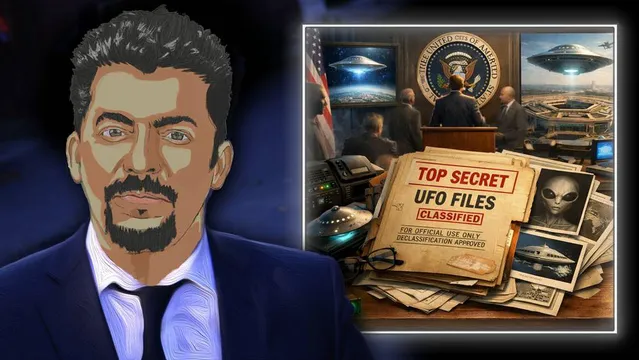
The US military is reportedly merging Northcom and Southcom into a new entity called "Americom," which will be linked to a "Golden Dome" defense grid. This system is designed for total surveillance and defense against both terrestrial threats and UFOs. Daniel Liss suggests that this infrastructure is being built in anticipation of a major "sky event" or potential earth changes, such as a pole shift, which have been predicted by various mystery schools.

Jeff Bezos recently announced a program related to Earth defense, coinciding with reports of strange fireballs and orbs landing in Austin, Texas. While the 2012 Mayan calendar date passed without a cataclysm, some argue the world is currently in the "heart" of the predicted big change. Concerns are raised about potential "pole shifts" and earth changes that the global elite are frantically trying to manage through secret technology.

A Navy veteran recalls training to defend against the Soviet Union and notes that the military has long understood the unique challenges posed by Iran compared to Iraq. The host shares anecdotes from a family member who worked under a top CENTCOM general, emphasizing that Iran is the "worst" possible theater for conflict. He argues for anti-missile defense and diplomacy over the current path toward nuclear war.

Anthony Cumia discusses Virginia House Bill 110, which prohibits carrying firearms or leaving them in vehicles in specific areas of Richmond, such as Capitol Square. He argues these laws effectively force citizens to leave their weapons at home, rendering them defenseless during their commute. Cumia points out that lawmakers often exempt themselves from these restrictions, maintaining private security while infringing on the rights of their constituents.

Alex Jones analyzes the historical context of Middle East instability, attributing the current borders to British intelligence strategies designed to create maximum division. He argues that the war in Iran serves the "Greater Israel" project and the interests of defense contractors rather than American national security. Jones expresses concern that the conflict is being framed as a religious "End Times" war by figures like Pete Hegseth to mobilize troops for a catastrophic regional struggle.

President Trump utilized the Defense Production Act to promote the domestic production of glyphosate, citing its importance to the national defense supply chain and military readiness. This move has sparked intense debate among supporters who follow RFK Jr.'s warnings about the chemical's link to chronic disease. The host struggles to reconcile the administration's "MAHA" goals with the promotion of a controversial pesticide.

Harrison Smith uses Grok AI to analyze the technical reasons behind the default judgment, specifically the alleged failure to produce Google Analytics and internal marketing data. Smith argues that the requested documents did not exist because InfoWars does not use traditional advertisers or internal marketing strategies for specific news stories. He contends that the court demanded non-existent evidence of "Sandy Hook related revenue" as a pretext for declaring guilt without a trial.

An analysis of the Trump administration's 2026 National Defense Strategy suggests a pivot away from overseas regime change and "democracy promotion" toward defending the American homeland. The unrest in Minneapolis is characterized as a "color revolution" tactic being applied domestically by far-left agitators. The new strategy emphasizes industrial revival and the Monroe Doctrine over globalist interventionism.

Benny Johnson provides drone footage of the Pacific Palisades reservoir, showing it is completely dry despite state and federal filings claiming it is operational and full. The reservoir was specifically built to provide gravity-fed water to fire mains in the hills where pumps cannot reach. Additional footage contrasts Mayor Karen Bass's 2024 promise to expedite rebuilding permits with the reality that only six permits have been issued a year later.

FULL VIDEO: President Trump Presents 365 Wins In 365 Days To The American People At Historic Press Conference!
55:14 - 58:40

FULL VIDEO: President Trump Presents 365 Wins In 365 Days To The American People At Historic Press Conference!

Department of War, WHO Withdrawal, Military Rebuilding

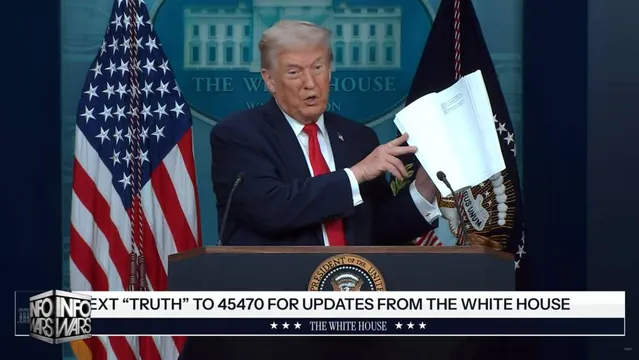
Donald Trump renames the Department of Defense to the "Department of War" and highlights a $1 trillion investment in the military. He discusses withdrawing from the "corrupt" World Health Organization, citing unfair funding structures compared to China. Trump also mentions signing critical minerals deals with allies like Australia and Japan to secure rare earth elements.