Topic: Discovery

110 chapters across the catalog

Harrison Smith uses Grok AI to analyze the technical reasons behind the default judgment, specifically the alleged failure to produce Google Analytics and internal marketing data. Smith argues that the requested documents did not exist because InfoWars does not use traditional advertisers or internal marketing strategies for specific news stories. He contends that the court demanded non-existent evidence of "Sandy Hook related revenue" as a pretext for declaring guilt without a trial.

Byrne discusses ongoing legal battles with Dominion Voting Systems, claiming that discovery documents contain evidence of national security breaches. He credits Susie Wallace for pushing the administration to consume this evidence, which Trump has referred to as "truckloads" of proof. The narrative suggests that the U.S. government finally became organized enough in June to begin acting on this intelligence.

The host addresses allegations made during the Sandy Hook defamation trials, specifically denying claims that he sent illicit material to the families. He asserts that the FBI cleared him of wrongdoing and that the plaintiffs' lawyers misrepresented discovery data. Furthermore, he credits Elon Musk for conducting an audit of his Twitter history, which allegedly proved he did not engage in the behaviors for which he was deplatformed.

Journalist Max Blumenthal reportedly expressed shock at the legal precedent being set by the Wilkins vs. Schaefer lawsuit. Elijah Schaefer suggests the lawsuit may backfire by opening FBI Director Kash Patel to the discovery process, potentially exposing government communications and travel records. The segment questions the funding of the lawsuit, noting the plaintiff's modest Spotify streaming revenue.

Barnes claims the plaintiffs in the Sandy Hook case demanded evidence that didn't exist to trigger a default judgment. He describes the proceedings as "show trials" using Soviet Stasi techniques, noting that a judge allowed an HBO documentary crew to film the trial. The data allegedly showed that Sandy Hook content actually led to negative audience reactions, debunking the "profit from tragedy" narrative.

The legal proceedings for Tyler Robinson at Utah Valley University involve the identification of thousands of potential student witnesses. The prosecution and defense are managing a voluminous amount of digital discovery materials, leading to a 30-to-60-day window before a formal preliminary hearing is set. The defense emphasizes the need to process massive amounts of digital data before proceeding with the trial.

The law firm Paul Weiss is accused of continuing "lawfare" against Trump despite previous fines and promises to stop. Regarding the Candace Owens case, Owens expresses a desire for discovery to prove her claims about Brigitte Macron's biological sex. Barnes warns that liberal courts will likely deny her a fair trial or discovery process.

The conversation refutes claims that modern Jewish people are not the true descendants of Abraham, citing the prophetic return of Jews from Russia (Moscow) to Israel. Archaeological findings in Shiloh and the restoration of vegetation in the Israeli desert are presented as evidence of biblical fulfillment. The narrative argues that the land itself responds to the presence of the covenanted people.

A satirical segment features a "major scientific discovery" where the U.S. government claims the entire world's ocean as the "Gulf of America." This "political science" announcement is used to mock the idea of "settled science" and the expansion of government authority. The clip includes a brief appearance by musician John Rich and parodies the planting of the American flag in global waters.

The legal complexities of using classified national security evidence in criminal trials are explored. Under FISA 702, the government must "clean" files before they can be used in discovery to protect sensitive sources and methods. This requirement explains why the public may not see the full Epstein files immediately, as prosecutors must navigate federal laws regarding victim privacy and classified intelligence gathering.

The use of "taint teams" within the FBI is criticized as an insufficient safeguard for attorney-client privilege. Alex Jones recounts an incident during his Sandy Hook litigation where privileged text messages were allegedly leaked to the Southern Poverty Law Center. The discussion suggests that the FBI uses parallel construction to turn privileged or illegally obtained information into perjury charges or other criminal predicates.

Serafin reports that the FBI has opened a massive shared drive (the "P Drive") containing 14 terabytes of Epstein-related files. The volume of agents accessing these files reportedly crashed the agency's servers. He explains that while the public may not see everything due to victim protection laws, the sheer scale of the operation confirms that a major investigation is underway.

Serafin explains the role of "tank teams" in the FBI, which are supposed to filter out privileged information during investigations. The host recounts how his own privileged texts were allegedly leaked to the Southern Poverty Law Center. They warn that any mistakes in redacting the Epstein files could lead to legal "landmines" and the harassment of victims.

Alex Jones recounts various attempts by billionaires and media executives to "buy him off" with offers of $50 million salaries or specialized shows. He mentions Jesse Ventura's transition from vaccine skeptic to supporter as a potential result of blackmail or co-option. Jones claims he was offered a "Free Speech Foundation" to act as a controlled fact-checker but refused to compromise his independence.

Discovery documents in the InfoWars bankruptcy case reportedly reveal "backroom deals" and illegal coordination to keep the network off the air. The host's parents were also targeted in lawsuits despite having no involvement in the alleged hidden funds. Listeners are encouraged to become VIP members for $30 a month to provide a stable funding base for the broadcast and its legal defense.

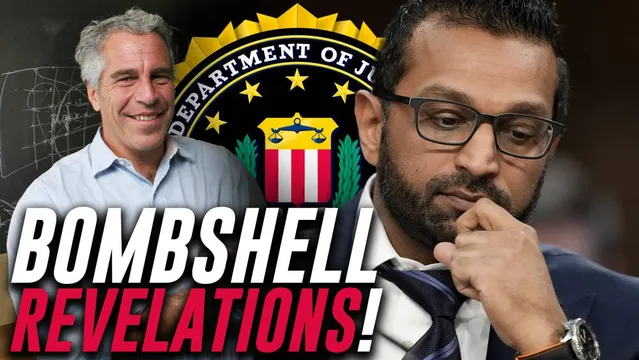
Significant changes are occurring at the FBI, with reports of 25 special agents in charge and multiple executive directors being forced out. Kash Patel has vowed to release the Jeffrey Epstein client list and dismantle child sex trafficking rings. Jones also mentions new discovery documents from his own legal cases involving the FBI and CIA, which he intends to turn over to the Justice Department for investigation.

Alex Jones provides an update on an emergency bankruptcy hearing in Houston, alleging that the US Trustee has engaged in illegal attempts to shut down InfoWars. Jones claims that discovery documents have revealed a deeper conspiracy involving the Justice Department that will be presented to the incoming Trump administration. He continues to promote DMO knives as a primary fundraiser to pay for ongoing legal expenses.

Jones provides an update on the InfoWars bankruptcy and the potential sale of the network, which has been pushed to early March. He claims that the discovery process in his lawsuits has revealed "incredible things" about his opposition, including the law firm Akin Gump. Jones asserts that despite the legal pressure, the network is currently in "domination mode" with record audience reach.

The ADL is accused of being the "arbiter of censorship" for big tech, targeting figures like Elon Musk, Tucker Carlson, and the host. In ongoing legal battles, Democratic Party law firms reportedly dumped 5,000 pages of secret correspondence on the host's legal team. These documents are said to contain evidence of illegal "shenanigans" and coordination between the government and private censors.