Topic: Utah

104 chapters across the catalog

Kash Patel is accused of micromanaging the Salt Lake City FBI investigation into the Charlie Kirk murder and engaging in a "turf war" with Joe Kent. The local sheriff resigned shortly after it was revealed that the ballistics evidence did not match the initial reports. Critics argue that Patel was more interested in a "social media management campaign" than a thorough criminal investigation.

Critics argue that outsourcing election processes to private corporations allows them to hide behind "proprietary" claims to avoid transparency and FOIA requests. This lack of oversight is described as a deliberate strategy by figures like Mark Elias to facilitate cheating. A caller from Utah raises concerns about loose mail-in voting laws and the potential for "Trojan horse" voter ID proposals that may not actually secure the vote.

A caller from Utah discusses historical and ongoing allegations of satanic ritual abuse and cover-ups within the state's legal system and the Mormon Church. Another caller from Louisiana suggests the Iran war might be a pretext to reveal secret UFO technology or "superweapons" currently hidden from the public. The segment concludes with a testimonial about how InfoWars supplements helped a listener avoid back surgery.

The Venezuelan gang Tren de Aragua was linked to an attempted kidnapping at a Walmart in Utah, highlighting the spread of international criminal organizations into red states. Stephen Gardner noted that federal agents were welcomed in Memphis, Tennessee, to clean up violent crime despite the city's blue leadership. The segment emphasizes that even in Republican strongholds, there is a significant need for federal intervention to address gang activity and drug trafficking.

A proposal for "digital citizenship" is discussed as a way to allow the Venezuelan diaspora to vote and bypass the corrupt Delcy Rodriguez administration. Byrne cites Utah's advanced laws as a model for how a state can "wither away" through technology. He also lists Latin American leaders like the Kirchners and Daniel Ortega as individuals who allegedly took hundreds of millions in bribes from cartels.

Gary Melton details the evidence against Tyler Robinson, noting that the fatal shot likely originated from the Lawsey Center. He highlights the fact that Robinson's own parents turned him in to authorities, which contradicts the narrative that he is a "patsy" being railroaded by the state of Utah. Melton also observes a massive influx of bot accounts on social media designed to flood the public with disinformation and attack anyone supporting the official charging documents.

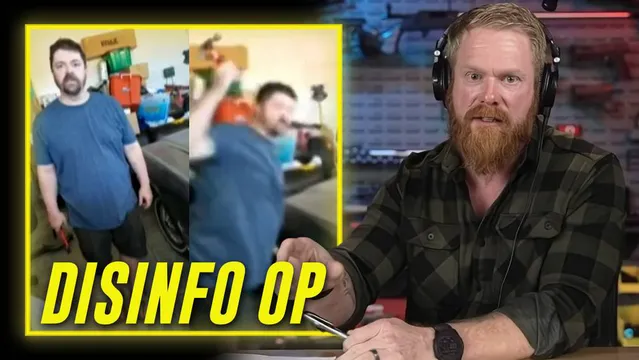
The speakers clarify that while they distrust the FBI and government institutions, the "palm gun" and "iPhone gun" theories did not originate from official sources but from online manipulators. They argue that these fringe theories are designed to make independent media look ridiculous and unreliable.

YouTube creator Steven Gardner joins the show to discuss the anomalies surrounding the assassination of Charlie Kirk in Utah. Gardner, who visited the crime scene, expresses skepticism about the official FBI narrative and the weapon used. The conversation also touches on new evidence regarding the 2020 election and the role of Kash Patel in potentially shutting down investigations into Kirk's accomplices.

The official narrative of Charlie Kirk's murder is questioned, specifically the claim that a .30-06 rifle was used, which experts argue would have caused significantly more physical damage. Candace Owens is praised for her adversarial investigative journalism and for releasing texts suggesting Kirk feared an Israeli assassination plot. The lack of prone-position footage from the FBI is cited as evidence of a potential cover-up by the state and federal authorities.

Alex Jones and Myron Gaines question the official narrative surrounding the death of Charlie Kirk, noting discrepancies in the reported use of a 30-06 rifle. They discuss Candace Owens's claims regarding Kirk's private fears of Israeli retaliation before his death. The segment calls for the FBI and Utah State Police to release more footage to restore public trust in the investigation.

Tyler Robinson, the suspect in the Kirk assassination, is appearing for a preliminary hearing in Utah where the defense has refused to waive proceedings. Robinson was reportedly a 4.0 student in a CIA-funded advanced college feeder program, leading to speculation regarding MKUltra-style psychological conditioning. Allegations suggest the official timeline of the shooting is falling apart as investigators and experts review the evidence.

The legal proceedings for Tyler Robinson at Utah Valley University involve the identification of thousands of potential student witnesses. The prosecution and defense are managing a voluminous amount of digital discovery materials, leading to a 30-to-60-day window before a formal preliminary hearing is set. The defense emphasizes the need to process massive amounts of digital data before proceeding with the trial.

Joel Skousen, a former Marine pilot, argues that a 30-06 bullet would have caused devastating exit wounds that are absent in the Kirk case. The lack of a formal medical examiner's report in Utah and the immediate transport of the body to Arizona are cited as major red flags. Skousen suggests the forensics do not support the official narrative of a single shooter from the roof.

The late LDS President Russell M. Nelson is linked to a "sanitized" version of the Skull and Bones fraternity at the University of Utah. Skousen criticizes Nelson's policy of banning concealed weapons in LDS churches, arguing it turned religious buildings into soft targets for shooters. The Mormon leadership is accused of seeking mainstream acceptance at the expense of traditional self-defense values.

Talk show host Kate Daly reports from Utah, suggesting the Kirk assassination was a "concerted effort" and a potential false flag. Witnesses at the scene reported that the security team had been replaced at the last moment by a "lax" new group. Daly questions the lack of surveillance footage of the shooter on a campus that is heavily monitored by cameras.