Topic: Centcom

40 chapters across the catalog

Military veterans and former CENTCOM officials have long warned against a direct invasion of Iran due to the country's decentralized leadership and defensive preparation. Recent reports indicate the Navy Secretary and Chairman of the Joint Chiefs were fired after opposing plans to invade the Strait of Hormuz. The strategic consensus in the Pentagon remains that such an attack would be disastrous for U.S. forces.

Special operations units, including Delta Force and SEAL Team 6, are reportedly training for raids on armored mountain fortresses to extract 1,000 pounds of enriched uranium. Critics label this a "suicide mission," arguing that Iranian forces have likely moved the material to hidden locations like goat farms or residential backyards. The mission is characterized as a wild goose chase designed to trap U.S. forces.

Former Secretary of State Mike Pompeo is criticized for allegedly sabotaging the Trump administration while appearing as an ally on Fox News. The host compares the current troop levels in the Middle East to the 110,000 personnel required to take Iwo Jima, noting that the current force is insufficient for a sustained invasion. Joe Kent's analysis of the situation as a "trap" is highlighted.

A Navy veteran recalls training to defend against the Soviet Union and notes that the military has long understood the unique challenges posed by Iran compared to Iraq. The host shares anecdotes from a family member who worked under a top CENTCOM general, emphasizing that Iran is the "worst" possible theater for conflict. He argues for anti-missile defense and diplomacy over the current path toward nuclear war.

Speculation is raised that the top levels of the military believe the U.S. is already in World War III, necessitating the elimination of Iran. A caller with a background in nuclear weapons discusses the goal of making the Strait of Hormuz a "freedom of navigation" site. However, the host warns that a collapse of Iran would trigger a chain reaction, potentially leading to invasions of Kuwait and Saudi Arabia.

Joe Kent warns that committing ground troops to Iranian islands would be a "gift" to the enemy, as U.S. forces would become sitting ducks for drone swarms and ballistic missiles. He fears that once casualties are taken, the U.S. will enter a cycle of "honoring the dead" that makes extraction impossible. Kent urges Donald Trump to avoid the sunk cost fallacy that defined the War on Terror.

The Department of Government Efficiency (DOGE) and Elon Musk's influence are discussed in the context of White House internal politics and the influence of advisors like Suzy Wiles. Tactically, the Strait of Hormuz is described as a "nightmare" for US Marines due to Iranian underground tunnels and mountain artillery. Critics argue that the administration failed to account for Iran's long-standing plans to mine the strait.

Donald Trump signaled a winding down of the "excursion" in Iran on March 10, 2026, despite previous military escalations. Internal friction exists between the President and advisors like Benjamin Netanyahu and the head of CENTCOM over failed predictions of a four-day regime collapse. Concerns remain that neoconservatives may attempt to sabotage the withdrawal as the 82nd Airborne and aircraft carriers remain positioned for conflict.

The host claims Saudi Arabia and the Israeli lobby are the primary drivers behind the push for war with Iran. Despite the rhetoric, the U.S. military is reportedly struggling to intercept low-cost Iranian drones, which are overwhelming the Iron Dome and Patriot missile systems. There is speculation that Netanyahu leaked embarrassing information about Trump to the New York Times to force his hand on Iran policy.

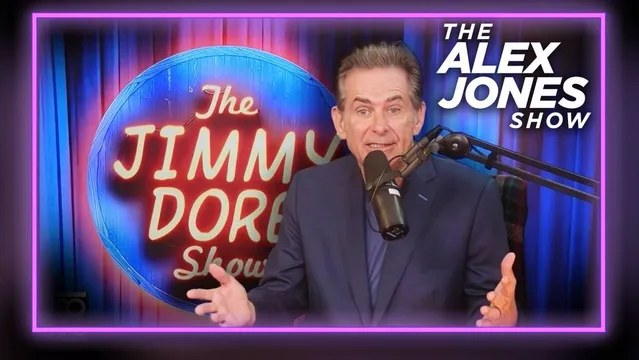
MUST-SEE: Alex Jones Interviews Jimmy Dore In EXPLOSIVE Must-Watch End Of The World Interview!
19:50 - 22:08

MUST-SEE: Alex Jones Interviews Jimmy Dore In EXPLOSIVE Must-Watch End Of The World Interview!

Saudi Arabian Influence and Middle East Military Strategy

Saudi Arabia and other Gulf States are accused of influencing the Trump administration through financial investments in family businesses and cryptocurrency. While CENTCOM advisors reportedly pushed for military action against Iran, other figures like Eric Prince expressed skepticism regarding the ramifications. The strategy is described as an attempt to satisfy Trump's ego through neoconservative rhetoric.

Tulsi Gabbard and the Chairman of the Joint Chiefs reportedly provided a report to the White House estimating a 90% failure rate for the current Iran strategy. While Iran's navy and oil refineries have been severely damaged, experts argue that continued military pressure only strengthens the position of hardliners within the regime. Comparisons are drawn to the long-term failures in Afghanistan and Syria, suggesting that removing the current leadership may lead to even more radical factions taking power.

A recent interview with Nick Fuentes sparked debate regarding the extent of Israeli influence over U.S. foreign policy. Claims are made that the Israel lobby now exerts unprecedented control, potentially jeopardizing Donald Trump's domestic agenda and efforts to reindustrialize the country. Despite warnings from the Joint Chiefs of Staff, the administration remains entangled in Middle Eastern escalations.