Topic: Diplomacy

65 chapters across the catalog

McInnes advocates for a return to "gunboat diplomacy" and the Monroe Doctrine to secure American interests in the Western Hemisphere and the Middle East. He argues that destroying Iran's nuclear capability and navy is a positive outcome, regardless of the catalyst. Jones warns that the Iranian situation is unique due to the geographical "honeycomb" of the Strait of Hormuz, which makes traditional military intervention difficult.
A discussion regarding Donald Trump's obsession with the Nobel Peace Prize suggests that his foreign policy decisions are often driven by a desire for international recognition. Claims are made that Emmanuel Macron offered to help end the war if Trump stopped social media attacks regarding Macron's wife. This "petty" mindset among world leaders is criticized for prioritizing personal egos over serious geopolitical stability.

The Iranian delegation in Islamabad officially blamed the United States for the collapse of peace talks, citing a total lack of trust. The host notes that the U.S. previously planned bombings while holding negotiations, justifying Iranian skepticism. Meanwhile, Benjamin Netanyahu vowed to continue fighting Iran and its proxies, while also targeting Turkey as a future threat.

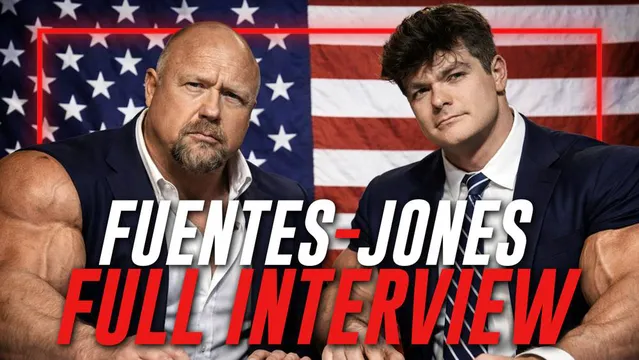
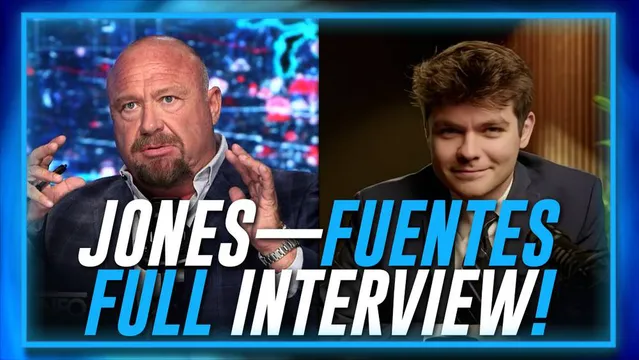
FULL FUENTES-JONES INTERVIEW 3/3/26: Trump Admin Pushes Ground Invasion Of Iran To Ensure Regime Change
34:01 - 37:20

FULL FUENTES-JONES INTERVIEW 3/3/26: Trump Admin Pushes Ground Invasion Of Iran To Ensure Regime Change

Iranian Internal Power Dynamics and Israeli Deterrence

The U.S. administration is reportedly hoping that military pressure will cause a pragmatic faction within the Iranian government to seize power. However, recent leadership changes in Iran suggest a shift toward more radical elements following the deaths of previous officials. Nick Fuentes argues that Israel actively sabotages diplomacy because a stable deal would prevent the total toppling of the Iranian regime.

FULL FUENTES-JONES INTERVIEW 3/3/26: Trump Admin Pushes Ground Invasion Of Iran To Ensure Regime Change
1:31:44 - 1:37:11

FULL FUENTES-JONES INTERVIEW 3/3/26: Trump Admin Pushes Ground Invasion Of Iran To Ensure Regime Change

Restraining Israel and the Future of U.S. Foreign Policy

The discussion focuses on the need for a U.S. movement that can effectively restrain Israel's influence on American foreign policy. Nick Fuentes argues that it is in the interest of both Washington and Tehran to make a deal, but Israeli interference prevents peace. He suggests that the U.S. should use its military and financial leverage to force Israel to comply with American diplomatic goals.

The segment discusses the "brownification" of America and Europe as a deliberate policy that has rendered white Americans second-class citizens. Jake Lang argues that when diplomacy and free speech fail, as seen in the attacks on figures like Charlie Kirk, a more aggressive response from "pissed off white guys" becomes inevitable. The current social climate is described as a "humiliation ritual" intended to destroy Western civilization.

Bill Maher is dismissed as a "Trojan Horse" who is not truly aligned with the populist movement. A caller then discusses a little-known diplomatic signal from Vladimir Putin during a meeting with Donald Trump in Anchorage, where Putin reportedly demonstrated trust by meeting without heavy cover. The discussion suggests that diplomacy remains a key power for Trump to prevent the escalation of global conflicts driven by the banking community.

Nick Fuentes argues that Trump's "Art of the Deal" approach is failing in the context of the Ukraine war because Vladimir Putin does not trust Western guarantees. They suggest Trump is unwilling to accept a perceived "loss" and is instead choosing to escalate, which could lead to a hot war between the US and Russia. The only solution proposed is a total withdrawal of US aid and an exit from NATO.

Donald Trump's attempt to use "Art of the Deal" tactics to end the Ukraine war is characterized as a failure, as Russia refuses to trust NATO-backed ceasefire proposals. Despite his campaign promises to solve the conflict in 24 hours, Trump has reportedly continued the trend of escalating lethal aid that began during his first term. This policy is seen as a continuation of the deep state's agenda rather than a radical break from interventionism.

The current administration's reliance on "gunboat diplomacy" and maximalist demands is labeled as incompetent and reckless when applied to a major nuclear power like Russia. While such tactics may have worked with North Korea, they are deemed inappropriate for the current geopolitical landscape involving Russia and China. The risk of a miscalculation leading to global catastrophe is presented as the primary threat facing the planet.

A flashback to late February 2025 details a heated exchange in the Oval Office where Donald Trump criticized Volodymyr Zelensky for his lack of gratitude regarding U.S. aid. Trump emphasized that Ukraine holds no leverage without American support, which totaled $350 billion at the time. The confrontation focused on Zelensky's refusal to accept a ceasefire and his perceived interference in American domestic politics.

First Lady Melania Trump sent a personal letter to Vladimir Putin calling for an end to the war and the return of children affected by the conflict. Donald Trump explains that the letter was well-received and stems from the First Lady's deep concern for the humanitarian toll of the war. The letter is presented as a soft-power diplomatic effort to facilitate a resolution between the warring nations.

The leadership of the EU Commission, including Kaja Kallas, is criticized for its lack of military experience and aggressive rhetoric toward Russia. Critics argue that their plans to "break up" Russia are delusional and only serve to mobilize the enemy. The host advocates for a return to transactional diplomacy and trade-based influence rather than the current path of military provocation.

Israel is reportedly pushing for a second round of strikes against Iran to destroy its "threshold" nuclear capability. Nick Fuentes explains that Iran's refusal to stop uranium enrichment is based on a total lack of trust in the U.S. and Israel, especially after the recent bombings. The Iranian leadership believes that giving up their nuclear deterrent would lead to their immediate execution, leaving Trump in a difficult position where diplomacy is no longer a viable option.