Topic: Vladimir Lenin

16 chapters across the catalog

A graphic anecdote describes Vladimir Lenin allegedly murdering hundreds of rabbits on an island as a display of "demon possession." This behavior is linked to the Jacobins of the French Revolution and a broader "death cult" ideology. The speaker warns that these types of leaders seek to break the human spirit through isolation and violence.
Nick Fuentes provides a historical analysis of Joseph Stalin, calling him an "evil, ruthless person" but also an "archetypal great man of history" for transforming Russia into a nuclear superpower. He contrasts Stalin with Hitler, whom he calls a "loser" set up by British intelligence. Fuentes admits he is attracted to "winners" in history who successfully wielded total power to change their nations.

A debate continues regarding the biblical implications of supporting Israel versus criticizing its political actions. Jones provides a historical critique of the Bolshevik Revolution, claiming it was funded by British intelligence and led by Jewish commissars who targeted Christians. He concludes that he does not support any extremist ideologies, whether from the Ayatollah, Netanyahu, or George Soros.

Vladimir Putin recently referenced a thousand-year conflict between Russia and Anglo-American powers, asserting that Russia will not be defeated. Historical analysis suggests that globalist interests, including the Rothschilds, originally installed Lenin and Stalin before being double-crossed by Stalin at the end of World War II. Current NATO movements are viewed by the Kremlin as a continuation of this long-term encirclement strategy intended to force a coup or national breakup.

Dr. Elliott compares current US economic policies to Leninist strategies of controlling the populace through the money supply. He asserts that the US has reached a point of "critical mass" regarding debt, where the system is on the verge of collapse. The discussion frames the current administration's actions as a deliberate move toward a globalist, non-sovereign financial future.

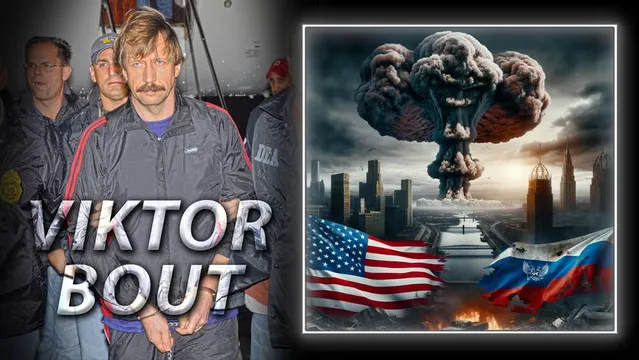
WORLD EXCLUSIVE: Russian Insider Viktor Bout Warns Nuclear War Is Imminent
59:21 - 1:01:32

WORLD EXCLUSIVE: Russian Insider Viktor Bout Warns Nuclear War Is Imminent

Leon Trotsky, New York Bankers, Joseph Stalin's Pivot

The Bolshevik Revolution is described as a coup funded by globalists, with leaders like Trotsky arriving on ships from New York. Joseph Stalin is credited with pivoting back to traditional values, such as the nuclear family and national history, once he realized the globalist plot to destroy Russia. This shift reportedly turned Stalin from a Western ally into a villain in the eyes of the New World Order.

Alex Jones quotes Vladimir Lenin regarding weeks where decades of history happen, applying it to the current rapid escalation of globalist control. He asserts that COVID-19 lockdowns were merely "training wheels" for permanent future restrictions tied to climate change and a cashless society. Jones describes a physical and spiritual "energy of resistance" he feels, urging his audience to prepare for a major societal impact.

Alex Jones details a two-and-a-half-hour interview conducted with Elon Musk, describing Musk's shift toward a "pro-human" stance. Jones introduces the term "human supremacy" to describe a philosophy of civilizational expansion and space exploration as a counter to globalist depopulation agendas. He references Vladimir Lenin to describe the current rapid pace of historical change and credits Musk with breaking shadow bans on X to allow forbidden information to reach the masses.

Jones discusses the concept of the "Fourth Turning," a theory of cyclical history where society undergoes major liquid changes every 87 years. He argues that globalists are attempting to use this period of instability to solidify a transhumanist technocracy involving digital currencies and vaccine passports. Jones contrasts his desire for a relationship with God and a productive future for children against what he describes as a "madhouse" run by the blind.

Alex Jones and Jackson Hinkle debate the history of the Bolshevik Revolution and the role of British intelligence in funding Vladimir Lenin and Leon Trotsky. Hinkle defends the overthrow of the Russian Czars as a heroic moment, while Jones points to the mass killings under Mao Zedong and Stalin as evidence of communism's failure. Despite their historical disagreements, both agree that the current globalist elite represents the primary threat to humanity.

The discussion references Vladimir Lenin's teachings on using deception to gain power, where communists would pose as nationalists to win public trust before implementing a dictatorship. Griffin argues that modern globalists use these same "scientifically deployed" evil tactics. He critiques the film Oppenheimer as a "communist apology movie" and warns that the elite's desire for power is a pathological drive that good people must actively confront.

Jay Dyer argues that the ultimate goal of both international socialism and globalist capitalism is the elimination of sovereign nation-states in favor of a "World State." He cites Lenin's goal of a "New World Order" and explains how international law is used to bypass national boundaries. The segment posits that the destruction of cultural and religious identity is a prerequisite for this centralized global governance.

Mark Moss and Alex Feske host a segment analyzing a quote attributed to Vladimir Lenin regarding the destruction of capitalism through the "debauching" of currency. They explain that inflation is a form of secret confiscation that impoverishes the masses while enriching a few. This process turns wealth-building into a "gamble" and distorts all economic relations.

The history of central banking is traced from John Law to the Monetary Control Act of 1980, which Hotep Jesus calls the "final nail in the coffin for freedom of money." He argues that CBDCs will allow for a Chinese-style social credit system in the West, where political dissent results in being blocked from buying essentials. They cite the current economic collapse in Sri Lanka as a real-world example.

Vladimir Putin's recent speech is analyzed as a critique of communism and the historical mistakes of Lenin and Stalin regarding Ukrainian borders. Putin is framed as a leader fighting against Western corporate monopolies and globalist influence. The segment suggests that the globalists, rather than Russia, are the ones planning to shut down energy infrastructure and pipelines to enslave the population.

In a televised address, Vladimir Putin provided a lengthy historical critique of the Soviet Union's role in creating modern Ukraine. He argued that Vladimir Lenin and the Bolsheviks haphazardly gifted Russian territories to Ukraine to maintain political power after the 1917 revolution. Putin characterized the current "decommunization" efforts in Ukraine as ironic, given that the country's borders were a product of communist policy.