Topic: Pardons

104 chapters across the catalog

Zachary Rehl discusses his decision to represent himself after his attorneys were hesitant to aggressively pursue the witness recantation. He argues that highlighting the political nature of the prosecution was essential for securing either a dismissal or a pardon. Rehl describes the risk of going pro se and his ultimate success in getting the recanted testimony into the official court record.
Jake Lang calls for the formation of "Crusader Active Clubs" to engage in Christian protests and street activism. He expresses support for Mike Lindell, predicting Lindell will become the Governor of Minnesota and pardon him for a felony charge related to a protest in that state. Lang characterizes the political struggle in Minnesota as a fight against "Somali daycare fraudsters" and "SSRI white liberals."

Ivan Reikland outlines a list of demands for President Trump, including full pardons for Stuart Rhodes, Joe Biggs, and former DC officer Shane Lamond. He argues that these pardons are necessary to energize the base and provide reinforcements for the administration's fight against the deep state. Furthermore, Reikland warns that the failure to release the Epstein files will eventually rest on Trump himself, potentially leading to political fallout or impeachment.

In the final days of the Biden administration, billions of dollars were reportedly wired to random bank accounts without names, a practice now being investigated by DOGE. Jones suggests that the $190 million received by Officer Michael Byrd's family daycare since 2021 functions as a "bounty" for the killing of Ashli Babbitt. He notes that Joe Biden issued a retroactive pardon that may have been intended to shield such individuals from federal prosecution.

Roger Stone details his role in advocating for the pardon of former Honduran President Juan Orlando Hernandez, claiming Hernandez was framed by a politicized Justice Department using "lawfare" tactics. The pardon is linked to the success of nationalist candidates in Honduras, such as Tito Asfara, against the Marxist Libra party. Stone suggests that a wave of populist conservatives is winning across Latin America, effectively cutting off globalist control of the region.

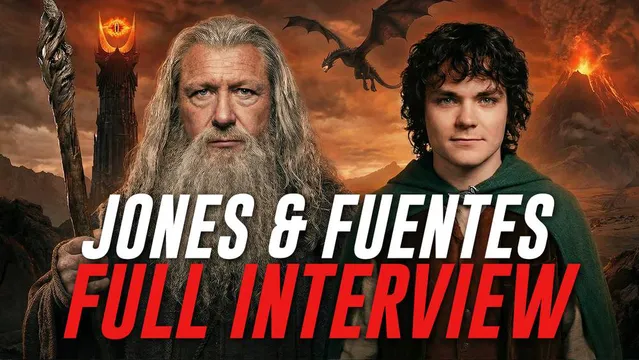
MUST-WATCH ALEX JONES & NICK FUENTES INTERVIEW / DEBATE — 12/17/25
43:36 - 47:07

MUST-WATCH ALEX JONES & NICK FUENTES INTERVIEW / DEBATE — 12/17/25

The Threat of a Democrat Return in 2028

If Democrats regain power in 2028, a "war on free speech" and aggressive legal action against right-wing influencers are predicted. Figures like Kamala Harris or Gavin Newsom are expected to escalate the tactics used during the Biden administration, including the weaponization of the FBI and DOJ. The segment warns that Trump's failure to "finish the fight" against the permanent bureaucracy will leave his supporters vulnerable to future persecution.

Mike Lindell explains the strategy for a federal pardon for Tina Peters, arguing it could override state-level imprisonment in Colorado. He alleges that Secretary of State Jenna Griswold illegally deleted 2020 election records, and that Peters is being persecuted because she possesses the only remaining backup of that data. Lindell claims the evidence shows Dominion voting machines were used to manipulate results.

Patrick Byrne elaborates on the "auto-pen" scandal, suggesting Michelle Obama was effectively acting as president. He frames the current political situation as a "mafia" coming apart, where individuals must "roll early" to get deals. Trump's retweeting of Byrne's interview is seen as a signal to potential whistleblowers within the Venezuelan and U.S. governments.

Byrne describes the current state of the "Deep State" as a mafia-like network that is breaking down under pressure, with individuals now "rolling" to save themselves. He mentions allegations that Michelle Obama used an "auto-pen" to sign pardons during the final days of the Biden administration. Jones and Byrne discuss the visible fear in Barack Obama's recent public appearances as his "house of cards" begins to collapse.

The unresolved identity of the January 6th pipe bomber is discussed, with Joseph McBride suggesting the individual may have ties to the Capitol Police. McBride calls for a special task force to work with independent journalists and lawyers who have analyzed the J6 tapes. He praises Donald Trump's pardons of J6 defendants and emphasizes that the American public is tired of government cover-ups ranging from JFK to the Butler shooting.

Congressional investigators questioned why Hunter Biden was involved in White House pardon discussions, suggesting potential "pay-for-play" schemes involving wealthy donors. Speculation was raised regarding whether figures like Anthony Fauci or Liz Cheney provided financial incentives for their pardons. The discussion emphasizes following the money trail through the Biden administration's final actions.

The segment reiterates that Todd Blanche is blocking J6 pardons and has historical ties to the Ghislaine Maxwell case. It suggests that once the "ice breaks" and these "rats" leave the DOJ, the system of tyranny will collapse. Trump is urged to bring in more aggressive prosecutors from states like Missouri.

The discussion shifts to the difficulties of reforming the Department of Justice, which employs 115,000 people. Joel Gilbert expresses concern that mid-level prosecutors are sabotaging Trump's agenda despite the leadership of Pam Bondi. He specifically mentions Deputy Attorney General Todd Blanche, a former Democrat, as a potential obstacle to J6 pardons and deep state accountability.

President Trump indicates he is open to reviewing a pardon for Ghislaine Maxwell following the Supreme Court's refusal to hear her appeal. The host suggests this is a Machiavellian move to use Maxwell as leverage against the deep state figures she could potentially expose. While Trump denies personal involvement in Epstein's crimes, the potential pardon is viewed as a high-stakes gamble in the ongoing political war.

Donald Trump is viewed as over-performing expectations, particularly regarding his commitment to pardoning J6 defendants and his alliance with RFK Jr. The success of the new mobile app is characterized as the "most honest poll" of public sentiment, demonstrating a massive demand for non-establishment information. The app allows the network to communicate directly with the audience via push notifications, bypassing the costs and filters of email and text marketing.

Donald Trump's long-serving lawyer, Peter Tickton, has publicly identified Todd Blanche as a major obstacle within the DOJ. Tickton claims Blanche is intentionally stalling J6 pardons and blocking the acquisition of evidence related to voting machines. Despite his role as Trump's defense attorney in the Stormy Daniels case, Blanche is criticized for maintaining his Democratic ties and acting against the president's interests.

Roger Stone recounts the pressure he faced from the Mueller investigation to "bear false witness" against Donald Trump in exchange for leniency. He describes the period as a horrific time in his life and credits his survival to the grace of God. Stone and Jones discuss the "historic realignment" of the Republican party, including the addition of figures like RFK Jr. and Tulsi Gabbard to the coalition.

Ivan Reikland calls for the immediate pardon of peaceful January 6th defendants, including members of the Oath Keepers and Proud Boys who were not convicted of violent crimes. The program concludes with emotional listener testimonies regarding the life-changing effects of Methylene Blue on conditions like MS and chronic seizures. The host reiterates that these products provide a quality of life that many users thought was lost forever.

The release of Ghislaine Maxwell's interview tapes has sparked a debate over a potential pardon, which Jones argues would be political suicide for the Republican party. Maxwell's claims of innocence and her family's ties to Israeli intelligence are scrutinized. Victims of Jeffrey Epstein have expressed outrage over the DOJ's handling of these recordings and the perceived cover-up of the broader network.