Topic: Perjury

66 chapters across the catalog

An analysis of Bill Clinton's opening statement to the House Oversight Committee suggests he is attempting to distance himself from Jeffrey Epstein by claiming their association ended in 2008. The commentary includes a satirical reading of the statement, mocking Clinton's denials of sexual misconduct and his claims of ignorance regarding Epstein's crimes. Critics argue that the presence of Ghislaine Maxwell at Chelsea Clinton's wedding in 2010 contradicts the former president's timeline of events.

Gary Melton compares the current climate of social media accusations to the Salem Witch Trials, where character and hearsay replace evidence. He explains that in a court of law, eyewitness testimony from individuals with criminal backgrounds requires corroboration and is subject to perjury. He laments that American society is currently ignoring these fundamental legal protections.

The discussion turns to the FBI's Hostage Rescue Team (HRT) and the 2016 shooting of LaVoy Finicum, alleging that agents were given medals for a "setup and murder." Rhodes accuses FBI Director Christopher Wray of perjury regarding the number of agents present on January 6. He criticizes Kash Patel for spinning the presence of these agents as "improper riot control."

Former FBI Director James Comey pleaded not guilty in a Virginia court to various crimes, including perjury to Congress. Allegations involve the illegal leaking of information through third parties and violating protocol while in office. The legal proceedings are characterized as a major development in holding former intelligence officials accountable for public crimes.

Roger Stone recounts the pressure he faced from the Mueller investigation to "bear false witness" against Donald Trump in exchange for leniency. He describes the period as a horrific time in his life and credits his survival to the grace of God. Stone and Jones discuss the "historic realignment" of the Republican party, including the addition of figures like RFK Jr. and Tulsi Gabbard to the coalition.

Kash Patel is accused of potentially lying under oath to Senator Cory Booker regarding his role in the FBI transition. Internal FBI sources claim Patel was actively directing personnel changes while denying such involvement to Congress. This discrepancy has reportedly given "Deep State" actors leverage over Patel, as they possess the emails and texts that contradict his testimony.

Kash Patel is accused of lying under oath during his confirmation hearing regarding his relationship with Stu Peters. Serafin claims Patel denied knowing Peters despite having done numerous interviews and exchanged text messages with him. The discussion also critiques the "chain of command" defense for FBI agents, arguing that following immoral orders violates the principles of the Nuremberg Code.

The Justice Department has formed a strike force to investigate James Clapper and other officials for a "treasonous conspiracy" regarding the 2016 election. Clapper’s history of lying to Congress about NSA surveillance of Americans is being revisited as new declassified documents emerge. Reports suggest that high-level journalists and talk show hosts were targeted for destruction by these stay-behind networks.

Federal Reserve Chairman Jerome Powell is accused of perjury before Congress regarding the opulent $2.5 billion renovation of the Federal Reserve headquarters in Washington, D.C. Representative Anna Paulina Luna has filed a criminal referral against Powell over testimony concerning private elevators and rooftop gardens in the complex. Two senators are also reportedly preparing criminal referrals as Powell remains under investigation.

While low-level federal employees are facing indictments for theft of USAID funds, critics are calling for action against high-level "kingpins" in the Department of Energy and EPA. Specific allegations include perjury by the former Secretary of Energy regarding stock investments and the suspicious transfer of $93 billion during the presidential transition period. The lack of high-level accountability remains a point of contention for the current administration.

The host expresses concern over recent statements by Kash Patel and Dan Bongino regarding the Jeffrey Epstein case, specifically their claims that he committed suicide. Kyle Serafin notes that Patel's current stance contradicts his previous public statements made before he was appointed as FBI Director. The discussion questions why these figures are suddenly aligning with the official narrative despite evidence of foul play and broken bones in the autopsy report.

The discussion turns to allegations of "lack of candor" and potential perjury by Kash Patel during his confirmation hearings. Kyle Serafin points out that Patel denied knowing certain individuals despite documented evidence of multiple appearances on their programs. This behavior is identified as a fireable offense within the FBI and a significant liability for the administration's efforts to reform the agency.

Roger Stone predicts a major story will break regarding New York Attorney General Letitia James allegedly ignoring violations of Iran sanctions by financial institutions. He suggests that Speaker Mike Johnson should hold field hearings to bypass the biased DC judicial system, allowing for prosecutions in other jurisdictions if witnesses commit perjury.

The segment analyzes why Michael Flynn and InfoWars staffer Owen Shroyer accepted plea deals, citing the high cost of legal defense and the 99% conviction rate in Washington, D.C. Geiser argues that "lawfare" is used to bankrupt and silence political opponents regardless of their actual guilt.

Associate Deputy Attorney General Ed Martin states on the Benny Johnson Show that James Comey is "going to prison." Martin explains that Comey faces a "perjury trap" where he must either admit to making an assassination threat or lie about his knowledge of the term "86."

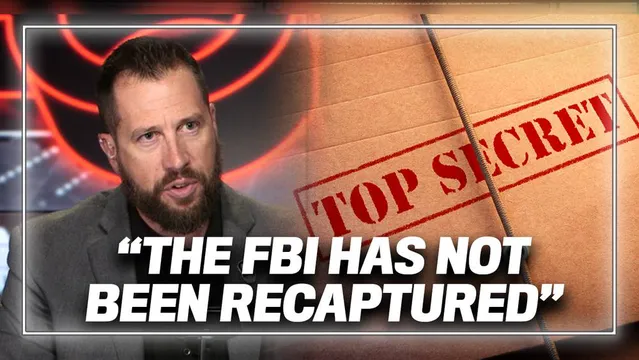
The FBI is accused of wrongly punishing agent Garrett O'Boyle for leaks actually perpetrated by Kyle Serafin. Evidence from the FBI's own file, including a spectrogram analysis from the Quantico lab, shows the bureau knew the voice in the Project Veritas video was not O'Boyle's. Despite this, O'Boyle remains on unpaid suspension while the bureau continues to monitor conservative podcasts for evidence.

Kyle Serafin claims he was blocked from testifying before Jim Jordan's Weaponization Committee because he was considered "too politically hot." He alleges that FBI agent Jennifer Moore committed perjury during her congressional testimony and has not been held accountable. The segment concludes with the observation that Donald Trump's effectiveness depends on receiving accurate information, which is often blocked by his own staff.