Topic: Venezuela

371 chapters across the catalog

Gaines and Jones discuss a rumored "black operation" in Isfahan, Iran, that allegedly went wrong during an attempt to seize uranium. They compare the situation to the 1979 Delta Force rescue mission and suggest that Trump's "flawless" victory in Venezuela gave him a false sense of confidence regarding Iran. They claim the U.S. successfully bought off Venezuelan officials but failed to account for Iran's resolve.
A segment from GB News discusses Trump's "Greater North America" doctrine, which involves securing strategic assets from Greenland to the Panama Canal. Gavin McInnes explains how controlling Venezuelan and Iranian oil gives the U.S. leverage over China in trade negotiations. He suggests the war is a form of "4D chess" to cripple adversaries' energy security.

John Ratcliffe and the CIA are credited with providing the "flawless intelligence" necessary for the rescue mission in Iran. The segment references several named operations, including Midnight Hammer, Absolute Resolve in Venezuela, and Epic Fury. Ratcliffe emphasizes the tradition of leaving no man behind as the driving force behind the high-risk mission.

Secretary of Defense Pete Hegseth defends the administration's refusal to rule out boots on the ground, citing the need for unpredictability in warfare. Hegseth references the Monroe Doctrine and gunboat diplomacy as precedents for American intervention in the hemisphere. However, critics point out that past interventions, such as the funding of Hamas by Netanyahu, have historically destabilized regions rather than improving them.

The perceived success of regime change in Venezuela reportedly led Donald Trump to believe that the military could easily remove Iranian leaders. Joe Kent explains that the Israelis sold the Iran war as a "slam dunk," claiming that protesters would greet U.S. forces as liberators once the IRGC was bombed. Kent and others warned that "Operation Midnight Hammer" would not be the end of the conflict as promised.

Patrick Byrne takes over the broadcast to discuss a massive Chinese hack of U.S. routers and Internet of Things (IoT) devices. He claims the Chinese have had backdoor access to government surveillance and communication systems for years. Byrne also links these technical vulnerabilities to election security, citing recent events in Venezuela and upcoming reports on voter roll hacks in 18 U.S. states.

Senator Lindsey Graham is criticized for his enthusiastic public rhetoric regarding total war and destruction in the Middle East. Meanwhile, the Trump administration and media figures have adopted a "short-term pain for long-term gain" talking point to explain economic disruptions. Trump continues to praise military strength following operations in Venezuela and Iran, claiming inflation is plummeting despite the conflict.

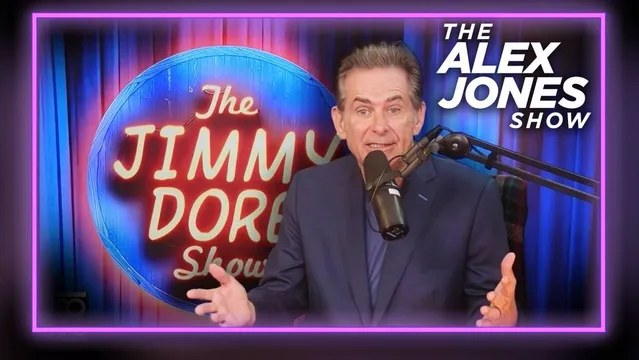
MUST-SEE: Alex Jones Interviews Jimmy Dore In EXPLOSIVE Must-Watch End Of The World Interview!
9:07 - 12:17

MUST-SEE: Alex Jones Interviews Jimmy Dore In EXPLOSIVE Must-Watch End Of The World Interview!

Trump Administration Internal Dynamics and Megalomania Claims

Donald Trump is described as operating within an information bubble, influenced by advisors who encourage megalomania. While figures like Elon Musk and RFK Jr. were brought in for reform efforts like DOGE, they are reportedly being sidelined as Trump consolidates power. The administration's perceived success in Venezuela is cited as a factor emboldening risky foreign policy decisions.

A caller from North Carolina presents a theory that the Iran war is "payback" for the 2020 election and part of a broader strategy to take out Shiite influence before pivoting to confront China. The caller expresses support for Jake Lang and the "Crusader Club," arguing that the West must show strength to prevent being dominated by foreign powers.

Military experts, including Eric Prince and the Chairman of the Joint Chiefs, warned Donald Trump that an Iranian invasion would not result in a quick victory. Comparisons to the success in Venezuela are dismissed due to Iran's superior ground troops and fortified mountain bunkers. The potential deployment of the 82nd Airborne to the Strait of Hormuz is characterized as the beginning of a long-term quagmire.

Donald Trump is described as having a "degenerate gambler" mentality, feeling emboldened by the successful extraction of the president in Venezuela. This confidence has led him to ignore military advisors who warn that Iran is a significantly more dangerous adversary. Critics suggest he is being "fluffed up" by advisors who want him to go down in history as the president who avenged the 1979 embassy crisis.