Topic: Forensics

48 chapters across the catalog

Jason Bermas joins the program to discuss the forensic evidence of the assassination attempt on Donald Trump in Butler, Pennsylvania. Bermas argues the event was real, citing bullet holes in a hydraulic crane and the visible impact on Trump's head. He also questions what medications the shooter, Thomas Crooks, may have been on and criticizes the FBI for potentially obstructing red flags prior to the incident.
The FBI's investigation into the J6 pipe bomber has remained cold for years despite increasing rewards to $500,000. Critics point out that the FBI deliberately degraded the surveillance video to one frame per second and altered the aspect ratio to prevent independent forensic analysis. This is viewed as part of a broader cover-up regarding the identity of the individual who placed the devices.

Jovan Hutton Pulitzer explains the difference between a "ticker tape" recount and a true forensic audit, noting that Georgia has never performed the latter. He alleges that 50 boxes of incriminating ballots were likely removed after an FBI tip-off to county officials. Pulitzer argues that "data is not evidence" and that only the physical paper ballots can prove the felonies required to overturn the election results.

Forensic examiners reportedly found that ballots in Georgia were printed at different shops, suggesting the injection of fraudulent votes. Proof of 2020 election hacking by foreign entities is claimed to be unequivocal, with Trump now possessing the necessary documentation. The segment mentions that a Dominion executive ordered the shredding of 3,000 pounds of material to hide evidence.

Steven Gardner discusses the upcoming trial of Tyler Robinson, the man accused of killing Charlie Kirk. Gardner raises questions about the ballistics, specifically the 30-06 bullet, and whether Robinson acted alone. Jones describes Robinson as appearing "deranged" and "smug" in court, noting that he wore transgender colors on his tie, which Jones links to leftist hostility toward Kirk.

Recent federal investigations and five separate IRS audits into InfoWars' finances have contradicted mainstream media reports regarding hidden assets. The audits revealed that the organization actually overpaid the IRS by $4.3 million over the last five years, rather than hiding hundreds of millions in offshore accounts. These forensic findings are being used in ongoing bankruptcy court proceedings to challenge claims made by opposing legal teams.

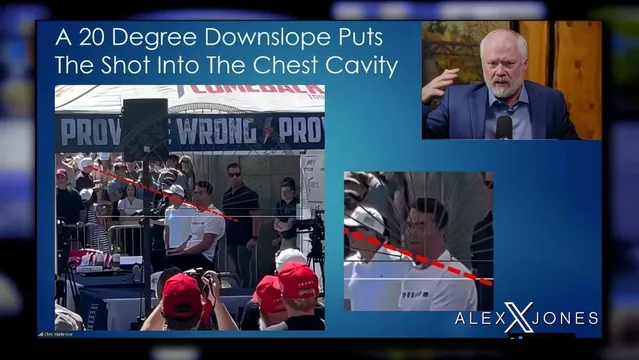
Dr. Chris Martinson presents a detailed forensic analysis of the Charlie Kirk shooting, arguing that a .30-06 round fired from the Losey building roof could not have produced the observed wound. He demonstrates that the 10-degree downslope angle is inconsistent with the spinal damage reported and the massive cavitation seen in video frames. Martinson concludes that the physical evidence suggests a shot from a much steeper angle, likely from a different building.

Dr. Martinson discusses the difficulty of finding original source videos on TikTok due to the platform's data-handling practices. He uses high-speed footage of watermelons being shot to illustrate the destructive power and straight trajectory of a .30-06 round. Martinson maintains that the laws of physics preclude the official narrative of the bullet's behavior in the Charlie Kirk case.

Dr. Martinson issues a plea for original video recordings with metadata to establish a proper crime scene timeline. By triangulating the positions of witnesses known as "Cowboy Hat Guy" and "Red Shirt Guy," investigators have identified the Sorensen roof as a more likely shooting position than the Lossie building. Martinson criticizes the quality of videos on TikTok, which are often "downloads of downloads," and requests raw files for forensic analysis.

Joel Skousen, a former Marine pilot, argues that a 30-06 bullet would have caused devastating exit wounds that are absent in the Kirk case. The lack of a formal medical examiner's report in Utah and the immediate transport of the body to Arizona are cited as major red flags. Skousen suggests the forensics do not support the official narrative of a single shooter from the roof.

Questions are raised regarding the absence of a public autopsy report for Charlie Kirk and the rapid embalming of his body before transport to Arizona. Nate Kornacki and the host demand the release of the bullet found in Kirk's neck, noting that a forensics expert could identify the caliber immediately. The lack of transparency from the FBI and local authorities is cited as evidence of a potential cover-up.

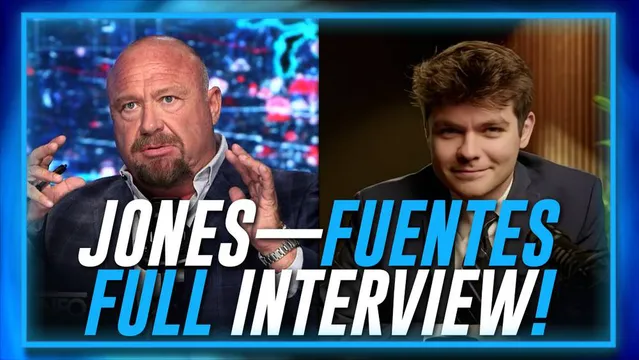
Nick Fuentes critiques the official narrative of the Charlie Kirk shooting, specifically the "Man of Steel" claim made by TPUSA spokesperson Andrew Colvitt. Fuentes argues that the lack of graphic forensic evidence and the "miracle" explanation for the bullet stopping are highly suspicious. He categorizes the current theories into three groups: the lone gunman, the Groyper conspiracy, and the Israeli plot.

The death of Turning Point USA founder Charlie Kirk is scrutinized amid claims of a potential cover-up regarding the forensic evidence. Questions are raised about the official narrative of a lone gunman using a .30-06 rifle, as observers note a lack of expected ballistic damage and the absence of an official autopsy report. Figures like Kash Patel have highlighted these discrepancies, while theories circulate regarding whether the perpetrator was a left-wing radical or part of a deeper conspiracy.

Alex Jones provides a detailed breakdown of the ballistics involved in Charlie Kirk's death based on conversations with Turning Point USA spokespeople and surgeons. He explains how a bullet entering at a downward angle can ricochet off bone and fragment, causing internal damage without an exit wound. Jones compares these mechanics to his personal experience hunting wild hogs.

The prosecution details the timeline of the September 10 shooting at Utah Valley University. Surveillance footage captured a suspect in dark clothing crawling to a prone shooting position on a roof 160 yards from the stage. Investigators found impressions in the gravel consistent with a sniper's position and tracked the suspect's escape route to a wooded area where a .30-06 rifle was recovered.

Law enforcement confirms that DNA found on the rifle's trigger and towel matches Tyler James Robinson. The recovered ammunition featured hand-etched inscriptions, including political and cultural references. Robinson surrendered to the Washington County Sheriff's Office 33 hours after the shooting following an intensive manhunt and the release of surveillance photos.

Jones presents a detailed ballistics analysis of the Kirk shooting, questioning the official "lone gunman" narrative. He points to video evidence showing what appears to be a muzzle flash from a stairwell 70 yards away and a bullet trajectory entering the back of Kirk's neck. He suggests a professional shooter may have been involved, coordinating with the primary suspect on the roof.

Kash Patel discusses a note written by suspect Tyler Robinson to a partner expressing the intent to "take out" Charlie Kirk. Patel criticizes the FBI for withholding the suspect's photo for 12 hours and notes suspicious leadership changes at the Salt Lake City FBI bureau. The segment suggests that "shadowy figures" in the deep state are undermining the investigation and the Trump administration's appointees.

The host disputes the official narrative that Jeffrey Epstein committed suicide, citing forensic evidence of a broken neck in three places. He criticizes Dan Bongino and Kash Patel for recently stating they believe Epstein killed himself after "seeing the files," arguing that the files were notoriously destroyed or hidden. The segment suggests that Epstein was the victim of a state-level hit involving the Southern District of New York and federal prison officials.