Topic: Evidence

73 chapters across the catalog

Jovan Hutton Pulitzer explains the difference between a "ticker tape" recount and a true forensic audit, noting that Georgia has never performed the latter. He alleges that 50 boxes of incriminating ballots were likely removed after an FBI tip-off to county officials. Pulitzer argues that "data is not evidence" and that only the physical paper ballots can prove the felonies required to overturn the election results.

Mike Lindell promotes the expanded MyPillow product line, including mattresses and "MySlippers," while detailing his recent debate experiences in Minnesota. He confronted a CBS anchor who claimed MyPillow was bankrupt, clarifying that the company is still standing despite boycotts. Lindell also criticized the placement of a "satanic statue" in the Minnesota Capitol and the media's failure to report on court victories that validated his election evidence.

Ian Carroll argues that the current document release represents only a tiny fraction of the evidence the FBI should have collected. He notes that authorities failed to raid Epstein's ranch and gave him advanced notice of other searches, allowing for the removal of incriminating material. The segment characterizes the entire investigation as a "ridiculous saga of corruption" involving a cabal of psychopaths.

The show analyzes video footage of the Renee Good shooting, claiming it proves the officer was hit by the car before firing. Slow-motion analysis is used to show Good's tires spinning on ice as she allegedly floored the accelerator. The speaker argues this footage definitively debunks claims by Jen Psaki and Don Lemon that the officer was never in danger.

New frontal footage of the Minneapolis incident clearly shows the driver hitting an ICE agent with her vehicle. The agent is seen flying back from the impact before firing defensive shots. This footage is described as "clear as day" evidence of the use of a deadly weapon against law enforcement. The segment highlights that the agent's reflexes likely saved his life and the lives of other officers in the vehicle's path.

Speculation arises that Maduro may turn state's evidence to expose deep state money laundering and election fraud involving the Democratic Party. Patrick Byrne notes that Maduro was effectively a prisoner of his own Cuban bodyguards, who wanted him to die as a martyr for the "Bolivarian Revolution." The U.S. raid may have functioned as a rescue mission for Maduro, who was unable to flee on his own.

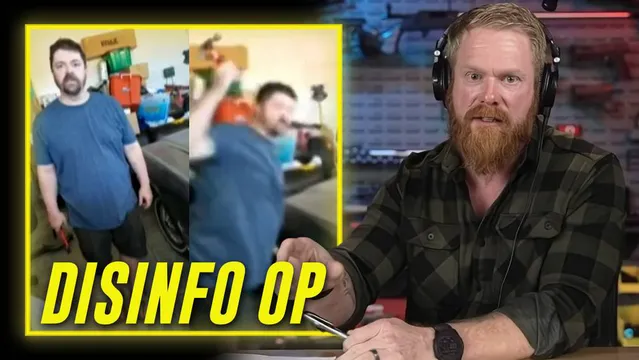
The program airs video footage from June 25, 2016, showing Mitch Snow menacing his wife, Lanae Snow, with a hammer and damaging her vehicle. The video contradicts Snow's later claims on podcasts where he portrayed himself as the victim of a "prison-like" garage setup. The host points out that Snow's only truthful statement was that he used a hammer to break a door handle.

The criminal complaint against Brian Cole Jr. is criticized for relying on thin evidence, such as general cell phone pings and license plate readers that placed his car in the broad vicinity of the Capitol. Serafin argued that the "bomb parts" found are common household items and that no evidence of black powder or bomb-making searches was presented.

Alex Jones and Dr. Martinson discuss Charlie Kirk's role as a potent political evangelist for the republic and why the deep state would target him. They call for the public to release raw video footage with metadata to help establish a proper forensic timeline. Martinson expresses concern over the lack of high-quality recordings from the event despite the presence of hundreds of phones and professional cameras.

The legal proceedings for Tyler Robinson at Utah Valley University involve the identification of thousands of potential student witnesses. The prosecution and defense are managing a voluminous amount of digital discovery materials, leading to a 30-to-60-day window before a formal preliminary hearing is set. The defense emphasizes the need to process massive amounts of digital data before proceeding with the trial.

Questions are raised regarding the absence of a public autopsy report for Charlie Kirk and the rapid embalming of his body before transport to Arizona. Nate Kornacki and the host demand the release of the bullet found in Kirk's neck, noting that a forensics expert could identify the caliber immediately. The lack of transparency from the FBI and local authorities is cited as evidence of a potential cover-up.

The FBI and local authorities are reportedly withholding specific evidence in the Charlie Kirk investigation, such as the recovered bullet and autopsy details, to avoid tainting the potential jury pool. Under the Fifth and Sixth Amendments, the accused has a right to a fair trial, which often leads to the slow-walking of damning evidence in high-profile cases. Confidence in the eventual conviction of the suspect depends on the state's ability to present a cohesive forensic case during the trial.

Tom Renz suggests that President Trump needs "political kamikazes" like General Mike Flynn to dismantle the swamp. The discussion focuses on the total collapse of institutional trust and the transition of "conspiracy theories" into documented facts regarding government overreach.

Kash Patel reveals that forensic investigators have matched DNA evidence from a firearm and a screwdriver to the suspect in the Charlie Kirk assassination. The investigation is reportedly looking into a "transgender network" in Utah, with claims that at least six individuals had foreknowledge of the attack. Further reports mention a bomb found under a news van in Utah, suggesting a broader regional threat.

Kash Patel discusses a note written by suspect Tyler Robinson to a partner expressing the intent to "take out" Charlie Kirk. Patel criticizes the FBI for withholding the suspect's photo for 12 hours and notes suspicious leadership changes at the Salt Lake City FBI bureau. The segment suggests that "shadowy figures" in the deep state are undermining the investigation and the Trump administration's appointees.

Official reports from Zero Hedge and Utah Governor Spencer Cox confirm that DNA found on a towel wrapped around the murder weapon matches Tyler Robinson. Robinson, who was arrested for the September 10th shooting at Utah Valley University, reportedly subscribed to radical left-wing ideology. The segment dismisses attempts by the left to label the shooter as a right-winger as "absurd delusion."

Kyle Serafin explains the process of boxing a rifle for evidence and debunks theories that the "box" seen in photos was found in the woods. He characterizes Robinson's attempt at a "costume change" as amateur tradecraft, noting that the suspect failed to change his Converse All-Star shoes, which allowed investigators to match his foot impressions. Serafin argues that the "straight line" explanation of a lone amateur is more likely than a complex state-level conspiracy.

The FBI has released unedited footage of the murder of Irina Zarutska on a Charlotte light rail. The video shows the suspect, DeCarlos Brown, stalking the victim before stabbing her multiple times in the neck. The audio confirms the suspect's racial motivation, which the segment argues should be prosecuted as a federal hate crime. The lack of intervention from bystanders on the train is cited as a sign of societal decay.