Topic: China Tariffs

69 chapters across the catalog

A segment from GB News discusses Trump's "Greater North America" doctrine, which involves securing strategic assets from Greenland to the Panama Canal. Gavin McInnes explains how controlling Venezuelan and Iranian oil gives the U.S. leverage over China in trade negotiations. He suggests the war is a form of "4D chess" to cripple adversaries' energy security.
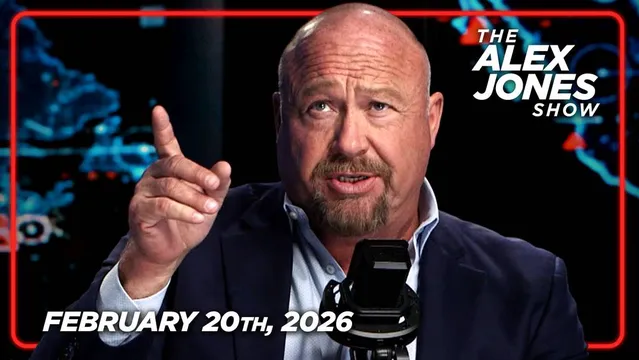
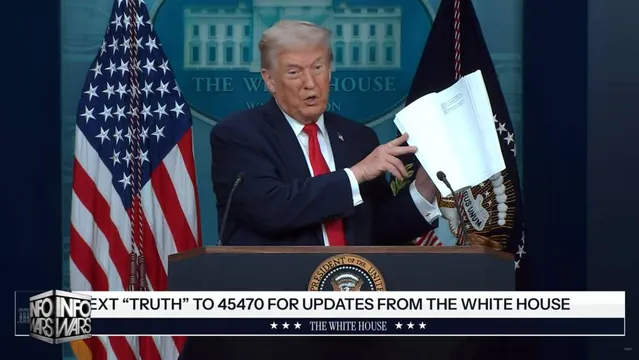
The U.S. Supreme Court struck down a significant portion of Donald Trump's sweeping global tariffs, ruling that many were unauthorized under the International Emergency Economic Powers Act. Justice Clarence Thomas led the dissenting opinion, arguing that the President maintains broad authority over foreign commerce and national security sanctions. The ruling potentially requires the federal government to refund approximately $175 billion in collected duties to various international trading partners.

FULL VIDEO: President Trump Presents 365 Wins In 365 Days To The American People At Historic Press Conference!
1:01:29 - 1:04:05

FULL VIDEO: President Trump Presents 365 Wins In 365 Days To The American People At Historic Press Conference!

Automobile Tariffs, Greenland Dispute, Energy Independence

Donald Trump defends his 100% tariff on Chinese cars and 25% tariff on other foreign automobiles to protect the U.S. car industry. He mentions a lawsuit by Leonard Leo and others seeking to overturn these tariffs. Trump also highlights the opening of ANWR for drilling and his support for "clean, beautiful coal" to ensure energy independence.

China is currently offering a premium price of $103 per ounce for silver, signaling a desperate need for physical delivery and a move to corner the market. Major financial institutions like Bank of America and Citi hold massive short positions that exceed annual global production, creating an "impossible math" scenario. As the COMEX runs out of physical silver, Trump's proposed tariffs on the EU are expected to further disrupt the flow of metals through London.

Nick Fuentes outlines a positive vision for America involving high tariffs, decoupling from China, and re-industrialization. He advocates for a foreign policy based on the Monroe Doctrine, focusing on the Western Hemisphere as America's primary strategic periphery. This includes controlling borders, implementing safe public transit, and ensuring the country produces its own goods.

The world is reportedly moving away from the U.S. dollar toward gold due to fears of weaponized finance and Trump's proposed tariffs on Chinese goods. Trump's "Genius Act" for stablecoins is described as a move to create demand for the dollar on the blockchain while avoiding a centralized Central Bank Digital Currency (CBDC). Once gold reaches $5,795 per ounce, it is projected to become the world's primary reserve asset, surpassing the dollar.

The weaponization of the U.S. dollar and trade sanctions is driving major economies like India and China closer to Russia, creating a truly multipolar world. Robert Barnes notes that a massive military parade in China showcased the country's growing strength and its alignment with other BRICS nations. The discussion warns that aggressive tariff policies against allies like India could undermine the U.S. dollar's status as the global reserve currency.

A federal court recently struck down Donald Trump's reciprocal tariffs as illegal, a decision that has been appealed to the Supreme Court. These tariffs are designed to force other countries to pay for American infrastructure and reduce the domestic tax burden on citizens earning under $200,000. Proponents argue that tariffs have been an unmitigated success in curbing China's military and economic expansion.

The recent summit in China involving Vladimir Putin, Xi Jinping, and Narendra Modi represents a significant shift in global power, covering 40% of the world's population. Colonel McGregor warns that Donald Trump's tariff policies are failing and have led India to cancel $35 billion in jet orders from Boeing. This economic shift threatens thousands of manufacturing jobs in Washington and South Carolina.

Donald Trump claims his trade policies and tariffs are bringing auto plants and other industries back to the United States from Canada and China. Globalist organizations like the CFR and individuals like Larry Fink are accused of previously managing a deliberate deindustrialization of America. The administration's current approach is described as a realist effort to reclaim technological and industrial dominance.

Robert Barnes argues that US policy is counterproductively forcing Russia into a strategic alliance with China. He emphasizes that controlling energy costs is the most effective way to reduce inflation and that high oil prices would derail Trump's economic plan. JD Vance is credited with helping relay this message from the populist base to the former president.

Donald Trump announced 50% tariffs on European goods, including cars and pharmaceuticals, starting in July to force political and economic alignment. This follows a successful negotiation with China where tariffs were adjusted to 30%. These economic measures are intended to bring manufacturing jobs back to the United States and counter globalist censorship efforts.

The United States is facing a national security threat due to its total dependency on Chinese manufacturing. As China's population collapses, they are leaning into AI and robotics to maintain low-cost production. The Trump administration is using tariffs to force diversification of the supply chain into India and Mexico while racing to develop domestic AI and robotics capabilities to remain competitive.

President Trump rejects the "taco trade" label from Wall Street, asserting that his tariff threats against China and the European Union have successfully forced foreign leaders to the negotiating table. He claims his administration has secured trillions in investment commitments that were absent during the Biden presidency. The host contrasts Trump's active negotiation style with Joe Biden's perceived lack of engagement and frequent vacations.

Roger Stone discusses the ongoing trade war with China and the impact of Trump's 30% tariffs. He also mentions his upcoming book, "Bushwhacked," which investigates the attempted assassination of Ronald Reagan and the redaction of related government documents. Stone notes discrepancies in witness testimony regarding the number of shots fired by John Hinckley Jr. in 1981.

A parody video of James Comey is played, mocking his reaction to being fired by Donald Trump. Geiser praises Trump's tariff policies and his efforts to diversify the U.S. economy away from China before a projected Chinese population collapse.

Senator Rand Paul is criticized for opposing Trump's tariff policies, which have reportedly led to a massive U.S. Treasury surplus and forced countries like China and the UK to lower duties. Meanwhile, inflation has dropped to 2.3%, the lowest since 2021. Trump's executive order to slash prescription drug prices by up to 80% is highlighted as a major victory against the pharmaceutical lobby.

Donald Trump implemented trade policies aimed at dismantling the globalist corporate system, effectively removing the United States from the World Trade Organization. China reportedly capitulated to U.S. trade demands due to an internal economic crisis, despite corporate media narratives suggesting a surrender by the Trump administration. The Treasury Secretary confirmed that China failed to enforce previous deals, leading to a new 90-day implementation period for structural economic changes.

Donald Trump signed an executive order to lower prescription drug prices by up to 80%, targeting price gouging by Big Pharma and ending U.S. subsidies for foreign healthcare systems. Regarding trade, the U.S. and China agreed to a 90-day tariff reduction where the U.S. maintains a 30% rate compared to China's 10%, which is framed as a strategic victory. Media outlets like Fox News and CNN are criticized for portraying these developments as a "blink" or surrender by the administration.