Topic: World Trade Organization

26 chapters across the catalog

Howard Lutnick and his associates are reportedly profiting from the overturning of tariffs by purchasing billions in insurance against Supreme Court decisions. The narrative suggests Donald Trump is being set up by sophisticated financial actors and naive advisors who ignore military realities. Trump’s recent withdrawal from the UN and WTO is framed as a positive move currently jeopardized by the failing Iranian intervention.
In an interview with Megyn Kelly, JD Vance discussed the collapse of the old international order and the rise of an "America First" system. Vance argued that the U.S. is successfully ignoring the UN and WTO to make sovereign decisions regarding trade and military alliances. He characterized the current era as a battle to ensure the new international setup is not dominated by a China-EU alliance.

George Soros and Larry Fink of BlackRock are identified as primary architects of a globalist takeover intended to destroy the middle class and eliminate free-market capitalism. The 2030 Agenda is described as a premeditated plan to replace national sovereignty with mega-corporate rule, leading to a post-human world dominated by robots and computerized systems. This transition allegedly involves the intentional destruction of urban centers, the promotion of homelessness, and the seizure of the final 20% of global assets.

Donald Trump faces potential legal setbacks as Supreme Court justices express skepticism regarding the constitutionality of his trade tariffs. Despite Howard Lutnick's insistence that the administration will prevail, legal analysts suggest a majority opinion may rule against the president's power to levy these fees. The discussion frames tariffs as the heart of an economic recovery plan intended to reclaim sovereignty from the World Trade Organization.

The Trump administration is moving to ban the Chinese Communist Government and connected groups from purchasing American land, citing an 83% increase in such acquisitions. The policy aims to reverse decades of deindustrialization and break China's 98% control over rare earth minerals. By pulling out of the World Trade Organization's influence, the U.S. is seeking to re-establish domestic chip manufacturing and raw material production.

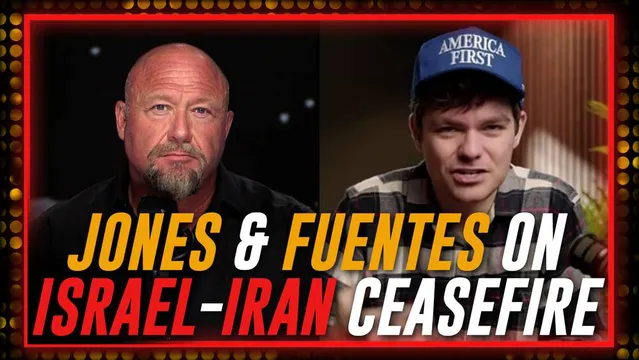
Israel Attempts To Sabotage Trump's Ceasefire, And US Braces For False Flag Attacks As Netanyahu Demands Regime Change In Iran
13:51 - 17:25

Israel Attempts To Sabotage Trump's Ceasefire, And US Braces For False Flag Attacks As Netanyahu Demands Regime Change In Iran

Geopolitical Analysis, Nick Fuentes, Michael Savage, Globalist Systems

Nick Fuentes is recognized for his rapid rise in geopolitical analysis despite his young age, joining other figures like Steve Bannon and Michael Savage in criticizing the current trajectory of Middle East policy. Michael Savage has recently called for regime change within Israel, specifically the removal of Benjamin Netanyahu, to prevent an existential threat to civilization. This movement advocates for an "America First" approach that involves withdrawing from globalist organizations like the World Trade Organization and the World Health Organization.

Claims surface that globalist entities are using the Iran conflict to derail Donald Trump's efforts to dismantle the World Trade Organization and secure U.S. borders. While some supporters theorize Trump is playing "5D chess" by making a secret deal with Iranian Mullahs to stage strikes, others, including Steve Bannon, warn that the situation is a genuine escalation toward total war. The shift in global alliances is reportedly driving nations away from the U.S. dollar and toward the BRICS economic bloc.

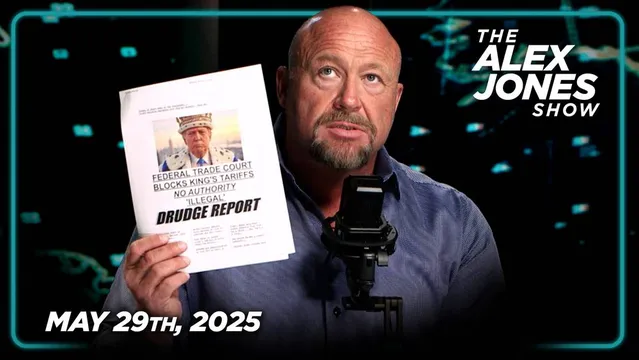
Mark Levin compared Donald Trump's diplomatic talks with Iran to the appeasement of Adolf Hitler, while Ben Shapiro faced criticism for prioritizing Israeli interests over American ones. Jones references admissions from a former Mossad chief regarding Israel's desire for the U.S. to engage in war with Iran. Additionally, the segment touches on a federal trade court ruling that aligns with World Trade Organization agreements to block Trump's tariffs.

Donald Trump's trade strategy involves targeting the EU for what he describes as predatory regulatory systems that exclude American products. The segment claims the EU has formed a public alliance with Xi Jinping and Communist China to defeat Trump's populist movement. Issues regarding European energy taxes and the banning of GMO foods are also addressed.

During a brief exchange with BBC News, Donald Trump dismissed questions about Russian delegations, highlighting the $4 trillion in recent investment into the US. The administration is actively moving power away from international bodies like the WTO and WHO, returning it to individual nation-states. Trump's "circle of friends" policy emphasizes mutual respect for national sovereignty and open free-market systems.

Donald Trump implemented trade policies aimed at dismantling the globalist corporate system, effectively removing the United States from the World Trade Organization. China reportedly capitulated to U.S. trade demands due to an internal economic crisis, despite corporate media narratives suggesting a surrender by the Trump administration. The Treasury Secretary confirmed that China failed to enforce previous deals, leading to a new 90-day implementation period for structural economic changes.

The Trump administration has successfully negotiated trade deals with over 100 countries, including major agreements with India and the United Kingdom, by bypassing the World Trade Organization. This "nation-by-nation" strategy is described as a massive political and economic realignment that benefits blue-collar workers and minorities. Trump is characterized as a "hospitality person" who seeks to raise global prosperity through fair, reciprocal negotiations.

The United Nations is reportedly pushing for a global shipping fuel tax to create an independent source of funding, bypassing national appropriations. Jasper warns that this is part of a broader move toward a "nascent world government" where UN agencies in Geneva dictate global policy on tourism, meteorology, and trade.

The U.S. trade war is described as a necessary step to re-industrialize the country after decades of "strip-mining" the productive base for the benefit of China. Jasper warns about UN Agenda 2030 and the World Health Organization's ability to coordinate global shutdowns, which he characterizes as a draconian, top-down control mechanism.

The history of global wealth distribution is analyzed, contrasting the 1950s American system with modern globalist austerity and ESG scores. The current administration's strategy involves using tariffs to dismantle the World Trade Organization and return to a Renaissance-style expansionist economy.

The administration has effectively cut funding to the World Trade Organization to force a-la-carte negotiations with individual nations. Treasury Secretary Bessent is credited with shifting the focus of the economy from Wall Street to Main Street through increased transparency and competency.

A Senate vote to eliminate tariffs failed despite some Republican opposition. Meanwhile, India has fully joined the new US trade alliance, and Ukraine's Zelensky has signed a minerals deal that effectively functions as a US economic takeover.

Dowd highlights China's severe demographic decline and real estate crisis, noting that the Chinese leadership's primary fear is their own population. He recalls his time at BlackRock when energy teams observed that the CCP's "deal" with its citizens depends entirely on maintaining high employment. Dowd suggests that the current trade war could accelerate China's internal instability, potentially leading to a "Black Swan" event or war.