Topic: Manufacturing

152 chapters across the catalog

The White House is reportedly asking US automakers to convert factories into weapons plants. Mike Adams argues this plan is doomed because the US has lost its industrial base and skilled labor to China. He cites personal experiences with poor American quality control at John Deere to illustrate why US manufacturing cannot currently compete with Chinese automation and robotics.
The host shares family stories from the Korean War and World War II regarding military equipment failures and manufacturing defects. An anecdote about an uncle in Korea describes how transport planes crashed due to metal shavings in the engines, which was allegedly covered up as enemy fire. The segment suggests a history of war profiteering where defective planes are presented as "shot up" to protect contractors and avoid scandal.

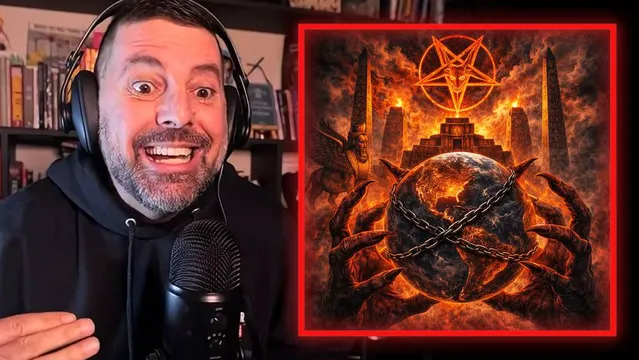
The Ancient Satanic Babylonian System Runs The World!!!
1:43:43 - 1:49:38

The Ancient Satanic Babylonian System Runs The World!!!

Manufacturing Consent, Soul Prison, Final Sign-off

Sam Tripoli references Noam Chomsky's *Manufacturing Consent* to explain how the public is manipulated into accepting government agendas. He concludes the show by reiterating his belief that the "Info War army" is winning against the globalists. He encourages listeners to check out his various podcasts and the "Word War Debate" platform before signing off.

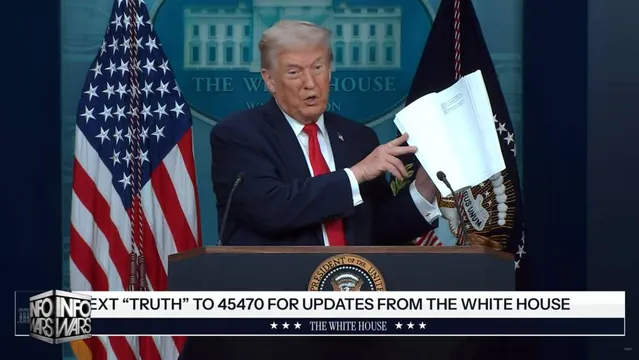
Donald Trump criticizes the inclusion of men in women's sports and references ongoing Supreme Court deliberations on the matter. He credits his tariff policies for a 62% reduction in the trade deficit and for saving a Ford plant in Michigan. Trump argues that tariffs provide national security and significant federal income without causing inflation.

Trump's tariff policies have reportedly led to a massive resurgence in U.S. manufacturing, with billions of dollars in new factory investments across the South and Midwest. A potential alliance between the U.S. and Russia is proposed to counter Chinese influence, focusing on the exchange of rare minerals and space exploration. This "Renaissance" approach emphasizes peace through strength and economic realism over traditional globalist interventionism.

Jackson Hinkle invites Alex Jones to visit Caracas and promotes the American Communist Party as a patriotic, anti-Zionist alternative to the current political system. He argues that the U.S. should learn from China's focus on infrastructure and manufacturing rather than relying on "Zio-slop" and service-based economies like OnlyFans. Jones strongly disagrees with the communist endgame but acknowledges the need for a "fourth turning" to address corporate fascism and corruption.

The AJN Live app reaches the top of the Apple trending news charts despite alleged big tech censorship. The broadcast transitions into a historical analysis of how the U.S. and the British Empire managed the world reserve currency through the Council on Foreign Relations. It claims a secret deal in the 1980s gave China control over manufacturing and rare earth minerals in exchange for military restraint, a deal China has since broken.

The legal argument that tariffs constitute an unconstitutional tax on Americans is challenged, with the host arguing that tariffs are voluntary regulatory measures. Examples such as Brazilian beef and German yachts are used to illustrate that consumers can choose domestic alternatives to avoid the costs. The segment asserts that current trade imbalances represent economic warfare against American workers and industry.

The U.S. dollar's status as the global reserve currency is under threat from the BRICS nations and a potential Russo-Chinese alliance. If Russia gains total control of Ukraine, it could divert the "breadbasket of Europe's" agricultural exports to China, making the CCP independent of American soybeans. This shift would likely lead to the collapse of the U.S. agricultural sector and the end of the petrodollar system.

A federal court recently struck down Donald Trump's reciprocal tariffs as illegal, a decision that has been appealed to the Supreme Court. These tariffs are designed to force other countries to pay for American infrastructure and reduce the domestic tax burden on citizens earning under $200,000. Proponents argue that tariffs have been an unmitigated success in curbing China's military and economic expansion.

Donald Trump claims his trade policies and tariffs are bringing auto plants and other industries back to the United States from Canada and China. Globalist organizations like the CFR and individuals like Larry Fink are accused of previously managing a deliberate deindustrialization of America. The administration's current approach is described as a realist effort to reclaim technological and industrial dominance.

Proposed 500% sanctions on Russia are criticized for potentially causing a massive spike in global energy prices, which would undermine Trump's domestic economic agenda. Barnes argues that these policies push Russia closer to China and the BRICS nations while hurting American workers. The success of Trump's tariff and industrial policies is said to be at risk if the administration continues to prioritize foreign conflicts over economic stability.

Kirk Elliott explains that rebuilding the US manufacturing base will take time due to decades of job exportation. He criticizes Federal Reserve Chairman Jerome Powell for refusing to lower interest rates, suggesting the banking cartel wants to trigger a recession to blame Trump. The segment also covers a new proposal to use US Treasuries as bank reserves for toxic assets, mirroring conditions that led to the 2008 financial crisis.

French President Emmanuel Macron criticized U.S. tariffs as a form of "blackmail" that hurts developing countries, a characterization the White House rejected. The Trump administration views tariffs as an effective tool to rebuild the American middle class and manufacturing industry. The policy is described as a reversal of decades of "globalist" decisions that hollowed out the domestic economy.

The "hollowing out" of America is attributed to politicians selling out to corporations that seek cheap labor and low regulation overseas. Bringing back manufacturing and jobs is identified as the primary pillar of the "Make America Great Again" agenda. By cutting the regulatory and tax burden, the administration aims to restore a "living wage" for American workers and revitalize Main Street.

Donald Trump announced 50% tariffs on European goods, including cars and pharmaceuticals, starting in July to force political and economic alignment. This follows a successful negotiation with China where tariffs were adjusted to 30%. These economic measures are intended to bring manufacturing jobs back to the United States and counter globalist censorship efforts.

The United States is facing a national security threat due to its total dependency on Chinese manufacturing. As China's population collapses, they are leaning into AI and robotics to maintain low-cost production. The Trump administration is using tariffs to force diversification of the supply chain into India and Mexico while racing to develop domestic AI and robotics capabilities to remain competitive.