Topic: Advertising

40 chapters across the catalog

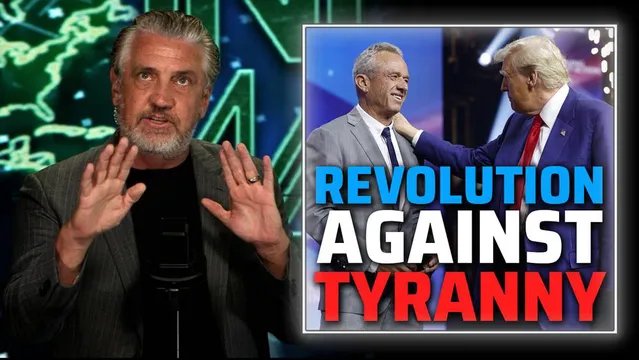
Robert Kennedy Jr. and Donald Trump are planning to reform pharmaceutical advertising by requiring companies to list every known side effect in their commercials. Because a total ban on direct-to-consumer marketing might violate the First Amendment, this strategy forces commercials to become "two minutes of horror," making the products difficult to sell. This legal maneuver is intended to break the financial bond between Big Pharma and corporate news agencies.
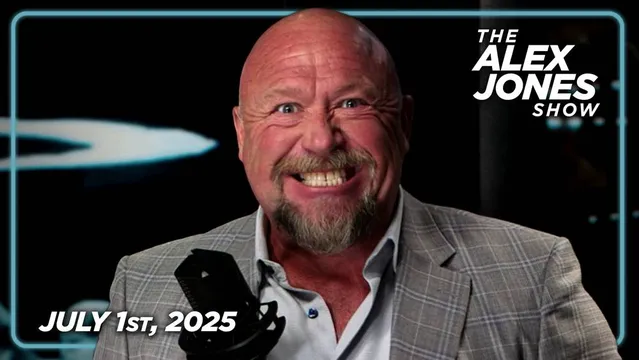
The host delivers a satirical critique of Athletic Greens, a former advertiser that dropped the show due to its association with Alex Jones. Using hyperbolic humor, the host jokingly claims the product caused a friend's death and mocks the "lifestyle" branding of green powder supplements. The segment is framed as a comedic response to being canceled by corporate sponsors.

Modern advertising campaigns, such as those by Gillette, are criticized for portraying traditional male behaviors like grilling or socializing as "toxic masculinity." This cultural shift is linked to the introduction of graphic sexual content in elementary school libraries and the promotion of "Drag Queen Storytime." Critics argue these initiatives are part of a broader effort to destabilize traditional family structures and gender roles.

RFK Jr. highlights that the U.S. spends as much on mitochondrial disorders like diabetes as it does on the military budget. Jones argues that the removal of iodine from salt in the 1980s contributed to a national health crisis. He accuses the media of "malpractice" for failing to report on these issues due to heavy advertising revenue from pharmaceutical and food companies.

Studies show that exercise is often more effective than SSRIs for treating depression, yet pharmaceutical companies continue to push drugs with significant side effects. The U.S. is one of only two nations that allow direct-to-consumer pharmaceutical advertising, which critics say misleads the public. Many antidepressants carry a black-box warning for increased suicide risk in young people.

The host explains the funding model of network radio to younger viewers, clarifying why the show features national and local advertisements. Despite being removed from major internet platforms, the InfoWars radio network has grown to over 450 stations. The segment concludes with a lyrical reference to "The Devil Went Down to Georgia" to describe the fight against the New World Order.

The discussion focuses on the need to remove pharmaceutical industry influence from government regulatory agencies like the FDA and CDC. Bigtree proposes ending direct-to-consumer drug advertising on television to break the financial hold pharma has over news networks. He argues that this "regulatory capture" is the primary reason for the lack of honest reporting on vaccine safety and public health.

A proposal to end direct-to-consumer pharmaceutical marketing aims to break the industry's influence over news networks, where drug companies provide 50% to 70% of advertising revenue. This financial dependency is blamed for the lack of critical coverage regarding COVID-19 vaccine safety and transmission. Removing this funding source is presented as the only way to return news agencies to serving the public interest rather than corporate sponsors.

Independent health advocates, including Jillian Michaels and the contributors to the Senate health roundtable, report significant de-platforming and algorithmic suppression on major social media sites. This censorship is attributed to the $7 billion annual advertising spend by Big Pharma, which gives the industry leverage over media platforms. The "Moses Revolution" is described as a movement where consumers shift their spending to independent broadcasters, supplement makers, and publishers.

Jay Dyer explains how Walter Lippmann and the Tavistock Institute perfected the technique of engineering public opinion through fake polls and advertising. He argues that the system uses these tools to create a "monoculture" where the population's thoughts are homogenized. Dyer notes that these techniques were pioneered in the West to control the "free" population.

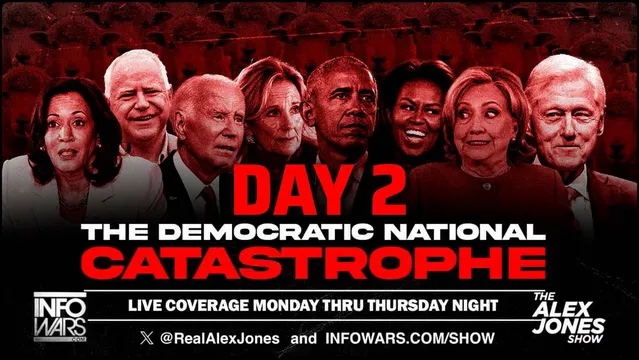
Day Two LIVE Coverage Of The DNC In Chicago With Alex Jones & Crew: The Obamas Crawl Out Of The Shadows To Speak
2:50:09 - 2:55:03

Day Two LIVE Coverage Of The DNC In Chicago With Alex Jones & Crew: The Obamas Crawl Out Of The Shadows To Speak

Michelle Obama "Do Something" Call to Action, Voter Registration

Michelle Obama concludes her speech by urging the audience to "do something" and ensure everyone they know is registered to vote. Alex Jones analyzes her delivery through the lens of advertising and subconscious manipulation, noting her "slick" ability to win emotional arguments. He warns that the Democrats are mobilizing their base to "cram" ballots into boxes, emphasizing the need for a massive Republican turnout.

Day Two LIVE Coverage Of The DNC In Chicago With Alex Jones & Crew: The Obamas Crawl Out Of The Shadows To Speak
2:55:08 - 2:58:07

Day Two LIVE Coverage Of The DNC In Chicago With Alex Jones & Crew: The Obamas Crawl Out Of The Shadows To Speak

Advertising Psychology in Politics, Apple "Think Different" Comparison

Chase Geiser explains how the Democratic party uses advertising principles to win subconscious emotional battles before addressing rational concerns. He compares their strategy to Steve Jobs's "I'm a Mac" campaign, which sold culture and beauty rather than technical specifications. Geiser argues that Republicans fail by focusing on "stats" and "facts" while the Democrats successfully "hijack the subconscious" of the "NPC" population.

The discussion explores how 80% of corporate advertising targets women using behavioral psychology to foster a sense of victimhood and dependence on the state. By isolating women from traditional community structures, globalist entities like BlackRock and major media networks can more easily manipulate their political leanings. The host shares an anecdote of being confronted by an angry liberal woman in a restaurant to illustrate the deep-seated hostility created by this indoctrination.

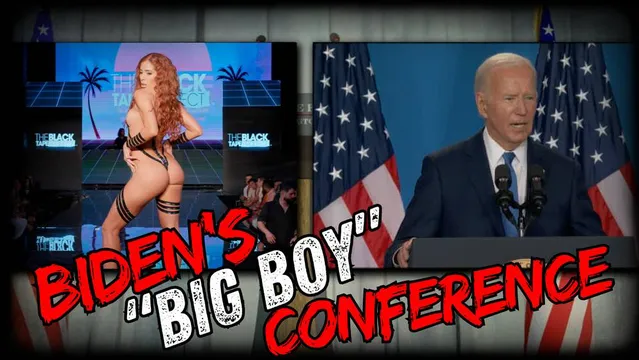
Watch Biden Gaffe and Mumble Through His Big Boy Press Conference Alex Jones and Owen Shroyer React Live
28:56 - 35:02

Watch Biden Gaffe and Mumble Through His Big Boy Press Conference Alex Jones and Owen Shroyer React Live

Swimsuit Segment, Trans Culture and Media Critique

To fill the time during the press conference delay, the broadcast displays a series of swimsuit photos and vintage advertisements. The commentary critiques "progressive trans culture" and modern advertising trends, such as those from Gillette. References are made to Michelle Obama and historical figures like Pete Rose and Jim Jones.

Watch Biden Gaffe and Mumble Through His Big Boy Press Conference Alex Jones and Owen Shroyer React Live
46:19 - 51:00

Watch Biden Gaffe and Mumble Through His Big Boy Press Conference Alex Jones and Owen Shroyer React Live

New York Times Coverage, Gross Profit and Corporate Structure

The hosts criticize reporting from The New York Times and Reuters regarding the valuation of InfoWars' assets. Jones explains the difference between gross revenue and net profit, stating that supplement sales fund the news operation and staff salaries. He reflects on the company's peak in 2016 when millions were spent on advertising before being de-platformed by Google.

Tucker Carlson, Russell Brand Join Alex Jones! MUST-WATCH Potential LAST Broadcast! — FULL SHOW 6/14/24
1:48:15 - 1:53:31

Tucker Carlson, Russell Brand Join Alex Jones! MUST-WATCH Potential LAST Broadcast! — FULL SHOW 6/14/24

Tucker Carlson Network, Subscription Model, Seeing America

Tucker Carlson explains his move to a subscription-based model at TuckerCarlson.com to avoid advertiser-driven censorship. He discusses his upcoming tour as a way to connect with the "physical reality" of America and its people outside of digital screens. Carlson emphasizes that his mission is to tell the truth without being dependent on corporate interests like Toyota or CNN.

Is This Infowars' Last Broadcast? Patriots Rally Behind Alex Jones and Crew
29:11 - 37:20

Is This Infowars' Last Broadcast? Patriots Rally Behind Alex Jones and Crew

John Harmon Phone Interview, Advertising Sabotage and Streisand Effect

Alex Jones conducts a live phone interview with long-time employee John Harmon, the affiliate relations director. Harmon alleges that Pat McGill called the show's information "dangerous" and expressed a desire to see Jones in jail. They discuss claims that McGill sabotaged $12 million in annual advertising revenue and later filed reports with the court claiming he "discovered" secret ads that had actually been previously disclosed in legal filings.

Elon Musk's acquisition of Twitter is framed as a civic mission rather than a financial one, as reinstating controversial figures like Fuentes and Alex Jones invites advertiser boycotts. Fuentes warns that the current free speech environment is tenuous and depends heavily on the survival of X and Rumble. He suggests that 2024 represents a final opportunity to secure a legal remedy for Big Tech censorship.

UK Government Confirms Covid Shots Have Killed MILLIONS As Secret CCP Military Bases Discovered Across US
1:10:52 - 1:13:39

UK Government Confirms Covid Shots Have Killed MILLIONS As Secret CCP Military Bases Discovered Across US

Corporate Media Control, Uncensorable Information

WikiLeaks is described as a pioneer in using the internet's architecture to bypass corporate media gatekeepers and advertisers. By operating without traditional revenue streams, the organization remained immune to the pressures that typically silence investigative journalists. This independence made Assange a primary target for the military-industrial complex, which fears any form of genuine transparency.

Alex Jones Interviews Elon Musk About Humanity's Ultimate Destiny
1:15:58 - 1:19:05

Alex Jones Interviews Elon Musk About Humanity's Ultimate Destiny

X Acquisition Impact, Patrick Bet-David, Advertiser Pressure

Patrick Bet-David applauds the acquisition of X, noting that without it, the state of free speech in America would be significantly worse. The decision to prioritize freedom over advertiser pressure is highlighted as a courageous use of resources. Bet-David mentions his plans to bring more content to X while continuing to grow his large audience on YouTube.