Topic: Minsk Accords

8 chapters across the catalog

George Soros is shown in a vintage clip admitting to setting up a foundation in Ukraine before its independence from Russia. Mel K argues that international NGOs have been positioning Ukraine as a Western hub for decades. She mentions a "Stop Soros" movement in Hungary and suggests that a meeting between Trump and Putin in Budapest, hosted by Viktor Orban, could lead to a peace deal.
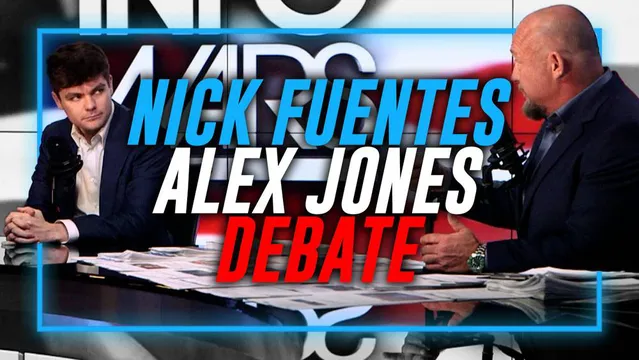
EXCLUSIVE: Alex Jones & Nick Fuentes Debate / Discuss All The Top Issues & Stories Happening In The World Today
1:45:22 - 1:47:51

EXCLUSIVE: Alex Jones & Nick Fuentes Debate / Discuss All The Top Issues & Stories Happening In The World Today

Russian Territorial Claims and the Minsk Accords

Fuentes argues that Ukraine is historically Russian territory and its existence as a state is an "anomaly" created by Lenin and Stalin. They discuss Vladimir Putin's goals of securing a buffer zone and control over Crimea. They express concern that if Trump cannot force a lasting peace deal, it will make the administration look weak on the global stage.

Archbishop Gabriel explains that Russians and Ukrainians share the same "baptismal font" and historical origins dating back over a thousand years to Kiev. He criticizes the forced conscription of women and individuals with Down syndrome in Ukraine, calling the ongoing war a tragedy for the Slavic people. The Archbishop notes that Russia's hand was forced after eight years of the Minsk Accords being ignored by Western powers.

The discussion explores Russian military doctrine, which permits the use of tactical nuclear weapons if the state's existence is threatened. Jack Posobiec explains that Russia has spent 30 years building a parallel economy via BRICS to withstand Western sanctions. He argues that NATO's refusal to abide by the Minsk Accords and its continued push into Eurasia forced Russia into a defensive invasion of Ukraine.

RFK Jr. discusses Victoria Nuland's admission regarding "biological research facilities" in Ukraine. He criticizes the US for provoking the conflict and failing to support the Minsk Accords, which he believes could have prevented the war. Kennedy highlights that Zelensky originally ran on a peace platform before being pressured by hostile forces like the Azov Battalion.

Scott Ritter characterizes the conflict in Ukraine as a "war of choice" waged by the United States to achieve the strategic defeat of Russia. He explains that the failure to honor the Minsk Accords and the expansion of NATO created an existential threat for Russia. Ritter warns that the suspension of arms control treaties puts the world on a path toward an inevitable nuclear exchange where "everyone dies."

US False Flag Attack on Nord Stream Pipeline Rocks World!  – THURSDAY FULL SHOW 02/09/23
1:19:49 - 1:26:06

US False Flag Attack on Nord Stream Pipeline Rocks World! – THURSDAY FULL SHOW 02/09/23

Zelensky European Tour, Minsk Accords, and Soft Power Decline

President Zelensky's recent visits to the UK and Brussels are described as a "rock star" tour where he was feted by European leaders as a modern-day Winston Churchill. However, critics point to admissions by Angela Merkel and Zelensky himself that the Minsk II Accords were merely a delay tactic to arm Ukraine. This perceived lack of diplomatic good faith is cited as a reason for the decline of American soft power in Africa, Asia, and South America.

INVASION: One of the Largest Migrant Caravans of ALL TIME Nears US as Americans Suffer Under Biden Economy – FULL SHOW 6/8/22
1:44:45 - 1:51:03

INVASION: One of the Largest Migrant Caravans of ALL TIME Nears US as Americans Suffer Under Biden Economy – FULL SHOW 6/8/22

Ceasefire Negotiations, Minsk Accords, Economic Sanctions Failure

The discussion turns to the possibility of a ceasefire in Ukraine, with Christoforou noting that Russia no longer trusts Western diplomats due to the failure of the Minsk Accords. He argues that Western sanctions have failed to collapse the Russian economy or the ruble, instead causing self-inflicted damage to the U.S. and European economies through high energy prices and inflation.