Topic: Federal Debt

51 chapters across the catalog

A montage reviews the history of Alex Jones and InfoWars, highlighting his opposition to the New World Order and the Federal Reserve. It covers his de-platforming by major tech companies in 2018 and the subsequent legal battles that resulted in a $1.5 billion judgment against him. The segment frames Jones as the "most banned man in America" whose voice cannot be silenced despite the forced sale of his assets.
The speaker claims to have predicted the current bull market in silver and gold 26 months ago. He suggests the US government may revalue its gold holdings to address the national debt. Despite being a public figure, he expresses frustration with friends and family who call him for private investment advice that mirrors his on-air statements.

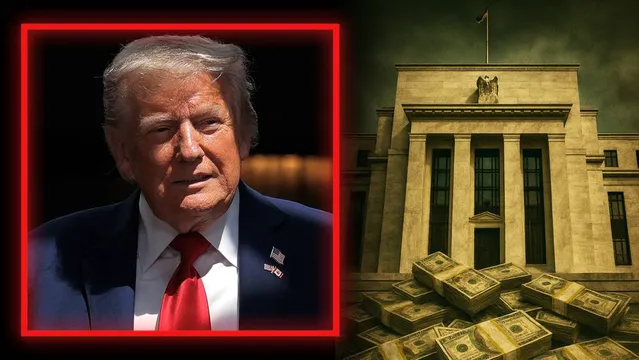
The Federal Reserve is reportedly considering revaluing its gold holdings from the arbitrary $42 an ounce to current market rates. This move could create trillions of dollars in assets to back the currency and significantly reduce the national deficit. Such a revaluation would align with long-standing goals of the Mises Institute and proponents of "hard money" like Ron Paul.

Economist Martin Armstrong warns of a 100% chance of nuclear war based on current geopolitical trajectories and computer models. The global economy faces a massive $40 trillion debt bubble in the U.S. and a potential collapse of "zombie companies." Simultaneously, the Trump administration is praised for cutting federal funding to states that allow transgender surgeries for children and for ramping up border deportations.

The combination of high oil prices from war and high interest rates from the Federal Reserve is creating a "stagflation" trap for the U.S. economy. Dr. Kirk Elliott argues that the Fed is intentionally sabotaging Trump's recovery by refusing to lower rates while the government is forced to print money to cover deficits. This cycle is expected to accelerate the transition to a debtor nation under international hegemonic control.

International organizations including the IMF, G7, and global bankers are accused of coordinating to ensure Donald Trump's economic policies fail. The strategy involves pushing the United States into an inflationary spiral through war-induced oil spikes and subsequent interest rate hikes. To cover resulting deficits, the government would be forced to print more money, leading to a worst-case economic scenario.

Elon Musk has endorsed a constitutional amendment that would make members of Congress ineligible for re-election if the national deficit exceeds 3% of GDP. The US is described as being in the final stages of "debt slavery," with $12 trillion added to the debt in just four years. Historical data is presented showing the massive loss of purchasing power since the creation of the Federal Reserve.

The Trump administration has reportedly achieved a 92% reduction in the growth of the national debt, a feat described as an unprecedented economic accomplishment. The discussion explores how the political class uses money printing and inflation as an indirect tax to fund the military-industrial complex and bureaucratic waste. Critics argue that government spending remains too high and should be further curtailed to protect the purchasing power of American citizens.

Elliott and Jones discuss how the Federal Reserve has devalued the dollar by 98% since 1913 through "incremental tyranny." They compare the rise of AI to the Skynet scenario from the Terminator films, where machines turn against their creators. Elliott argues that the globalists use slow, administrative changes to pass through the "shield" of public awareness, posing as saviors while destroying the economy.

A 71-year-old caller reports significant physical improvements after three months of using Irish Sea Moss, including skin tightening and weight loss. The discussion touches on the scale of the $32 trillion national debt, noting that one trillion dollar bills end-to-end would reach the sun. A final segment explores the "Wizard of Oz" as a metaphor for the Federal Reserve and the "Earth goo" properties of Shilajit.

Elon Musk argues that the United States has transitioned from a democracy to a bureaucracy where unelected officials hold more power than representatives. With a $2 trillion deficit and interest payments exceeding the defense budget, Musk claims federal spending cuts are essential for national solvency. DOGE investigations have uncovered individuals in the bureaucracy with net worths in the tens of millions despite modest official salaries.

The Trump administration and Elon Musk are reportedly considering adding a Bitcoin strategic reserve to the US balance sheet. Other assets being considered for monetization include federal lands, which could be opened for oil and gas drilling. These moves are part of a broader plan to leverage America's real assets to exit bankruptcy and stabilize the currency.

The Government Accountability Office (GAO) is criticized for employing 3,000 people while remaining largely inactive, contrasted with the small, efficient DOGE team. National debt interest payments now exceed the military budget, creating a forced requirement for radical cost reductions. Allegations are made that BlackRock and other entities are attempting to crash the stock market to blame the current administration's tariffs.

The conversation turns to the "Cantillon effect," where newly printed money benefits large entities and government insiders first, while devaluing the savings of the working class. Bush supports the idea of a strategic Bitcoin reserve, arguing that it forces the state to adapt to the reality of scarcity rather than manipulating interest rates and debt. He claims that whoever controls the creation of money truly controls the political system.

Dr. Kirk Elliott joined the program to discuss how Treasury Secretary Janet Yellen is using "extraordinary measures" regarding the debt ceiling to sabotage the new administration. The Federal Reserve is accused of planning to blame Trump for inflation that occurred during the Biden term. The strategy involves withholding payments to federal retirement accounts to create a political crisis.

Treasury Secretary Janet Yellen has notified Congress that the US will reach its borrowing limit in mid-January 2025, requiring "extraordinary measures" to avoid a default. This fiscal crisis will be a top priority for the incoming Trump administration. The recurring difficulty in passing a balanced budget is cited as evidence that the current monetary system is an unsustainable "Ponzi scheme" nearing collapse.

A caller criticizes Fed Chair Jerome Powell for only recently admitting the $36 trillion national debt is "unsustainable." Geiser argues that the U.S. fractional reserve banking system is an inherent Ponzi scheme that would collapse if the debt were ever fully paid off. He challenges listeners to ask AI models like ChatGPT about the implications of balancing the budget, asserting that the current system is a "bomb" that must be carefully dismantled.

The private Federal Reserve system is criticized for its power to print money and cause generational theft through inflation. Jay Dyer credits Ron Paul and the Tea Party movement for bringing the "Audit the Fed" conversation into the mainstream. He argues that centralized control of currency is a temptation that inevitably leads to economic corruption.

Dyer compares the narcissism of cult leaders like Osho to the pathology of modern government officials. He identifies the usury-based Federal Reserve debt system as the central control mechanism of the "global cult." Bitcoin and gold are discussed as potential exits from this financial "black hole" that seeks total control over human labor and assets.

Analysis of the 2024 federal budget revealed that 83% of all U.S. revenue is consumed by mandatory spending on entitlements and interest on the $34 trillion national debt. Dr. Kirk Elliott pointed out that once interest payments reach $1 trillion annually, there is virtually no revenue left for infrastructure, defense, or education. This fiscal trajectory was compared to the fall of the Roman Empire, which collapsed under the weight of similar entitlement burdens.