Topic: Stagflation

62 chapters across the catalog

Robert Barnes warns that using tactical nukes in the Gulf would cause a global catastrophe, as radioactive air would render the region's water and oil supplies unusable. Such an event would lead to permanent stagflation, hundreds of millions of refugees, and the destruction of desalination plants. There is also a warning that globalists may use the chaos to release a new virus and implement population rationing.
A debate is emerging among conservatives regarding the use of the Insurrection Act to quell domestic unrest, with some libertarians like Mike Adams expressing concern over a potential police state. Proponents argue that the move is necessary to stop a premeditated globalist takeover and protect federal agents from mob violence. Economically, the country faces a choice between globalist-designed stagflation and Trump’s expansionary inflation model.

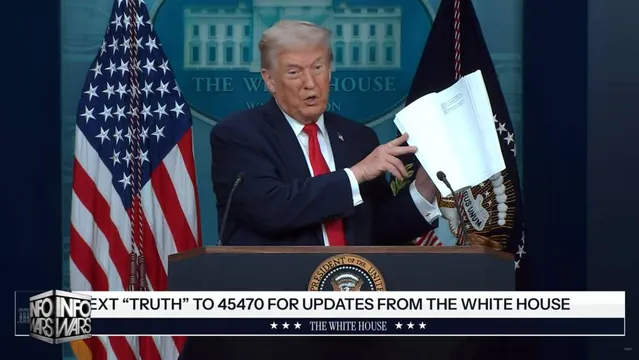
President Trump is presenting a comprehensive list of "365 wins in 365 days," highlighting the end of Biden-era stagflation and the return of high economic growth. The administration claims that fourth-quarter GDP is on track to exceed 5%, driven by a surge in domestic manufacturing and business investment. Trump also criticized the Federal Reserve for raising interest rates in response to economic success, calling it an attempt to "kill success."

Donald Trump discusses the reversal of "Biden stagflation" and claims the United States is currently experiencing a massive economic boom. He cites a fourth-quarter GDP growth track of over 5% and criticizes the Federal Reserve for raising interest rates during periods of success. Trump highlights the construction of the world's largest factories within American borders.

The U.S. economy is described as entering a period of stagflation, characterized by a recessed economy and rising prices. Dr. Kirk Elliott discusses the move away from a technocratic, centralized world toward decentralized assets like Bitcoin, Solana, and physical gold. Independence and self-sufficiency are framed as the most valuable future assets.

Donald Trump claims that the United States has secured $18 trillion in investment commitments within ten months, contrasting it with one trillion during the Biden administration. While Trump highlights new factory construction and foreign investment from companies like Toyota, critics argue that average Americans are still struggling with high inflation and car prices. The current economic state is described as the "best house in a bad neighborhood," with warnings that voters are growing impatient for immediate relief.

Gold prices have reportedly broken out above $4,000 in the futures market, while Bitcoin and the S&P 500 show signs of volatility. The host warns of "stagflation"—a combination of depression and inflation—caused by a manipulated economic system. He maintains that gold, silver, and Bitcoin are the most reliable hedges against the current inflationary spiral.

Donald Trump is pressuring the Federal Reserve to implement a two-to-three point interest rate cut to stimulate economic growth and combat stagflation. The President is reportedly considering executive orders to cap interest rates at 10% to prevent what is described as financial "rape" of the American consumer. The administration advocates for a laissez-faire plan over the "Great Reset" austerity measures proposed by globalist entities.

The potential closure of the Strait of Hormuz by Iranian forces or Houthi rebels threatens to trigger global stagflation and supercharge oil prices. Historical precedents, such as the 2020 killing of Qasem Soleimani, suggest that back-channel communications often attempt to prevent full-scale war through staged retaliatory strikes. Current naval movements indicate international shipping is already diverting from the Persian Gulf.

Federal Reserve Chairman Jerome Powell's decision to keep interest rates steady is viewed as a move that could devastate the Trump economy. If war with Iran drives oil to $300 a barrel, the resulting stagflation would force the Fed to raise rates, potentially triggering a depression. This economic scenario is framed as a "no-win" situation designed by globalists to sabotage Trump's recovery plan.

The combination of high oil prices from war and high interest rates from the Federal Reserve is creating a "stagflation" trap for the U.S. economy. Dr. Kirk Elliott argues that the Fed is intentionally sabotaging Trump's recovery by refusing to lower rates while the government is forced to print money to cover deficits. This cycle is expected to accelerate the transition to a debtor nation under international hegemonic control.

A military conflict with Iran is projected to drive oil prices to $130 per barrel and double the Consumer Price Index inflation to 5%. This scenario creates stagflation, where rising energy costs force the Federal Reserve to raise interest rates despite a sluggish economy. Such a policy shift would likely trigger a recession and undermine Donald Trump's economic recovery plans.

Federal Reserve Chairman Jerome Powell is accused of engineering economic collapse by refusing to cut interest rates. The Federal Reserve is described as a private entity with globalist shareholders that has devalued the US dollar by 98% since 1913. Critics argue that Powell is attempting to blame Trump for fiscal instability that was actually caused by central bank policies.

Dr. Kirk Elliott predicts a 15-20% short-term collapse of the US dollar due to the Federal Reserve's refusal to lower interest rates. He accuses Jerome Powell of "economic terrorism" and warns of impending stagflation, while suggesting that gold and silver remain the best hedges against currency devaluation.

The speaker calls for the nationalization of the Federal Reserve, specifically targeting the New York Fed and its alleged European banking shareholders. Trump is encouraged to repeal the Federal Reserve Act if the board refuses to lower interest rates. The current economic state is described as "stagflation," a combination of a stagnant economy and high inflation caused by central bank policies.

Dr. Elliott criticizes the Federal Reserve's decision to lower interest rates while the money supply continues to expand, calling it a "catastrophic" policy failure. He argues that the US is in a state of stagflation, where prices rise while the economy slows down. Elliott warns that the Fed's actions will lead to even higher inflation, for which the incoming Trump administration will likely be unfairly blamed.

Jones replays a clip of Donald Trump promising to cap credit card interest rates at 10% to provide relief to working families. Dr. Elliott analyzes this as a massive economic stimulus that will help Americans pay down debt. They also discuss the termination of "Green New Deal" spending in favor of traditional infrastructure like roads and bridges.

Economist Michael Gibson explains how globalists are allegedly turning down the velocity of money to create depressionary conditions and stagflation. Gibson argues that the infrastructure for a digital slave system is being put in place under the guise of instantaneous transactions. He warns that once this system is fully established, markets will be crashed and the money supply will be cut off, leading to civil unrest and bank seizures.