Topic: Drug Cartels

50 chapters across the catalog

Massive terror attacks are reported across Mexico, specifically in Puerto Vallarta and Guadalajara, targeting airports, hospitals, and roads. The violence follows a joint U.S.-Mexico operation that resulted in the death of a major cartel leader, El Mencho. Drug cartels are reportedly holding the country hostage and threatening to expand attacks into the United States.

The cartel violence in Mexico has escalated to include the use of rocket launchers against military helicopters. Reports indicate that the Mexican government is considering cutting power to certain regions to stifle cartel communications. Dan Dix describes the Guadalajara airport as a scene of panic, with passengers forced onto tarmacs as the military and cartels engage in a countrywide showdown.

The discussion compares the situation in Mexico to El Salvador's crackdown on gangs under President Nayib Bukele. Mexico's cartels are described as a shadow government that carries out acts of terrorism to force political and economic concessions. The segment asserts that the current conflict is a full-scale war between the state and criminal organizations that have achieved military parity.

Victor Avila, Assistant Director of the Office of the Drug Czar, discusses a White House roundtable with tech companies like Meta and TikTok to combat online drug sales. Avila highlights the danger of fentanyl-laced counterfeit pills killing American teenagers and notes that overdose deaths have trended downward to 72,000. The Trump administration is reportedly pressuring social media platforms to take more responsibility for illegal drug distribution.

A recent law enforcement surge in Alaska resulted in the seizure of enough fentanyl to kill 2.3 million people. Victor Avila reveals that the Sinaloa Cartel has been exploiting rural Alaska's reliance on small aircraft and the postal system to deliver drugs directly to residents' doors. The administration is now expanding monitoring of private mail carriers like UPS to close these smuggling routes.

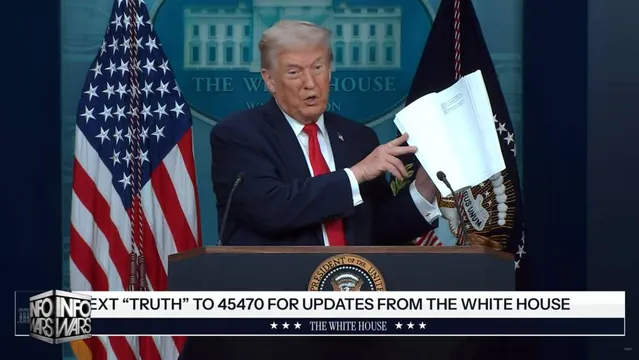
Donald Trump designates MS-13 and Mexican drug cartels as foreign terrorist organizations, reporting a 97% decrease in drugs entering by water. He addresses the tragedy of a young woman killed by an illegal alien, noting her father was a supporter. Trump defends ICE agents, acknowledging they deal with "rough people" and may occasionally make mistakes.

Communist motorcycle militias in Caracas are reportedly conducting door-to-door executions of citizens who support the overthrow of the Maduro dictatorship. While Donald Trump seeks free elections rather than direct regime change, concerns remain that South America could become a quagmire if China maintains control over the region's oil reserves. Jones references a breakdown by Glenn Beck regarding the strategic importance of preventing a Chinese power projection into the Western Hemisphere.

Pete Hegseth faces criticism from mainstream media outlets like the Washington Post regarding the legality of military orders to strike drug boats. Hegseth defends these actions as necessary to defeat narco-terrorists and protect the American people from poisoning by cartels. The narrative suggests that the Pentagon is bypassing traditional media by bringing in independent reporters to provide a more accurate account of military affairs.

Donald Trump claims that 300,000 people die annually from fentanyl, a figure significantly higher than official hospital estimates. The New York Times has warned that labeling drug cartels as terrorist groups could collapse the U.S. stock market by cutting off illicit cash flows. Jones defends his support for aggressive action against cartels, clarifying that he opposes offensive wars but supports securing the hemisphere against "missiles" of lethal drugs.

The CIA is accused of working against the Trump administration by proposing a "cartel camouflage" plan to replace Nicolas Maduro with a vetted intelligence chief rather than supporting a true uprising. Reports from the New York Times suggest that labeling cartels as terrorist organizations could harm the U.S. stock market due to the volume of drug money laundered through major banks. The administration's efforts to cut off these illicit financial flows are meeting resistance from established intelligence and financial institutions.

DHS Secretary Kristi Noem and General Michael Flynn have reportedly confirmed that drug cartels have placed bounties on the heads of Border Patrol and ICE agents. Intelligence from the NSA suggests these bounties range from $2,000 for kidnappings to $10,000 for killings. The safety of federal agents involved in narcotics interdiction is highlighted as a primary concern amid these threats.

Donald Trump is reportedly preparing for military action against Venezuela to combat the flow of fentanyl and target drug cartels. Alex Jones compares this potential conflict to Thomas Jefferson's war against the Barbary pirates, arguing that the invasion is a necessary defense of American national security. Jones warns that the CIA may attempt to sabotage the mission and advises Trump to rely on the Defense Intelligence Agency instead.

The discussion shifts to the justification for military action against South American drug cartels. While claiming to be generally anti-war, the speakers argue that the fentanyl crisis and illegal immigration constitute a literal invasion of the United States. They reference Thomas Jefferson's response to the Barbary pirates as a historical precedent for using the Marines to protect American citizens and trade from foreign threats.

Donald Trump has reportedly declared a "full-scale war" on drug cartels, with the U.S. military preparing to seize ports and airfields in Venezuela. Alex Jones explains that the strategy involves baiting the Venezuelan military into shooting back, providing a pretext for a total takeover. Jones predicts the imminent fall of Nicolas Maduro's regime, citing the country's economic collapse and starvation.

Donald Trump announced the designation of major drug cartels and gangs like MS-13 as foreign terrorist organizations. He threatened to "blow out of existence" any smugglers bringing fentanyl into the U.S. and highlighted military actions against the Maduro regime. Additionally, he urged the UK to reopen the North Sea oil fields to restore its economic power and stop relying on expensive green energy.