Topic: Bureaucracy

76 chapters across the catalog

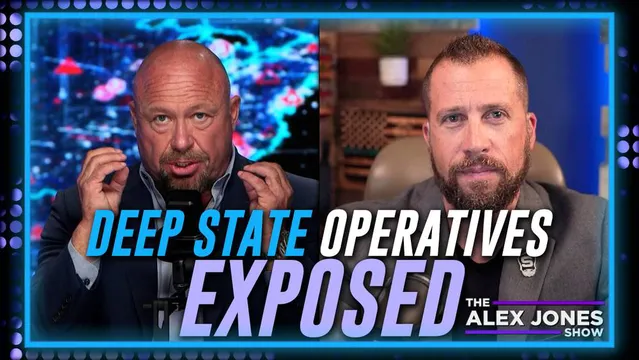
The lack of meritocracy in the federal government is discussed, with the hosts noting that many high-level positions are filled by "best friends" or lawyers rather than qualified experts. They reference a conversation with former FBI agent Kyle Serafin about how government agencies often follow outdated directives on "autopilot" long after the original crisis has passed. This "soup of rules" leads to a system that is disconnected from the needs of the American public.

The Johnny Cash song "One Piece at a Time" is used as a metaphor for how globalists incrementally strip away national sovereignty. The speaker compares the formation of the EU to the proposed North American Union, where power is transferred to unelected commissions through trade and security blocks. Clips of EU commissioners are played to support claims of election interference.

The New American magazine's "Global Power Grab" issue provides a comprehensive map of UN agencies and their operations worldwide. William F. Jasper explains that the Socialist International and the Progressive International, both described as Marxist-Leninist organizations, dominate the voting blocks within the UN. He asserts that these groups use U.S. money to bribe officials and establish bureaucratic control over third-world economies.

Former Trump spokesperson Liz Harrington argues that the FBI cannot be reformed and must be dismantled entirely due to inherent corruption. Kyle Serafin suggests that instead of firing disloyal managers, the administration should utilize "Hoover-style" reassignments to remote locations like Guam to encourage resignations. The segment warns that if the administration does not secure "scalps" and show results by the midterms, the remainder of the term will be wasted.

Referencing Gustav Le Bon's crowd theory, the segment describes how newsrooms act like "starlings in a murmuration," attacking targets in unison once a narrative is deemed "cool." The media is accused of ignoring the influence of 10,000 nonprofits while labeling anyone who questions election legitimacy as an "election denier." This process is framed as the weakening of the Republic by consultants and committees.

FULL INTERVIEW: Russell Brand Takes It To Another Level and Goes Insane with Alex Jones
35:09 - 36:54

FULL INTERVIEW: Russell Brand Takes It To Another Level and Goes Insane with Alex Jones

C.S. Lewis and the Demonic Bureaucracy

Russell Brand cites C.S. Lewis’s *The Screwtape Letters* to describe modern tyranny as a "demonic bureaucracy" that comes cloaked in the language of safety and neoliberalism. They discuss Lewis's views on extraterrestrials, with Jones arguing that modern UFO encounters are actually interdimensional incidents involving demonic entities rather than physical aliens in "tinfoil saucers."

The European Parliament reportedly rejected a request for a moment of silence for Charlie Kirk, citing bureaucratic rules about plenary sessions. Critics point out that the same body granted a moment of silence for George Floyd, whom Smith describes as a "career criminal." The segment argues that the EU's refusal to symbolically condemn political violence reveals their true ideological bias.

Robert F. Kennedy Jr. is described as a "Jedi Master" of 3D chess for his ability to navigate and dismantle federal bureaucracies while maintaining a working relationship with Donald Trump. Kennedy's strategy involves using the momentum of his opponents against them to enact sweeping changes at HHS. His efforts are framed as a long-awaited "revenge of the Kennedys" against the deep state entities that allegedly targeted his father and uncle.

A caller from Texas describes being the target of a game warden sting operation after attempting to sell tree frog tadpoles for $5 on Facebook Marketplace. The caller claims the game warden admitted that AI tracked the listing and dispatched an officer to his home. The segment highlights the absurdity of government bureaucracy interfering in small, harmless transactions between neighbors on private property.

The segment explores the difficulties Dan Bongino faces as Deputy Director of the FBI, suggesting he is being "run" by the senior bureaucracy. Serafin argues that there are 13 levels of bureaucracy between the leadership and the actual case agents, making real reform nearly impossible. He attributes the lack of aggressive action to "peer pressure" and the "pride" of being part of an elite institution.

Dan Bongino's role as Deputy Director of the FBI involves navigating thirteen levels of bureaucracy between his office and active case agents. Critics suggest that the institutional structure of the FBI is designed to overwhelm leadership with high-priority briefings to prevent systemic reform. There is a concern that leadership is being "run" by the agency they are meant to oversee.

The FBI typically recruits individuals in the 75th to 90th percentile of IQ, favoring competent workers who are unlikely to challenge the system. High-IQ individuals with strong critical thinking skills are often viewed as "mistakes" by the bureau because they tend to identify institutional lies. Whistleblowers describe the training at Quantico as a process of establishing bureaucratic loyalty over constitutional adherence.

While low-level federal employees are facing indictments for theft of USAID funds, critics are calling for action against high-level "kingpins" in the Department of Energy and EPA. Specific allegations include perjury by the former Secretary of Energy regarding stock investments and the suspicious transfer of $93 billion during the presidential transition period. The lack of high-level accountability remains a point of contention for the current administration.

The CIA and federal bureaucracy are accused of mutinous behavior by ignoring presidential orders, such as Donald Trump's directive to withdraw troops from Syria. Kiriakou suggests that the agency lacks a formal ethics framework, leading to a culture where officers are rewarded for ignoring human rights. He recommends that Trump follow Ronald Reagan's example by appointing loyalists to key deputy positions to ensure the bureaucracy follows executive orders.

Elon Musk discusses the "banal evil of bureaucracy," citing millions of government software licenses paid for but never used. He references Milton Friedman's theory on the inefficiency of spending other people's money on strangers. Musk explains that the DOGE team faces the challenge of "complaint minimization" when trying to cut unnecessary expenses.

Jen Psaki's recent comments regarding Joe Biden's mental state are scrutinized, specifically her claim that she did not notice a decline until the June debate. The commentary labels Psaki a liar, asserting that Biden's cognitive issues have been evident for years and were documented by Hunter Biden's private communications. The segment argues that Biden's condition has allowed a corrupt bureaucracy of intelligence operatives and staffers to run the executive branch.

Donald Trump signed an order to gut several federal agencies, including the parent organization of Voice of America. The order aims to eliminate "non-statutory components" of agencies like the Smithsonian Institution and the U.S. Interagency Council on Homelessness. Trump's allies argue that Voice of America has become a tool for "woke" propaganda and is no longer salvageable in its current form.

UFO sightings are documented throughout history in ancient paintings and religious texts, yet modern "mad scientists" have kept the technology in a black box since World War II. Dr. Greer criticizes the U.S. for being "fat, lazy, and slow" in addressing this issue, warning that the country will become a technological backwater if it continues to dither. He emphasizes that the current secrecy is not about national security, but about maintaining illegal corporate and bureaucratic power.