Topic: Management

89 chapters across the catalog

Benjamin recalls being "canceled" for a joke about Caitlyn Jenner years before Dave Chappelle made similar comments. He and Jones discuss "perception management," where media outlets like CNN claim that figures like Tucker Carlson or Alex Jones have no audience despite their massive digital reach. They conclude that the establishment's primary tool is gaslighting the public into believing their "spells" of irrelevance.
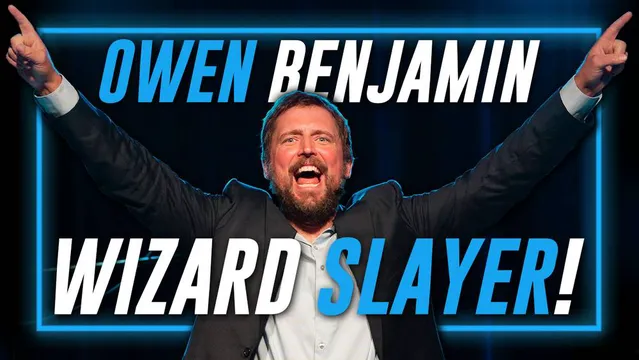
The host and Owen Benjamin discuss "perception management," where legacy media outlets like CNN claim independent creators have no audience despite having significantly lower ratings themselves. They emphasize that the "wizards" rely on the public believing their spells. Both speakers reflect on their careers, noting that their knowledge comes from "trial and error" and "the school of hard knocks," echoing Socrates' sentiment that the beginning of wisdom is knowing that you know nothing.

Leon Black, co-founder of Apollo Global Management, is identified as a key figure in the Epstein files with over 8,000 mentions. Black reportedly paid Epstein $160 million for "tax mitigation strategies" that helped him avoid $1.3 billion in taxes. The hosts point out that Apollo manages hundreds of billions in public pension and retirement funds, making Black's character and associations a matter of significant public interest.

Billionaire Leon Black paid $62.5 million to the U.S. Virgin Islands to settle claims related to Jeffrey Epstein, following previous payments of $158 million for "services." Newly released documents include allegations of violent rape against Black. Additionally, emails between Woody Allen and Epstein surfaced, featuring disturbing jokes about cannibalism and Epstein paying for Allen's children's private school tuition.

Journalist J. Edward Epstein reportedly contacted Ghislaine Maxwell in 2003 regarding a "secret" shadow commission on 9/11. Jason Burmas explains that J. Edward Epstein's role was narrative management, similar to Noam Chomsky. The segment highlights missing ledger lines in Jeffrey Epstein's financial records from the 9/11 period, suggesting a manual excision of data related to the attacks.

Billionaire Leon Black, founder of Apollo Global Management, faces disturbing allegations in the Epstein files involving the abuse of minors. Harrison Smith notes that Black's company owns Life Touch, the dominant school photography firm in the U.S., raising concerns about data privacy and facial recognition of children. Smith argues that schools should cancel contracts with companies tied to Epstein associates as a matter of safety.

Kyle Serafin outlines a strategic plan to reform the FBI by bypassing civil service protections to remove corrupt management. He suggests promoting high-performing GS-14 squad leaders to replace senior executives who are politically compromised. Serafin argues that the Trump administration missed an early opportunity to "turn the hourglass" on the Hoover building's leadership, allowing figures like Shannon Perry to remain in power.

The Office of Transition Initiatives (OTI) within USAID is identified as the "beating heart" of influence operations that have migrated from foreign targets to the U.S. home front. Voters are described as a "variable" to be managed by the shadow government rather than the source of authority. This system allegedly uses "democracy research" to find ways to circumvent inconvenient election results.

A color revolution is described as a method for replacing elected authority with "managed political authority" run by activists. The George Floyd protests are cited as an example of an orchestrated effort that led to a massive spike in plywood sales overnight. Listeners are encouraged to be "missionaries for truth" by asking their neighbors who they think really "runs the show" in Washington.

Adams announces the launch of "Brighteon.ai," a free, non-commercial AI engine trained on 24 years of Infowars content and other suppressed information. He claims that Artificial General Intelligence (AGI) already exists in labs and will soon replace millions of white-collar jobs, including 80% of customer service roles and 60% of middle management tasks within the next 18 months.

Wikipedia editing has become a significant business, with PR firms charging thousands of dollars to manipulate articles for their clients. Sanger explains that many powerful people and organizations use "squatters" to ensure their pages reflect a specific narrative. This has turned the platform into a battleground where paymasters and special interest groups control the "unvarnished truth" presented to the public.

Kyle Serafin criticizes Kash Patel and Dan Bongino for "cheerleading" for the FBI rather than gutting the senior management. He argues that the only way to reform the bureau is through "exile or execution" of the administrative state, meaning the permanent removal of all senior officials. Patel is accused of being played by "sycophantic vipers" within the bureau who are protecting their own interests.

Ted Nugent criticizes the management of grizzly bears in Montana, claiming the species has been overpopulated since 1969 despite federal protections. He argues that state game agencies across the U.S. are infested with "animal rights" activists who seek to undermine the rugged individualist lifestyle of hunters and ranchers. Nugent encourages citizens to engage with local school boards and law enforcement to reclaim control from bureaucratic "thugs."

A plan to reform the FBI involves removing all Senior Executive Service (SES) members promoted under the previous administration and replacing them with frontline agents. Serafin describes the FBI as a "factory of no's" where institutional knowledge is used to obstruct change and protect existing fiefdoms. The current system of internal investigations is criticized for creating a loop that wears out whistleblowers.

A proposal is made to purge the FBI's Senior Executive Service (SES) and move all Biden-era managers to remote territories like Puerto Rico. Kyle Serafin argues that the current management class has no recent investigative experience and merely "ping-pongs" between headquarters and field offices. He advocates for a merit-based system where the most effective frontline agents are drafted into leadership roles to break the legacy of J. Edgar Hoover's bureaucracy.

Representative Thomas Massie has investigated Mark Carney and Brookfield Asset Management for using ESG standards as a form of financial extortion against fossil fuel companies. Carney is described as a highly connected globalist networker, more influential than many world leaders due to his ties to the UN and the IMF. His goal is reportedly to rally international opposition against Donald Trump's nationalist policies.

Alex Jones and Daniel Lis critique recent Blue Origin flight footage, claiming the spacecraft appears "flimsy and plastic." They suggest the event was a "parade of artifice" designed for perception management rather than actual space exploration. Jones compares the high-definition footage to staged political town halls, questioning the authenticity of the entire commercial space industry.

Wigington traces the origins of modern geoengineering to the period immediately following World War II, starting with operations over the polar regions. He explains that the featureless, opaque skies often seen today are not natural but a result of long-term solar radiation management. He references Operation Popeye as a key historical milestone where weather was successfully used as a weapon of war.

The FBI's "Integrated Program Management" (IPM) system is criticized for creating financial incentives for senior managers to manufacture certain types of cases. This system reportedly leads to a focus on "white supremacist" investigations that often turn out to be race hoaxes, such as the Jussie Smollett incident or the Bubba Wallace garage door pull investigation. Critics argue these quotas distort crime statistics to fit political narratives.