Topic: Syria

249 chapters across the catalog

Donald Trump invited Prime Minister Bibi Netanyahu and President Joseph Ayoun to the White House for the first meaningful talks since 1983. Despite the ceasefire announcement, the Pentagon is reportedly approaching automakers like GM and Ford to shift capacity toward weapons production. Meanwhile, the last American-occupied base in Syria has been handed over to the Syrian army as US forces reorganize for potential large-scale conflict in the Middle East.

The ongoing conflict in Lebanon is framed as a 40-year war rather than a recent reaction to Gaza. Reference is made to the "spider web" symbolism used by Hezbollah to mock Israeli military weakness following previous retreats. Analysts suggest the current ceasefire is a strategic pause to allow the United States and Israel to reallocate resources for a more significant second round of conflict involving Iran.

A major civilian bridge in Central Asia was destroyed by a Tomahawk missile, an act the Pentagon reportedly admitted was based on bad intelligence despite neocon denials. Donald Trump claims the Iranian people "love the bombs" because they want to be free, comparing the situation to the overthrow of Syria. The president also alleges that 45,000 protesters have been killed by the Iranian regime and expresses frustration that weapons sent to the populace were stolen by intermediaries.

Robert Barnes calls for the president to "divorce his Israeli lobby mistress" and return to "America First" principles. He notes that Israel is currently bombing schools and universities in Lebanon and Syria while targeting anyone who seeks a negotiated peace. A clip is played of an Israeli official "giggling" about the potential use of neutron bombs, which Barnes describes as "madmen" gambling with the world.

Benjamin Netanyahu is accused of doubling the funding for Hamas to destabilize Palestinian leadership and provide an excuse for military action. This policy has reportedly led to the persecution of Christians in the region, with some Christian groups in Lebanon now siding with Hezbollah for protection. Critics argue that the pursuit of a "Greater Israel" is endangering global stability and alienating traditional allies.

Donald Trump is criticized for his treatment of war veteran Joe Kent and for allegedly lying about an Iranian elementary school bombing. The discussion highlights Trump's personal attacks on Kent's marriage and his failure to acknowledge Kent's military service. Reference is made to Bernie Sanders calling Trump a pathological liar, a sentiment echoed in relation to the administration's handling of war intelligence.

Anthony Rubin recounts his experiences in the Darien Gap, where he observed suspicious groups of men from Syria and the Middle East heading toward the US border. The discussion addresses the long-term implications of birthright citizenship for the children of illegal immigrants, arguing it creates a population with no loyalty to American constitutional values. The host warns that replacing local police and military with foreigners will lead to state-sponsored tyranny.

Ivan Reikland defends the character and expertise of Joe Kent, noting his eleven combat tours and six Bronze Stars. He highlights Kent's personal tragedy, the loss of his wife in Syria, as evidence of his commitment to the country. Reikland contrasts Kent’s direct experience fighting Iranian proxies with the lack of military background among current advisors like Marco Rubio.

The ongoing conflict in Ukraine has effectively spiraled into the current Iran war through shared drone technology and shifting alliances involving Russia and Syria. A historical parallel is drawn to the beginning of the Ukraine war when flooding revealed World War II-era remains, serving as a symbolic warning against repeating past mistakes. Current policy decisions to deploy thousands of additional U.S. troops to the Middle East are criticized as a path toward permanent entanglement and unnecessary sacrifice.

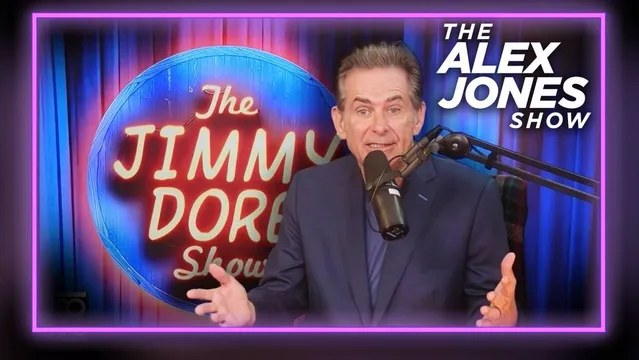
MUST-SEE: Alex Jones Interviews Jimmy Dore In EXPLOSIVE Must-Watch End Of The World Interview!
31:34 - 33:13

MUST-SEE: Alex Jones Interviews Jimmy Dore In EXPLOSIVE Must-Watch End Of The World Interview!

Trump Administration Control of Federal Agencies

Questions are raised about whether Donald Trump truly controls the CIA, FBI, and NSA or if he is being managed by them. Historical examples, such as John Bolton providing fake intelligence briefings during Trump's first term, are used to illustrate the "deep state" resistance to presidential orders. The failure to release the full Epstein files is presented as evidence of this lack of control.

Tulsi Gabbard and the Chairman of the Joint Chiefs reportedly provided a report to the White House estimating a 90% failure rate for the current Iran strategy. While Iran's navy and oil refineries have been severely damaged, experts argue that continued military pressure only strengthens the position of hardliners within the regime. Comparisons are drawn to the long-term failures in Afghanistan and Syria, suggesting that removing the current leadership may lead to even more radical factions taking power.

Donald Trump's Truth Social posts threatening the "complete destruction" of Iran are criticized as signs of megalomania. Intelligence reports suggest such threats only unify the Iranian population and strengthen the resolve of extremist Shiites. While the Deep State reportedly enjoys the chaos, advisors like Eric Prince continue to urge a declaration of victory and a military pullback.

Donald Trump’s relationship with military leadership is characterized by a lack of personal interest in combat culture, despite his military academy background. He previously expressed betrayal by generals he once considered patriots, discovering that many were aligned with globalist interests. The current conflict in Iran highlights a disconnect between the President and his advisors at CENTCOM and the Joint Chiefs.