Topic: Economic Growth

5 chapters across the catalog

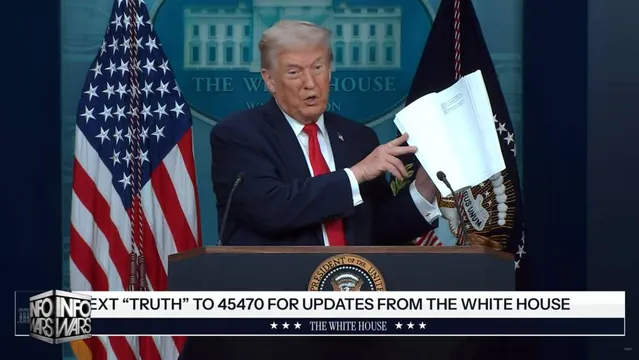
Donald Trump discusses the reversal of "Biden stagflation" and claims the United States is currently experiencing a massive economic boom. He cites a fourth-quarter GDP growth track of over 5% and criticizes the Federal Reserve for raising interest rates during periods of success. Trump highlights the construction of the world's largest factories within American borders.
The "Great Reset" is described as a globalist plan to induce a permanent depression and implement universal basic income. Trump’s strategy to counter this involves massive economic growth to "blast our way out" of the national debt. Economists warn that if the economy stalls or enters a deep recession, the current level of federal spending will become completely unsustainable.

Newsweek reports on the Chinese military gaining control in the Pacific and Caribbean while the London Telegraph suggests trust in the U.S. dollar may be breaking. Billionaire Ray Dalio expressed concerns about a significant economic downturn, and homebuyers are reportedly waiting for a market crash similar to 2008. Despite these indicators, a forecast is made that the U.S. will see explosive growth as companies return to domestic production.

Edward Dowd concludes by stating that Trump's goal is to re-establish the private sector as the engine of growth, moving away from public sector deficit spending. He promotes his website, FinanceTechnologies.com, and his economic reports. Dowd notes that while the transition will be painful for financial assets, it is necessary for the long-term health of "Main Street."

Economist Kirk Elliott and Alex Jones discuss Trump's plan to trigger a global renaissance through laissez-faire economics and the abolition of the IRS. Jones compares his role in the movement to a lead chef or conductor, asserting that his ideology has surpassed corporate media in reach. The discussion touches on Megyn Kelly's YouTube viewership as evidence of the decline of traditional networks.