Topic: Resources

71 chapters across the catalog

Trump's interest in Greenland is framed as a modern application of Manifest Destiny and the Monroe Doctrine to secure oil, gas, and rare minerals. The speaker argues that if the US doesn't take these resources, China will. Trump's personal work ethic is highlighted, with claims that he works 20 hours a day and expects the same from his confidants.
Matt Bracken discusses his recent Substack article on the "Global Resource War," arguing that silver is becoming as critical as oil. Silver is essential for solar panels, data centers, and missile systems, and there are no known high-tech substitutes. As easy-to-reach silver deposits are depleted, the world is entering a period of intense competition for the remaining ore.

Donald Trump has published a national security plan aimed at partnering with Russia to access vast natural resources and push out Chinese influence in Africa. Russian Foreign Minister Sergey Lavrov stated that while Eurocrats seek to prolong the conflict, Russia is ready to provide legal guarantees for a collective settlement. Lavrov accused Western Europe of using ceasefires only to rearm the Zelensky regime for future aggression.

A geopolitical plan is described where Israel and Turkey intend to partition Syria to seize control of regional oil and gas trillions. This operation allegedly involves using proxy groups like ISIS and Al-Qaeda to destabilize the region before invading to "restore order." The displacement of millions of refugees to the West is framed as a secondary goal to create domestic instability in Europe and the U.S.

Victor Bout argues that Europe has a historical pattern of attacking Russia every 80 to 100 years to seize its abundant natural resources. He claims the current Ukrainian regime follows the ideology of Bandera, which was more aggressive than the Gestapo. Bout asserts that the Russian people are consolidated and will dismantle the "Satanic cults" currently imposing their will on the European population.

The host discusses predictive programming in media, such as the Audi "Green Police" Super Bowl ad, which depicted arrests for excessive resource use. He argues that globalists view themselves as "Ubermensch" with a right to rule over the masses while restricting their access to meat, water, and energy. The segment contrasts the "warrior" archetype that protects humanity with the "scientist" archetype that seeks to destroy it through eugenics.

The drive for war in Ukraine is described as a neocon strategy to dismantle Russia and seize its $75 trillion in natural resources. Martin Armstrong claims that Boris Johnson personally intervened to stop a peace deal between Russia and Ukraine in early 2022. The historical desire of European powers to conquer Russia is linked to its vast gold reserves and resource wealth.

The opposition to the current administration is described as a "Satanic" force of mad scientists and globalists who are more dangerous than historical tyrants. The discussion criticizes the push for green energy and electric vehicles, arguing that these technologies increase carbon footprints and dependency on a fragile power grid. The segment emphasizes that 90% of the population is currently unself-sufficient and vulnerable to systemic collapse.

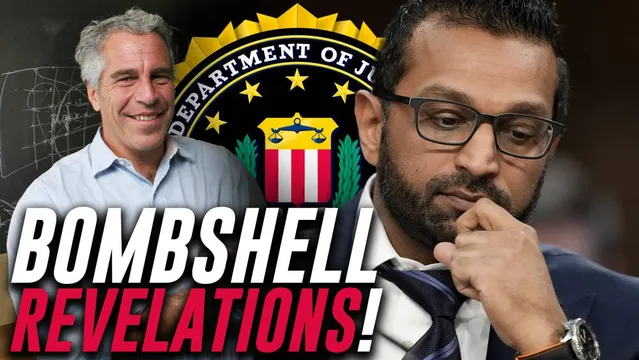
The FBI's dual role as a law enforcement agency and an intelligence service is analyzed, with comparisons made to the CIA's domestic operations. Through the "National Resource Group," FBI agents can reportedly be trained as CIA case officers to run human sources within the United States. Unlike criminal cases that end in prosecution, intelligence cases are described as "circles" that spin off infinite sub-investigations to monitor subjects indefinitely without probable cause.

Serafin describes the FBI as a "crappy hammer" trying to function as an intelligence agency. He explains how the CIA operates domestically through the "National Resource Group" and how FBI agents can be trained as CIA case officers. This crossover allows for "spying" and information gathering on Americans without traditional criminal predicates.

Michael Yon suggests that the conflict in Gaza is tied to strategic energy resources off the coast and the potential construction of the "Ben Gurion Canal" as an alternative to the Suez. He links this to the broader "Indo-European corridor" intended to connect India to Europe through Israel. Yon argues that global conflicts are almost always driven by the pursuit of "routes and resources."

The European Union, led by Ursula von der Leyen, is accused of having a plan to "carve up" Russia to seize its $75 trillion in natural resources. Emmanuel Macron is described as "Napoleon 2.0," leading a dying and unelected EU commission that seeks to dominate the globe. This strategy is framed as a desperate attempt to prop up the failing European economy.

Calin Georgescu delivers a direct message to President Donald Trump, urging him to protect the spirit of democracy globally to ensure the survival of the American spirit. He also extends an invitation to Elon Musk to invest in Romania's natural resources and creative workforce. Georgescu frames his movement as a "zero-budget" campaign fueled by the people's desire for freedom from the "new communist regime" of the EU.

Vladimir Putin expressed openness to a peace summit with Donald Trump in Saudi Arabia, noting a shift toward a friendly atmosphere in recent negotiations. The discussion highlights Russia's vast natural resources as a key component of a potential "Renaissance" rather than conquest. Trump's transactional approach aims to end the "fake dialectic struggle" and focus on global business and industrial exploration.

Donald Trump reported that the U.S. Treasury Secretary traveled to Ukraine to have a document signed regarding resource loans, but Zelensky was reportedly "sleeping" and unavailable. Trump intends to secure half of Ukraine's rare earth minerals to ensure the U.S. economy does not collapse from the war's costs. The segment calls for patriots to support the administration as globalist "rat creatures" are forced into retreat.

The host recounts a childhood story about his grandmother warning him that an "Anti-Christ system" would eventually cut off all resources, including water. This personal anecdote is used to frame current globalist efforts to control food and energy as the fulfillment of biblical prophecy. The segment transitions into a critique of modern cultural figures who use guilt and pride to bully the "normal" majority.

Donald Trump's interest in Greenland and his renaming of the "Gulf of Mexico" to the "Gulf of America" are seen as a modern revival of Manifest Destiny. These moves are interpreted as strategic efforts to secure resources and military positioning for the United States. The discussion suggests that these regions would be more prosperous under American policies of freedom and reduced regulation.

The shift toward intangible assets like Bitcoin could potentially reduce the frequency of wars fought over physical resources like oil and gold. Jay Dyer suggests that because Bitcoin cannot be seized through traditional military conquest, it may lead to a more peaceful international order. He notes that much of modern warfare is currently driven by the need to maintain the petrodollar system.

Ursula von der Leyen is shown in a clip discussing the 50-year anniversary of the Club of Rome's "Limits to Growth" report. Jones argues that this report serves as a battle plan for cutting off energy and resources to achieve depopulation. He claims that elites have access to life extension technologies while the general public is subjected to biological experiments like the COVID-19 vaccine, which he labels a "beta test."