Topic: Ptsd

55 chapters across the catalog

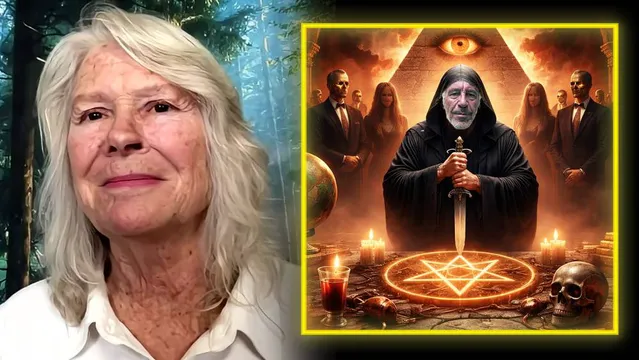
Kathy O'Brien credits Mark Phillips, a high-level intelligence insider, with rescuing her from a planned ritual sacrifice at Bohemian Grove. She explains that Phillips did not "deprogram" her but rather taught her how to heal from within using methods detailed in "PTSD: Time to Heal." O'Brien asserts that reclaiming free thought and joy is possible for anyone who has suffered from media manipulation or trauma.

The shooting of Renee Good by an ICE agent is analyzed as a consequence of a lack of accountability among social justice protesters. Good was reportedly shot after hitting an agent with her vehicle during a protest against the deportation of Somali nationals. The event is framed as a "play stupid games, win stupid prizes" scenario where protesters fail to realize the lethal risks of attacking federal officers.

Psychologists report an increase in "Donald Trump Anxiety Disorder" among patients who view the president as a sign of the end of the world. Alex Jones characterizes this as "Trump Derangement Syndrome," claiming it renders political parties unrecognizable and leads to a veneer of civilization evaporating. The segment features clips of public confrontations and hysterical reactions to Trump's political presence, framing it as a clinical manifestation of post-traumatic stress.

The arson attack on a Michigan LDS church is described as a pre-planned event involving large quantities of gasoline to bypass the building's cement construction. Joel Skousen dismisses PTSD as the sole cause, suggesting "extreme satanic influence" drove the perpetrator to commit mass murder and arson. The segment highlights a growing trend of "possessed" individuals carrying out violent attacks on religious institutions.

Kathy O'Brien shares her journey of healing from extreme trauma through "birthright information" and reclaiming her own mind. She promotes her workbook, "PTSD: Time to Heal," as a resource for other survivors to find strength from within rather than relying on external institutions. O'Brien emphasizes that the capacity for healing is innate and that "free thought" is the ultimate defense against mind control.

Ultra Methylene Blue is described as a cellular game-changer that cleans out mitochondria and provides immediate energy. A personal anecdote details the intense physical sensation of "electricity" and euphoria experienced after taking a full dose, comparing the initial onset to medicinal-grade ecstasy. The product is marketed as a powerful tool for mental clarity and focus, though users are cautioned to consult physicians if taking other medications.

Michael Savage discusses his lifelong dedication to botanical research and healing, highlighting his PhD work on the medicinal plants of Fiji. He reflects on the subconscious and ancestral drives that lead individuals to their callings, citing his own childhood trauma regarding a sick brother as a primary motivator. The segment concludes with a tribute to Savage's influence on the modern herbal health revolution.

Kyle Serafin shares a personal anecdote about the 2018 Hawaii missile false alarm and its lasting psychological impact on his family. The event, caused by a technician's error, led many to believe a nuclear strike from North Korea was imminent. This story illustrates how media-driven fear and political tension can create real-world trauma, even when the perceived threat is non-existent.

Investigative journalists describe the traumatic experience of witnessing children being loaded into vans and buses at the southern border. Before the recent crackdown, the border was described as an "anthill" of smuggling activity occurring at all hours. These firsthand accounts highlight the emotional toll on those documenting the crisis and the alleged complicity of some corrupt elements within the Border Patrol.

O'Brien characterizes the COVID-19 pandemic as a "Mind Control Master's Virus" designed to depersonalize the population through masking. She compares the use of masks in the pandemic to their use in MK Ultra to inhibit oxygen and muffle voices, citing Michael Jackson as a victim of this tactic. She encourages people to use her "PTSD Time to Heal" workbook to recover from the psychological damage of the last few years.

Kathy O'Brien explains a "brain hack" involving writing memories by hand to open neuron pathways and process trauma logically. She claims that the removal of cursive and handwriting from schools was a deliberate move to facilitate indoctrination by preventing critical analysis. O'Brien asserts that this method allows survivors to deprogram themselves without external psychiatric intervention.

Kathy O'Brien promotes her healing workbook and emphasizes the importance of grounding through nature, sunlight, and proper nutrition. She characterizes the transgender movement as a depopulation agenda designed to stop human procreation. O'Brien advises people to disconnect from electronic devices and reconnect with the earth to combat the sensory deprivation tactics used during the pandemic.

Callers from Connecticut and California discuss the difficulty of bringing down a worldwide elite network and the long-term effects of childhood abuse. A professional who writes sentencing reports for sex offenders notes that early trauma often manifests as uncontrollable impulses later in life. Kathy O'Brien recommends her PTSD healing information as a way to understand and mitigate these psychological effects.

A discussion on the possibility of "Confederates" infiltrating the security details of figures like George Soros. Comstock shares his experience with PTSD, clarifying that his trauma stems from seeing women and children suffer rather than a fear of death. He also quotes Elon Musk regarding the difference between a purchased education and genuine street smarts.

The conversation addresses the use of tribalism and "divide and conquer" tactics by elites to keep humanity enslaved. Billy Carson explains the concept of "epigenetic memory," where trauma is passed down through generations, and the need for "post-traumatic growth." They link the idea of being "born again" to the scientific process of reprogramming negative genetic data and achieving a higher state of consciousness.

Joe Biggs describes the psychological toll of his release, noting that he received a sentence commutation rather than a full pardon and remains on probation. He admits to suffering from severe PTSD, finding it difficult to be around crowds or trust the system. Biggs shares that he spent his first night at a party hiding in a bedroom because he did not yet feel "normal" or truly free.

Joe Biggs shares the "awesome" experience of reuniting with his daughter and taking her to school for the first time in years. He notes that his daughter also suffers from PTSD, constantly fearing that he will not return when he leaves for simple errands. Alex Jones relates this to his own experience of being separated from his daughter during legal battles, calling it the most "scarring" thing in his life.

Jones recounts a graphic personal experience visiting Skid Row in Los Angeles, describing the area as a "hell on earth" filled with diseased and drugged individuals. He details encounters with "trans creatures" and emaciated addicts, comparing the scene to a Nazi death camp or a zombie movie. He alleges that NGOs manage these populations as a "weapon system" to facilitate drug trafficking and welfare fraud.

The broadcast explores the concept of "desperateness" as a source of strength, citing Lord Nishogi's teachings on the way of the samurai. This mindset is applied to the current fight against the globalists, who are attempting to roll out a new pandemic. The host describes a feeling of "nasty" determination and "PTSD" from previous lockdowns, fueling a commitment to stop the enemy's new operations.