Topic: Opec

33 chapters across the catalog

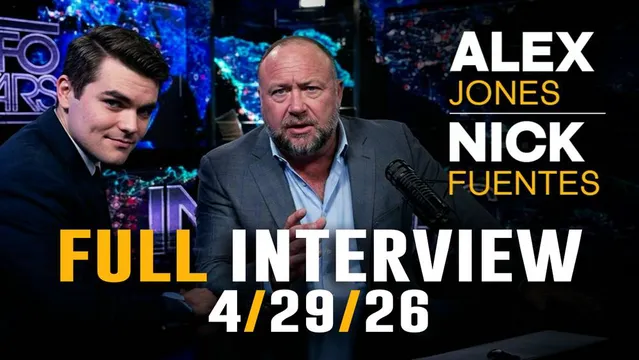
FULL NEW ALEX JONES INTERVIEW WITH NICK FUENTES — 4/29/26
44:15 - 46:32

FULL NEW ALEX JONES INTERVIEW WITH NICK FUENTES — 4/29/26

Global Fertilizer Crisis, Petrodollar Decline

The closure of the Strait of Hormuz has blocked 30% of global fertilizer shipments, guaranteeing a famine for millions next year. Geopolitical shifts, such as the UAE leaving OPEC, are cited as major blows to the Western alliance and the long-term stability of the petrodollar. These economic pressures are viewed as a derailment of the American recovery and a win for globalist banking entities like BlackRock.

The United Arab Emirates has reportedly left OPEC due to the ongoing war, delivering a major blow to Western economic interests. Simultaneously, pollster Mark Mitchell reports that Donald Trump's approval ratings have reached an all-time low as constituents express frustration over inflation and foreign conflicts. Figures like JD Vance have expressed concern regarding the administration's current policy trajectory and its impact on the upcoming midterm elections.

The United Arab Emirates announced its exit from OPEC and OPEC+, a move that weakens Saudi Arabia's control over global oil prices. This decision is interpreted as a strategic attempt by the UAE to avoid being targeted by Iran, given the presence of U.S. military bases in the region. Analysts suggest that Iran's parallel command structure makes it difficult to destabilize through leadership decapitation alone.

The UAE's departure from OPEC is viewed as a reaction to being framed by Israel and the U.S. during military operations against Iran. Viktor Bout explains that Iran's retaliation against the UAE was more severe than its actions against Israel because the UAE provided logistical support for the strikes. This shift indicates a breakdown in the traditional oil cartels and a realignment of regional powers seeking to avoid Iranian aggression.

The climate change movement is characterized as a tool for NGOs to acquire federal funding and a strategy to weaken the dollar by decreasing oil demand. National security agencies like the CIA are accused of using Machiavellian tactics, including allowing events like 9/11, to justify protecting the dollar's status in the Middle East. The entire system is framed as a struggle to maintain imperialist dominance through a fake fiat currency.

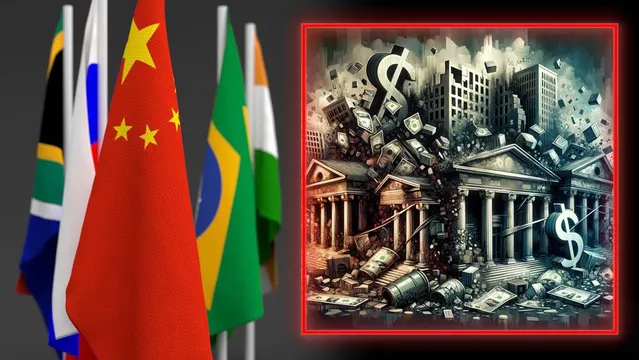
Vladimir Putin announced that Russia will add silver to its strategic reserves, a move designed to back the ruble and undermine Western banks. This strategy targets US banks like JPMorgan and Bank of America, which hold massive short positions in silver. The upcoming BRICS summit on October 22nd is expected to finalize a new common currency unit backed 40% by gold, further accelerating global de-dollarization.

The U.S. foreign policy is described as maintaining "reverse vassal states" where American taxpayers pay to protect foreign nations while their own manufacturing base is offshored. Royce White argues that modern American foreign policy is merely an extension of the British Empire's business model, leading to border crises and economic decline at home. He calls for a return to national sovereignty and an end to globalist entanglements.

The U.S. dollar's status as the world's reserve currency is under threat as BRICS nations, including Saudi Arabia and Iran, move toward non-dollar oil settlements. Dr. Kirk Elliott explains that central banks in China, Russia, and India are aggressively accumulating gold as a backstop for new digital currencies. He highlights silver's dual role as a flight-to-quality asset and a critical industrial metal for the defense industry.

The discussion focuses on the collapse of the petrodollar and the rise of the BRICS trade block. Elliott explains how U.S. economic sanctions have backfired, driving Russia, China, and India to create a gold-backed alternative to the dollar. He predicts that BRICS nations, representing over 50% of the world's population, will eventually place economic sanctions on the United States.

Economic disruption is predicted to lead to social unrest and potential martial law scenarios ahead of the 2024 US election. As the US depletes its strategic oil reserves, it becomes increasingly dependent on OPEC and BRICS nations for energy. The global power shift from West to East is expected to culminate in the BRICS nations controlling global trade benchmarks through gold and oil.

Federal Government Warns Massive Bank Failures Looming As More Nations Join The BRICS— Special Report
1:30:46 - 1:33:52

Federal Government Warns Massive Bank Failures Looming As More Nations Join The BRICS— Special Report

Federal Reserve Inflation Strategy, OPEC Production

The Federal Reserve is accused of maintaining high inflation intentionally to devalue the currency and pay off the $34.8 trillion national debt with "cheaper" dollars. Simultaneously, the BRICS-aligned members of OPEC are limiting oil production in response to Western economic sanctions. This combination of domestic monetary policy and foreign production cuts is driving energy prices higher for US consumers.

The Biden administration faces criticism for draining the Strategic Petroleum Reserve to lower gas prices ahead of the 2022 midterms. Despite claims of buying back oil at a profit, prices have risen to nearly $90 a barrel while OPEC announces further supply cuts. This energy policy is characterized as a political stunt that has left the United States vulnerable to rising fuel costs.

Saudi Arabia announces a cut in oil production by one million barrels per day, leading to concerns over rising US gas prices. Jones blames the Biden administration for sabotaging US energy independence by canceling the Keystone Pipeline and offshore drilling permits. He alleges that major oil companies fund the environmental movement to maintain monopolies and eliminate small competitors.

Feds Crack Down on Whistleblowers Raising Alarm on Weaponization of FBI, DOJ - FULL SHOW 5/19/23
2:44:03 - 2:48:18

Feds Crack Down on Whistleblowers Raising Alarm on Weaponization of FBI, DOJ - FULL SHOW 5/19/23

The 1970s Oil Crisis and Middle Class Taxation

Jay Dyer claims the 1970s OPEC oil crisis was an engineered event designed by Henry Kissinger to establish the petrodollar and implement "engineered austerity." He cites the Club of Rome and Maurice Strong as key figures who promoted the idea that humans are "pollution." Dyer argues that current high taxation on the middle class is a deliberate CFR and Bilderberg plan to prevent upward mobility.

John Perez and Mike Adams discuss "Operation Sandman," a hypothesized simultaneous global rejection of the U.S. dollar led by Saudi Arabia and OPEC. They predict that oil could reach $150 per barrel, leading to $8 gasoline in the U.S. and a total collapse of the domestic trucking and supply chain. The segment frames the recent OPEC production cuts as a direct geopolitical attack on the Biden administration's "suicide cult" economic policies.

In his final segment, Mannarino identifies physical silver as the most undervalued asset on the planet. He explains the geopolitical struggle for the world reserve currency, noting that if the petrodollar is dethroned by the BRICS nations, it will lead to global war. He emphasizes that the U.S. military's primary role has been to defend OPEC oil to maintain dollar dominance, a system now under direct threat from China and Russia.

Stein and Shroyer discuss the timing of the Trump indictment, suggesting it was used to distract from the Nashville school shooting and the "mental health issues" within the transgender movement. They also touch on the loss of US allies, noting that OPEC is in control of energy and Japan is moving away from the US dollar. They characterize the current moment as the "self-destruction of a once great nation."

The segment covers President Biden's decision to drain the Strategic Petroleum Reserve to lower gas prices before the midterms. Shroyer points out that Democrats previously blocked refilling the reserve when oil was $24 a barrel under Trump. He also mentions Justice Amy Coney Barrett's refusal to block Biden's student debt forgiveness program, characterizing it as a vote-buying scheme.