

Topic: Fermi Paradox

3 chapters across the catalog

Elon Musk discusses the necessity of becoming a multi-planet species to ensure the survival of consciousness against extinction events like asteroid strikes or thermonuclear war. He aims to establish a self-sustaining city on Mars, passing the "Fermi Paradox" filter that often destroys single-planet civilizations. Musk estimates that un-crewed Starships could be sent to Mars within approximately two years during the next planetary alignment.

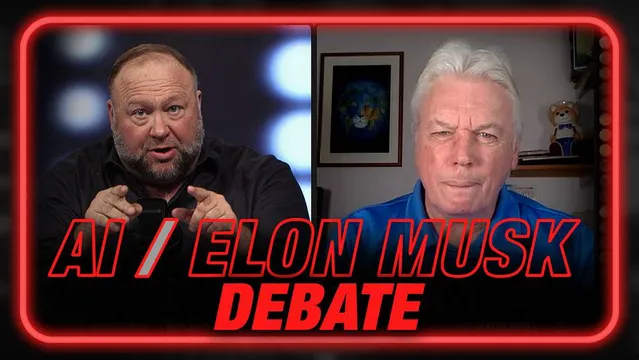
Brian Krassenstein joins the discussion, agreeing that the probability of living in a simulation is high given the trajectory of rendering technology. The Fermi Paradox is addressed, with the suggestion that "aliens" are not seen because they exist outside the visible light spectrum or have moved "inward" into virtual environments. David Icke notes that the speed of light may represent the processing limit of our current simulation.

Watch The Full AI / Elon Musk Debate With Alex Jones and David Icke
1:05:06 - 1:10:14

Watch The Full AI / Elon Musk Debate With Alex Jones and David Icke

Brian Krasenstein, Fermi Paradox, Simulation Processing Speed

Brian Krasenstein joins the discussion to agree with the likelihood of living in a simulation, citing the rapid advancement of AI and VR technology. David Icke connects this to the Fermi Paradox, suggesting that we don't see aliens because they exist outside the "visible light" frequency of our simulation. Icke also references a Scientific American article suggesting the speed of light is the processing speed of our simulated reality.