Topic: Energy Prices

85 chapters across the catalog

A Navy veteran suggests the Iran war is a distraction from other issues, such as the Epstein files. The host argues that the conflict is "COVID 2.0," a globalist trap designed to trigger mass inflation through rising energy and fertilizer costs. He predicts the Federal Reserve will raise interest rates, effectively bankrupting the U.S. and destroying Donald Trump's economic recovery plan.

Russia has announced a six-month ban on gas and oil exports starting April 1st, a move expected to cause a massive surge in global energy prices. This announcement contradicts President Trump's claims that the war situation is under control. The Kremlin blames Trump's "gross errors" for the escalation, as the global economy faces the prospect of $150-per-barrel oil.

The conflict in the Middle East threatens the Trump administration's economic recovery plan by driving oil prices toward $100 per barrel. High energy costs serve as a baseline for inflation, disproportionately affecting lower-income populations and potentially derailing interest rate strategies. The segment suggests globalist forces are using the war to sabotage domestic economic gains, similar to the impact of COVID-19.

US Energy Secretary Chris Wright criticizes the "Net Zero" movement as the greatest malinvestment in human history. He points to Germany's energy crisis as a warning, noting that massive investments in renewables have led to higher prices and lower production. Wright advocates for continued use of oil and natural gas.

One year into the current term, the Trump administration receives high marks for border security, economic growth, and cultural victories, including the capping of credit card interest and residential electric bills. Significant policy shifts include the removal of fluoride from water supplies and the defunding of mRNA vaccines. However, the administration is criticized for a lack of prosecutions against the "deep state" and Antifa, despite ongoing investigations into figures like Ilhan Omar.

Howard Lutnick and Scott Bessent are leading a push at Davos to replace globalist offshoring with an "America First" industrial model. The administration is working to lower global energy prices by encouraging production in Saudi Arabia and Venezuela to combat the "Great Reset" austerity plans of the WEF. While Trump’s interest in Greenland is strategically sound for future Arctic competition, critics warn against any talk of invasion, which would provide political ammunition to his opponents.

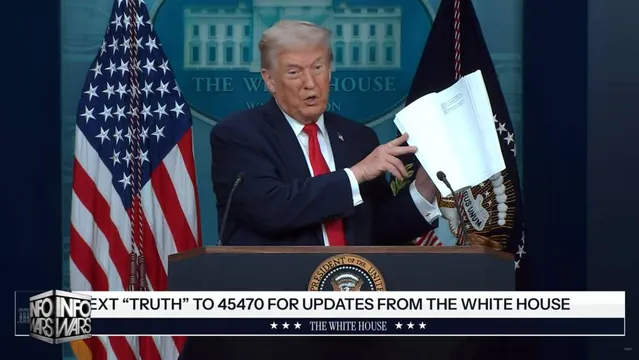
Donald Trump mentions an upcoming call with Turkish President Erdogan before pivoting to defend his economic record. He argues that he inherited "historic high" inflation and successfully brought down the price of eggs and gasoline. Trump claims the reduction of energy costs is the key to bringing down the price of all other consumer goods.

Trump is reportedly gearing up to release suppressed "zero point" and free energy technologies to lower global prices. The speaker argues that Greenland's natural resources are worth at least $700 billion, which could significantly impact the US balance sheet. Trump is described as an "anti-feudalist" who wants to see everyone succeed through innovation.

A critique of globalist austerity measures claims that carbon taxes were designed to kill 2 billion people over a decade by increasing the cost of living. Lord Monckton's actuarial data is cited to support the theory that these policies aim to force the public into a state of non-self-sufficiency. Trump's withdrawal from international climate treaties is presented as a necessary step to lower energy prices and prevent mass starvation.

The discussion focuses on the historical precedent of the Monroe Doctrine and the policies of William McKinley as the basis for current U.S. actions in Latin America. Jones criticizes Jimmy Carter and Barack Obama for relinquishing control of the Panama Canal and praises Trump for reasserting influence there to counter Chinese expansion. He reiterates that global inflation control depends on the U.S. managing international energy production.

Eric Bolling argues that Donald Trump must focus on lowering consumer prices to win the upcoming midterms. He points out that while energy and input costs have dropped significantly, corporations are keeping retail prices "sticky" to fatten their profit margins. Bolling warns that these "greedy fat cats" are effectively setting Trump up for a political loss by refusing to pass savings on to the American consumer.

The administration is navigating a complex economic landscape involving stagflation and central bank policies from the IMF and World Bank. While energy and egg prices have seen significant decreases, the introduction of 50-year mortgages is criticized as a "loan shark" tactic designed to prop up a failing housing bubble.

A caller critiques pollster Mark Mitchell, accusing him of "voter suppression" by focusing on negative trends for Donald Trump. The caller argues that Trump has successfully stabilized energy prices compared to the Biden administration. However, the slow approval of Trump's Senate nominees is cited as a major hurdle for the administration's agenda.

Proposed 500% sanctions on Russia are criticized for potentially causing a massive spike in global energy prices, which would undermine Trump's domestic economic agenda. Barnes argues that these policies push Russia closer to China and the BRICS nations while hurting American workers. The success of Trump's tariff and industrial policies is said to be at risk if the administration continues to prioritize foreign conflicts over economic stability.