Topic: Defense Spending

8 chapters across the catalog

Donald Trump meets with German Chancellor Merz on the anniversary of D-Day. Merz acknowledges the U.S. role in liberating Germany from Nazi dictatorship and asks for more pressure on Russia. Trump comments on Germany's increased defense spending, referencing General MacArthur's historical stance against German rearmament but ultimately calling the current increase a "positive thing."
Russia launched a 90-minute drone assault on Kharkiv, Ukraine's second-largest city, in response to a previous Ukrainian strike. Meanwhile, NATO officials are calling for "significantly higher defense spending" to face Russian threats. Chase Geiser argues that the U.S. should leave NATO to de-escalate the "bloodbath" and focus on domestic technological dominance.

Donald Trump is scheduled to meet with European leaders to finalize a peace framework for the conflict in Ukraine, despite alleged double-dealing by Volodymyr Zelensky. Zelensky is accused of demanding $350 billion and nuclear weapons while refusing to agree to mineral resource deals. Reports indicate the United States pays over 70% of NATO costs and 87% of Ukraine's funding, leading to Trump's demand that NATO stop expanding.

NATO Secretary General Mark Rutte has instructed European nations to stop complaining about being excluded from U.S.-Russia peace talks and instead focus on increasing their own defense budgets. This comes as Polish and French leaders, including Emmanuel Macron, call for an emergency summit to counter the Trump administration's agenda. The shift suggests a fracturing of the traditional NATO alliance as the U.S. seeks to end the war.

Donald Trump proposed a summit with Xi Jinping and Vladimir Putin to reach an agreement on cutting global defense spending by 50%. This proposal is framed as a direct threat to the military-industrial complex and a move to redirect funds into national infrastructure. Trump is also reportedly moving toward auditing the Pentagon and challenging the private Federal Reserve system.

Donald Trump recounted his efforts to force NATO members to pay their "bills," claiming he raised $680 billion by threatening to withdraw US protection. He proposed that NATO members should increase their defense spending to 5% of GDP, up from the current 2% target. Trump emphasized that Europe has a similar-sized economy to the US and should bear more of the financial burden for its own security.

The discussion covers how rising silver prices will impact the cost of electronics and defense manufacturing, as silver is a critical strategic metal. Dr. Elliott points out that U.S. interest payments on federal debt are on track to reach $1 trillion this year, surpassing the budgets for Medicare and the Defense Department.

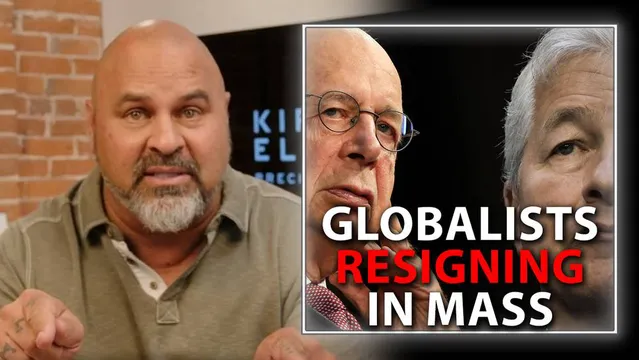
BREAKING: Globalists Resigning In Mass Ahead Of HUGE Events - MUST WATCH
21:55 - 25:53

BREAKING: Globalists Resigning In Mass Ahead Of HUGE Events - MUST WATCH

Inflationary Pressures, Federal Debt Interest Payments

Rising silver prices are expected to drive up retail costs for electronics and increase the federal defense budget, as strategic metals are essential for missile and torpedo production. The U.S. national debt has reached a point where interest-only payments are on pace to hit $1 trillion annually, surpassing the budgets for Medicare and the Department of Defense. Major food producers like Tyson Foods are reportedly warning the government about the potential for civil unrest as consumers struggle to afford basic staples.