Topic: Blockade

28 chapters across the catalog

Secretary of the Treasury Bassem reportedly stated that the United States has effectively won the economic war against Iran through an oil blockade. The administration claims Iran will run out of financial resources within four months as their oil exports remain blocked. Skeptics question the timeline and the potential for unforeseen consequences resulting from this aggressive economic strategy.
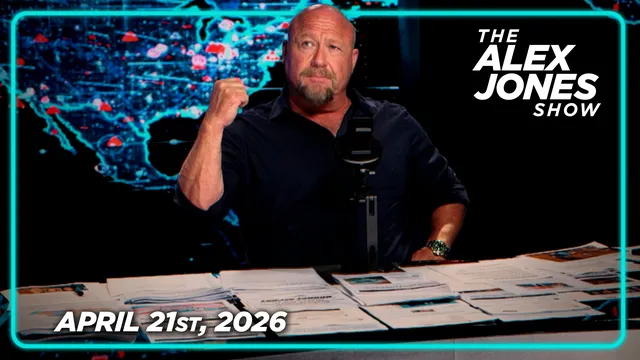

Treasury Secretary Scott Bessent announced that the U.S. blockade has cornered Iran, predicting the nation will go bankrupt within four months as oil storage reaches capacity. Daily shipments have plummeted from 1.85 million barrels to approximately 567,000, forcing Iran to shut in production. Experts warn that shutting down these wells can cause long-term geological damage, potentially preventing them from returning to full capacity for decades.

Secretary of State Marco Rubio stated that Iran's fractured leadership and apocalyptic vision are complicating peace negotiations. The U.S. continues to maintain a blockade to prevent Iran from obtaining a nuclear weapon, though officials are debating whether to resume military strikes. Rubio emphasized that any future agreement must definitively prevent Iran from sprinting toward nuclear capabilities.

The USS Spruance, a U.S. Navy destroyer, reportedly disabled an Iranian cargo ship, the Sukka, in the Gulf of Oman after it attempted to bypass a blockade. The engagement involved firing on the ship's engine room. This escalation marks a shift from verbal threats to active kinetic engagement between U.S. and Iranian naval forces in the region.

Donald Trump announced via social media that the Strait of Hormuz is fully open for passage, though he noted a naval blockade against Iran remains in effect until negotiations are finalized. Trump claimed the U.S. would receive "nuclear dust" created by B-2 bombers as part of the deal. The announcement also touched on separate efforts to address the Hezbollah situation in Lebanon.

The host explains how Iran can effectively close the Strait of Hormuz without physically sinking ships, simply by making it uninsurable for commercial traffic. He describes the Iranian coastline as a "DMZ" style fortification with hidden artillery and bunkers. The discussion notes that the U.S. cannot easily escort ships through the narrow waterway because they would be "sitting ducks" for Iranian land-based missiles and sea drones.

President Trump is reportedly reasserting the Monroe Doctrine by challenging the influence of Russia, China, and Cuba in the Western Hemisphere. Alex Jones and William F. Jasper discuss the blockade of oil to Cuba and the potential collapse of the Maduro regime in Venezuela. They argue that these moves are necessary to reclaim American dominance and remove foreign "satraps" from the region.

The breakdown of free sea lanes could lead to global starvation in countries like Japan, Egypt, and Pakistan that rely on imported grain. Bracken suggests that Trump may be signaling a division of the world into spheres of influence, leaving Asia to China and Eastern Europe to Russia. This shift would leave allies like Taiwan and South Korea outside of the American naval umbrella.

Tucker Carlson reports that members of Congress have been briefed on an imminent military announcement regarding Venezuela. The U.S. has assembled a massive naval force, including a carrier strike group, to enforce an oil blockade targeting shipments to China. This "gunboat diplomacy" is viewed as a high-stakes attempt to force Maduro's resignation through maximum pressure and kinetic strikes.

MUST-WATCH ALEX JONES & NICK FUENTES INTERVIEW / DEBATE — 12/17/25
27:57 - 34:24

MUST-WATCH ALEX JONES & NICK FUENTES INTERVIEW / DEBATE — 12/17/25

Naval Blockade and Potential Declaration of War on Venezuela

Reports from Tucker Carlson and Judge Napolitano suggest an imminent declaration of war or significant military escalation against Venezuela. The United States has already initiated an oil blockade, interdicting shipments primarily bound for China. A massive naval force, including a carrier strike group and 10,000 troops, is stationed off the coast of Trinidad and Tobago. Analysts debate whether this is a genuine invasion force or a high-stakes exercise in "gunboat diplomacy" intended to force Nicolas Maduro's resignation.

Donald Trump has reportedly implemented bomb blockades at Mar-a-Lago following advice to increase his security perimeter. The host claims to have spoken with the Trump operation, urging them to publicly accuse the Secret Service of a "deliberate stand-down." The segment emphasizes that the deep state will likely attempt another assassination or a "false flag" terror attack within the next 180 days.

China launches military drills around Taiwan, which the host characterizes as a naval and air blockade. The drills are described as punishment for Taiwan's new president and involve simulated strikes on high-value targets. The segment also mentions the potential for "kill switches" on semiconductors and China's support for Russia in Ukraine.

In El Paso, Texas, border agents are accused of driving buses through ravines and using trucks to block media cameras from filming the "border invasion." The segment captures a confrontation between a citizen and law enforcement over the right to document illegal immigration. Critics argue that the government is intentionally hiding the scale of the crisis while providing illegal immigrants with food, clothes, and protection that taxpayers are forced to fund.

Harrison Smith provides a breakdown of the living conditions in the Gaza Strip, describing it as a 25-mile-long "open-air prison." He presents data on the human cost of the conflict since 2008, noting that Palestinians have borne the majority of casualties. The segment includes a video explanation of the militarized perimeter, the naval blockade, and the 70% youth unemployment rate resulting from the economic chokehold on the territory.