Topic: Abrahamic Accords

33 chapters across the catalog

A caller suggests using AI to simulate a roundtable with the Founding Fathers to address modern corruption. Another caller, Carlos from Canada, argues that Benjamin Netanyahu is using the war to destroy the Abraham Accords and clear the way for Israeli expansion in Lebanon. Carlos warns that the focus on Karg Island might be a distraction from a planned invasion of northern Iran using Kurdish forces.

Religious groups in Jerusalem have likened Donald Trump to King Cyrus for his role in brokering the Abraham Accords and supporting the rebuilding of the Third Temple. Gematria analysis is used to link Jared Kushner to prophetic numbers, specifically regarding his oversight of the rebuilding of Gaza. These events are framed as the fulfillment of biblical prophecies concerning the end times.

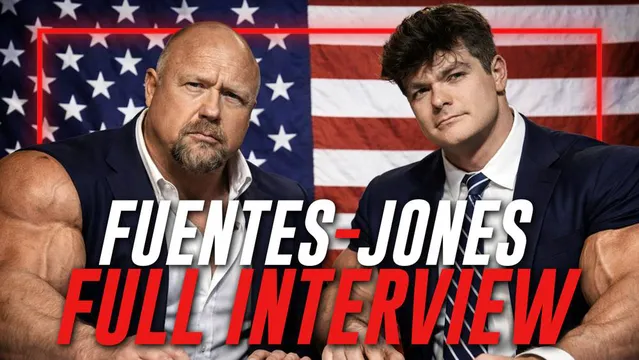
FULL FUENTES-JONES INTERVIEW 3/3/26: Trump Admin Pushes Ground Invasion Of Iran To Ensure Regime Change
1:42:48 - 1:48:43

FULL FUENTES-JONES INTERVIEW 3/3/26: Trump Admin Pushes Ground Invasion Of Iran To Ensure Regime Change

Turkish Threats and the Expansion of the Levant

Former Israeli officials warn that Turkey is becoming the "new Iran" under President Erdogan, seeking to encircle Israel. There is a discussion regarding the biblical "deed" to land from the Nile to the Euphrates mentioned in Genesis 15, which some interpret as a justification for Israeli expansion. This expansionist rhetoric is reportedly driving Saudi Arabia and Pakistan into a mutual defense pact against Israeli interests.

The segment discusses the US approach to Iran, emphasizing avoiding war, preventing nuclear proliferation, and leveraging regional alliances like the Abraham Accords to counterbalance Iranian influence, while criticizing the current administration's handling of the situation.

The Saudi Crown Prince expresses a desire to join the Abraham Accords, provided there is a clear path to a two-state solution for Palestinians. Trump mentions that Iran "badly" wants to make a deal and that he is open to negotiations to satisfy the region's security interests. The defense partnership is further solidified by the planned purchase of Lockheed Martin military equipment by the Saudi government.

Nick Fuentes argues that Israel is becoming an "unreliable ally" to the U.S. as it seeks to integrate with Gulf states and China's "Belt and Road" initiative. He suggests Israel's current aggressive military posture is a "go for broke" move to secure its regional position before the U.S. potentially withdraws support. Fuentes predicts Israel will eventually "double dip" by taking security from the U.S. and credit from China.

Syrian Girl discusses the pressure placed on Trump by Gulf Arab states following the bombing of Qatar. She notes that Trump's agreement to protect Qatar was a significant signal to Israel. The discussion touches on the Abraham Accords and the high number of Palestinian casualties in the West Bank and Gaza prior to the current ceasefire.

Kiriakou references a report in *Haaretz* suggesting a peace plan where Gaza would fall under the administrative auspices of Saudi Arabia. The plan would involve disarming Gaza and using Saudi funds to build a port, airport, and electrical grid to stabilize the economy. However, Kiriakou notes that Benjamin Netanyahu opposes such deals to maintain a state of crisis and political control.

Several U.S. states now require businesses to sign loyalty pledges to Israel to receive state contracts, a move Kiriakou calls dangerous and unconstitutional. A proposed peace plan involves placing Gaza under Saudi Arabian administration to develop its economy and disarm the region. However, Benjamin Netanyahu is accused of blocking such deals to maintain conflict and expand territory.

Ben Shapiro is criticized for attacking President Trump's restraint regarding Iran and for deviating from the "Trump 1.0" foreign policy. Jones argues that Shapiro and other neoconservatives are attempting to drag the United States into a nuclear conflict to serve Israeli regional interests. The segment references George H.W. Bush's "New World Order" speech as the blueprint for these ongoing global interventions.

White House Press Secretary Caroline Leavitt announces a historic trade agreement with the United Kingdom, which includes $5 billion in new export opportunities for U.S. farmers and a $10 billion purchase of Boeing planes. She also previews President Trump's upcoming trip to the Middle East, including stops in Saudi Arabia and Qatar, to reemphasize the vision of the Abraham Accords and regional stability.

Alex Jones reiterates his report that Donald Trump has "cut ties" with Benjamin Netanyahu, negotiating peace deals with the Houthis and Gulf States without Israeli input. Jones claims Trump views Netanyahu as a "globalist" who betrayed him in 2020. He describes a "global political realignment" where Trump is projecting American interests worldwide while securing the border and pursuing deep state prosecutions.

At the World Economic Forum, a panelist from the Middle East credited Donald Trump for the current peace accords, surprising the globalist audience. Media figures from Time and The Economist labeled Trump's "America First" policies as "anti-growth" for the global economy. The host argued that what is bad for the New World Order is good for American prosperity.

Trump's Abraham Accords were praised as a legitimate attempt to bring peace to the Middle East without favoring one religious group over another. The host criticized "tribal warfare" between various religious and political factions, including radical Islam and neo-Nazism. He argued that the real enemy is the "death cult" at the top of the global power structure seeking world government.

A critique is offered regarding "patriot purists" who focus on minor criticisms of Donald Trump instead of supporting his broader agenda. Trump's previous successes, including the Abraham Accords, energy independence, and border security, are highlighted as evidence of his effectiveness. The discussion urges supporters to remain unified behind Trump and Elon Musk to ensure the implementation of an "America First" agenda.

The discussion with Jim Paff continues, focusing on the need for the U.S. to stop funding foreign conflicts and return to a policy of non-interventionism. While acknowledging Israel's right to exist, the speakers criticize the "candy-like" distribution of taxpayer money to wealthy nations like Taiwan and Israel. The Abraham Accords are cited as the only successful framework for regional stability, now threatened by the current escalation.

The Deep State and "neocon" advisors like John Bolton and Nikki Haley are accused of deceiving Donald Trump during his presidency to maintain an offensive military posture. Despite this internal opposition, Trump successfully brokered the Abraham Accords and engaged with North Korea through a strategy of strength and optimism. Critics argue that the current global instability is a direct result of the military-industrial complex reclaiming control after Trump's departure.

Constitutional lawyer Robert Barnes argues that Benjamin Netanyahu invited a direct conflict with Iran to secure his own political survival. By attacking the Iranian embassy, Netanyahu hoped to force a regional war, but Iran opted for a "PR stunt" response to avoid a total military confrontation with the West. Barnes suggests that the mass invasion of Gaza has been a strategic disaster that destroyed the diplomatic progress made during the Trump administration.

The "Trump strategy" of the Abraham Accords is presented as the only viable path to Middle East peace by separating the Arab Royals from the Islamist wing of Iran. Current Israeli military actions are criticized for forcing Sunni nations like Saudi Arabia to side with Palestinians, thereby undoing years of diplomatic alignment against Iran. Breaking news reports suggest the Israeli war cabinet has reached a decision to launch a retaliatory strike on Iran immediately.