Topic: State Governments

27 chapters across the catalog

Anthony Cumia discusses New York's push to eliminate natural gas in favor of an all-electric infrastructure. He argues that consolidating energy sources under the electric grid makes it easier for the government to control the population by "flipping a switch." Cumia shares anecdotes about the breakdown of civility during power outages to illustrate how dependency on government-controlled utilities can be weaponized.
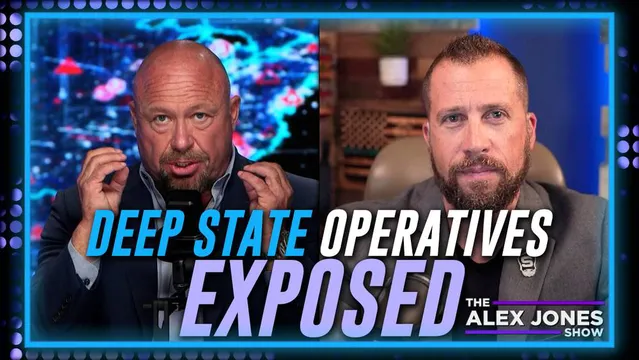

The "Deep State" is defined as a collection of federal employees who prioritize agency interests and funding over the U.S. Constitution and the American people. This institutional culture is described as apolitical but inherently self-serving, affecting both left-wing and right-wing activists. Whistleblowers argue that the bureau's survival has become its primary mission, leading to the targeting of perceived domestic threats.

Full Alex Jones. Vs Nick Fuentes Debate
5:34 - 12:20

Full Alex Jones. Vs Nick Fuentes Debate

Systemic Corruption, Political Blackmail, Negative Inferences

Nick Fuentes argues that the Epstein scandal represents the "scandal of all scandals," involving blackmail and foreign intelligence. He posits that if Trump is burying these files, it suggests he is compromised by the same system he promised to dismantle in 2016. The lack of transparency forces a negative inference that the administration is protecting billionaire oligarchs and intelligence agencies.

The second Trump administration is reportedly utilizing "strike forces" to target low, mid, and high-level Deep State actors simultaneously. These units include a task force focused on the weaponization of government and a "treasonous conspiracy task force" with the specific mission to secure indictments. Unlike the first term, the current team is estimated to be 90% aligned with Trump's populist agenda.

The "Continuity of Government" (COG) program has evolved into a secondary, covert government that operates with little congressional oversight. Originally designed to ensure survival during a nuclear war, the program has allegedly expanded into a parallel structure with its own housing and technology. This "doomsday network" is accused of hijacking national narratives to preserve its power during crises.

Kash Patel discusses plans to reform the FBI and CIA by closing the J. Edgar Hoover building and sending thousands of employees to work as street-level cops. Patel argues that the government is filled with "billets" or empty seats that are funded for years without humans in them. The administration aims to return unspent money to Congress and eliminate the "government creep" that has allowed intelligence agencies to operate without accountability.

The jealous spirit of the globalist system seeks to harvest human creativity, which is viewed as a gift from God. For years, these groups denied the existence of the Bilderberg Group and international manipulation, but they have recently moved toward open admission of their goals. Most of the public remains in a dream state induced by television and movies, allowing globalists to operate while the masses are effectively asleep.

The use of "Global Tetrahedron" as a parent company is described as "double satire equals truth," mocking the reality of global governance. Reference is made to Elon Musk's appearance at a Global Government Forum where he criticized tyrannical systems. The host reads the Onion's statement over the "Imperial March" music, framing the legal battle as a fight against an "Empire."

Alex Jones and Harrison Smith discussed reports of Democrats planning to form a "shadow cabinet" to resist the second Trump administration. They referenced past "war games" by figures like John Podesta and alleged that this parallel government is an act of treason. The hosts argued that the left is compelled to cheat and manipulate the system because they cannot win through fair democratic processes.

Jones discusses the Bill & Melinda Gates Foundation, alleging it is a front for a global depopulation agenda. He claims to possess documents proving plans for forced injections and the use of viruses to implement planetary lockdowns. The segment serves as a lead-in to an upcoming interview with a former Delta Force leader regarding deep state activities.

Alex Jones details his thirty-year career in media, beginning with access television in 1994 and subsequent radio syndication. Jones attributes his early awareness of the deep state to his father’s recruitment into DARPA-related programs and his uncle’s involvement in Iran-Contra operations. He describes his transition from a history-focused reader to a prominent voice against centralized technocracy and globalism.

A local Springfield man accuses city officials of being paid off to allow the massive influx of Haitian migrants. He highlights the disparity in law enforcement, where citizens are ticketed for minor traffic violations while migrants flip cars and commit crimes with impunity. The speaker calls on officials to leave their "comfy chairs" and witness the chaos in the streets firsthand.

A personal anecdote about the death of a family member serves as a warning not to take independent media for granted during ongoing legal attacks. The federal government is described as a "hijacker" using lawfare and rigged trials to silence dissent and destroy the middle class. The globalist agenda is portrayed as a predatory system seeking full control over the human body, mind, and access to basic necessities like food and energy.

A segment features footage from a "Stop the Steal" rally at a state capitol, described as a movement of the people against a navy-less establishment. The narrative defines true enlightenment as the realization that the government operates as an organized criminal enterprise designed to deceive and steal from the public.

Governor Greg Abbott and the State of Texas are in a direct confrontation with the Biden administration over control of the southern border. The federal government has issued a deadline for Texas to allow federal agents back into restricted border areas currently blocked by the Texas State Guard. This bottlenecking of illegal immigration is described as a bold move to highlight the national security crisis.

Mike Benz, a former State Department official, warns of a quiet plan by lawmakers and NGOs to foil the president's control over the military. He argues that if the military defies the commander-in-chief, it is a unilateral defiance of the will of the people and the end of civilian-run government. Benz links the groups involved to previous "color revolution" tactics used during the 2020 Summer of Love protests.

Alex Newman breaks down the primary organizations driving the globalist agenda, starting with the Council on Foreign Relations (CFR) and its role in submerging U.S. sovereignty. He also discusses the Trilateral Commission and the Bilderberg Group, describing them as "job interview" grounds for future world leaders. These groups are characterized as the visible arms of a coordinated effort to establish a technocratic world government.

Whistleblower documents reportedly confirm that the Obama administration established a "stay-behind" shadow government to wield power through three-letter agencies and non-profit institutions. This permanent establishment allegedly used spy informants against the Trump campaign and continues to manipulate elections and surveil the public through private-sector fronts.

Drew Hernandez analyzes the "deep state" mobilization that began the moment Donald Trump won the 2016 election. He describes the Russia collusion narrative and the subsequent impeachments as a coordinated attempt by a "demonic legion" of globalists to overthrow a legitimately elected president. Hernandez argues that the establishment was caught off guard in 2016 and has since weaponized every federal agency to prevent a repeat.

Kate Daly encourages citizens to focus their activism on local city and county governments to stop the implementation of "Agenda 2030" and "15-minute cities." She cites instances where local officials have abolished public comment at meetings to avoid accountability. Daly argues that the "Deep State" relies on a willing local populace to carry out its globalist plans.