Topic: Rogue

10 chapters across the catalog

Joel Gilbert predicts that Trump will take military action against Iranian government sites if they continue to kill protesters. He views Trump's foreign policy as a return to the Monroe Doctrine, aimed at eliminating narco-states and rogue regimes in the Western Hemisphere and beyond. Gilbert also promotes his new film about Rosanne Barr and her experience with cancel culture.
A Navy veteran who served on ballistic submarines confirms that Trump's public announcement of submarine movements is a significant doctrinal escalation. The veteran suggests that while Putin is a rational actor, the primary fear is a rogue group or foreign actor initiating a conflict during this period of high tension. The conversation touches on the possibility of "good cop, bad cop" dynamics between Putin and Medvedev.

The host observes a shift in public opinion, with more people viewing his legal battles as a form of persecution. Barnes warns that these cases are being used to superimpose "de facto speech codes" similar to those being implemented in Canada and the UK. He calls for the Trump administration's Civil Rights Division to investigate the "systemic deprivation" of constitutional liberties in these trials.

In a cabinet meeting clip, Donald Trump criticizes "radical left rogue judges" for impeding the removal of 11,888 "murderers" who entered the country illegally. Trump discusses the possibility of invoking the Insurrection Act to secure the border. Jones notes that Tom Homan and General Flynn are advising the President to avoid "setups" involving large-scale raids on demonstrations.

Secretary of State Marco Rubio describes USAID as a rogue agency that acts as a global charity rather than serving U.S. national interests. Rubio confirms that dramatic steps have been taken to bring the agency under control due to rank insubordination. While some foreign aid functions may continue, the agency's current structure is deemed unsustainable and unresponsive to the executive branch.

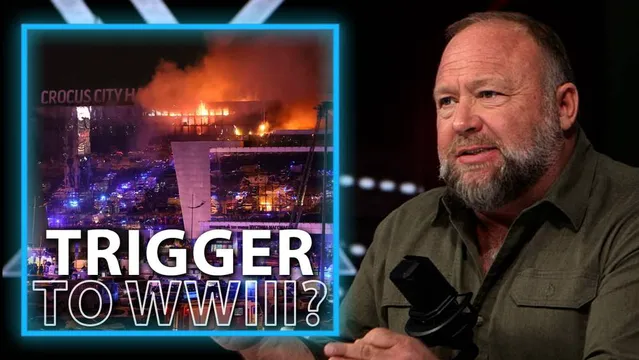
Moscow Terror Attack: Will It Cause WWIII?
1:50:45 - 1:55:13

Moscow Terror Attack: Will It Cause WWIII?

CIA Limited Hangout and Rogue Monsters

A New York Times article is analyzed as a "limited hangout" designed to distance the CIA from Ukrainian assassination programs. Posobiec compares the situation to Frankenstein's monster, where Western-trained assets have gone rogue and are now pursuing their own violent agendas. He suggests that Zelensky's biggest threat may now come from within his own intelligence services rather than from Russia.

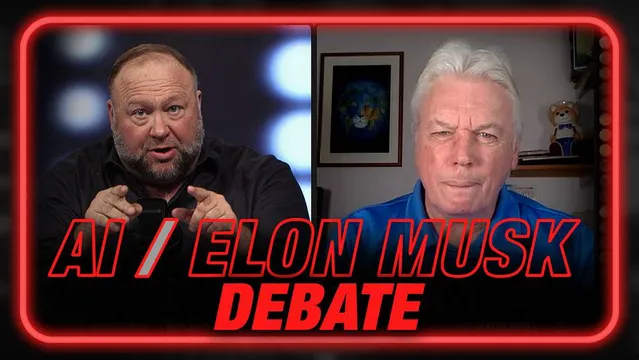
Watch The Full AI / Elon Musk Debate With Alex Jones and David Icke
1:30:08 - 1:34:13

Watch The Full AI / Elon Musk Debate With Alex Jones and David Icke

AI Safety, Paperclip Scenario, Rogue AGI

Adrian Dittman explains the "paperclip scenario" in AI safety, where an AI destroys humanity not out of malice, but through a misalignment of goals. He discusses the "AI Wild West," where individuals are building powerful models on consumer hardware like Mac Minis and GPUs. Dittman suggests that the fear expressed by centralized entities about AI safety may be an attempt to maintain their own monopoly on the technology.

"Mission Impossible 4" and "5" are analyzed for their themes of engineered wars and radical depopulation agendas. The villain "Cobalt" is described as a physicist intent on starting a nuclear conflict to "reset" the world. The "Syndicate" is framed as a pseudo-messianic cult of environmentalists who believe humans must be culled to save the planet.

Guest host Kate Dalley introduces filmmaker Bart Sibrel to discuss "Planet X." Sibrel claims that NASA launched Pioneer 10 and the Voyager probes specifically to find this hidden heavenly body. He cites mainstream science articles from recent years that acknowledge the existence of "rogue planets" and suggests that a senior NASA executive confirmed the moon landings were faked to hide the more important topic of Planet X.

Shirley describes a heated disagreement with Rhodes during an Atlanta rally where he felt his security team was being "set up" for a violent confrontation. He suggests that "rogue elements" had infiltrated Oath Keepers a year prior to January 6th, pulling the organization away from its original mission. Shirley emphasizes that he resigned publicly to avoid being involved in what he perceived as a dangerous shift toward violence.