Topic: Reciprocity

10 chapters across the catalog

China has reportedly opened the door for trade talks as Trump's tariffs reach up to 245% on certain goods. Elliott explains that China is in a "lose-lose" situation where Xi Jinping must either capitulate to America or face economic collapse. He notes that Trump's tariffs are strategically designed to address the fentanyl crisis and level the playing field for American manufacturers.
Donald Trump's reciprocal tariff executive order is entering its second phase, targeting non-monetary trade barriers like VAT and carbon taxes. While corporate media outlets claimed uncertainty regarding the President's plans, the administration followed through on previously stated goals to address trade imbalances. The strategy includes a 25% tariff on foreign-made automobiles to encourage domestic manufacturing and investment.

Donald Trump signed a reciprocal trade executive order that effectively pulls the United States out of the World Trade Organization. The move targets hidden taxes, regulations, and VATs used by Europe, Canada, and China to disadvantage American goods. This action aims to reclaim national sovereignty from multinational corporations and globalist systems.

Donald Trump announces that "reciprocal tariffs" will take effect on April 2, 2025, ensuring that any tax or barrier placed on American goods by foreign nations will be met with an identical U.S. tariff. He singles out China, the European Union, and South Korea for their high tariffs on American products. Trump argues this shift will end decades of the United States being "ripped off" and will create millions of domestic jobs.

Donald Trump signed an executive order on reciprocal tariffs that effectively withdraws the United States from the World Trade Organization's power structure. Peter Navarro appeared on Fox News to explain that the order targets the global tax system and non-monetary hidden tariffs used by international groups. This move is characterized as a direct attack on unelected globalist world government structures.

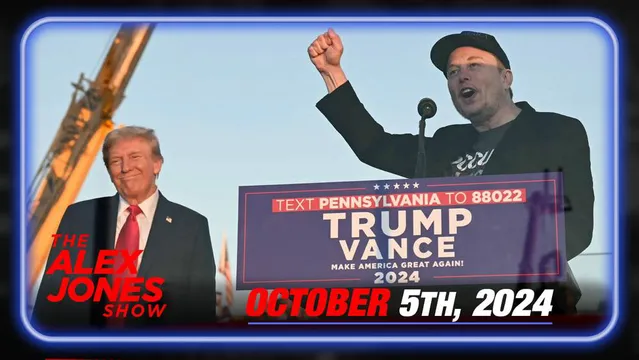
President Donald Trump Returns to Butler, Pennsylvania For Historic Rally 3 Months After Assassination Attempt
3:19:40 - 3:23:55

President Donald Trump Returns to Butler, Pennsylvania For Historic Rally 3 Months After Assassination Attempt

Manufacturing Renaissance, Reciprocal Trade Act

Donald Trump details his plan for a "manufacturing renaissance," including a 15% corporate tax rate for companies that make their products in America. He promises to use tariffs to protect domestic industries and proposes the Reciprocal Trade Act to match the taxes charged by foreign nations. Trump also expresses opposition to the sale of U.S. Steel to a Japanese company, vowing to keep the iconic firm under American ownership.

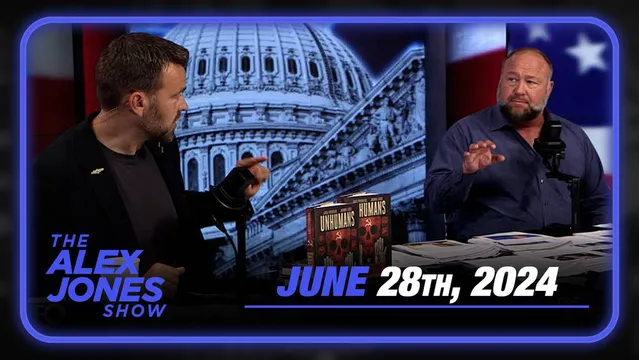
Jack Posobiec argues that "reciprocity" is the only language the establishment understands. He calls for legal action against those who have targeted Trump and his allies. The segment concludes with a mention of Speaker Mike Johnson and the need for the Republican party to take a more aggressive stance against the current administration.

Jack Posobiec introduces the "Iron Law of Exact Reciprocity," stating that the tactics used against the right will be returned to the left. He criticizes Judge Juan Merchan as a "foreign-born judge" convicting a U.S. president. Posobiec argues that the law is being used as a tool for punishment rather than a sacred pursuit of justice.

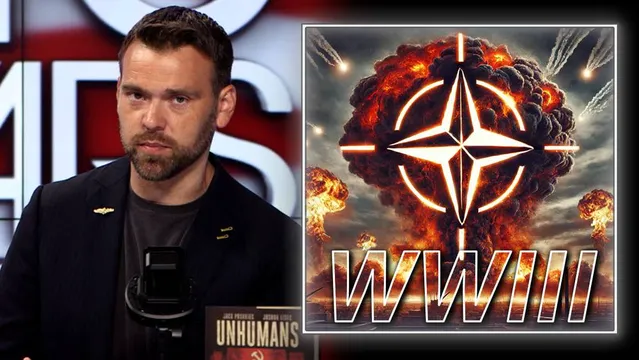
The final chapter of "Unhumans" outlines a "counter system" based on reciprocity and 5G information warfare. The argument is made that the only language the "unhumans" understand is exact legal and political reciprocity. This concept is illustrated by Russia's response to long-range missiles in Ukraine by placing nuclear submarines off the coast of Miami.

Emergency Saturday Broadcast! January 6 False Flag Confirmed
1:42:31 - 1:46:43

Emergency Saturday Broadcast! January 6 False Flag Confirmed

Jewish Political Influence, Reciprocity in Alliances, NATO

The conversation shifts to the role of Jewish donors in American politics and the potential for an alliance based on shared values like sovereignty and free speech. Reference is made to Laura Loomer as an example of someone who identifies as "America First" despite disagreements on the Israel lobby. The principle of reciprocity is applied to all foreign relations, including NATO, where the host argues that alliances must benefit American interests first.