Topic: Iraq War

90 chapters across the catalog

Sam, an Israeli-American caller from Haifa, shares his perspective as a veteran of both the IDF and the U.S. Army. He supports Trump's goal of overthrowing the Iranian government but opposes the use of American ground troops. The caller suggests that Trump's rhetoric about boots on the ground is a "bluff" or a "Joker card" intended to pressure European allies.

Reports indicate that a U.S. naval ship accidentally killed 168 schoolgirls in Iran, an event that media figures allegedly laughed about. The host condemns the potential bombing of water plants as a war crime. He notes that while Israel encouraged the conflict, the Israeli government has officially stated it will not assist in a ground war, leaving U.S. troops to face a hardened conventional force alone.

Ben Shapiro is featured in a clip arguing that the American people have the patience for long conflicts, citing the Persian Gulf War and Kosovo. Shapiro uses a historical quote from Adolf Hitler regarding American "decadence" to argue that the U.S. must prove its strength through military victory. He emphasizes that the point of a military is to undertake dangerous sacrifices for the greater good.

Joe Kent characterizes the Iran war as a deliberate "trap" set by the pro-Israel lobby to commit the U.S. to a never-ending regime change conflict. He compares the situation to the failures in Iraq, Afghanistan, Libya, and Yemen, urging the administration to cut its losses now. Kent reveals that he resigned because he could no longer affect the situation from within the administration.

Joe Kent describes his realization during multiple deployments to the Middle East that the Iraq War was based on false pretenses. He criticizes figures like Colin Powell for remaining loyal to the government despite knowing the intelligence was flawed. Kent explains that his current whistleblowing is a fulfillment of a personal vow to prevent future generations from being deployed under similar lies.

Israel has reportedly destroyed the majority of Iran's oil refineries, an action criticized as targeting civilian infrastructure. Reports confirm a U.S. cruise missile strike hit an Iranian girls' school located near a National Guard base, resulting in over 100 deaths. Historical comparisons to the Iran-Iraq War suggest that the Iranian regime and its population are unlikely to surrender despite heavy attrition and infrastructure damage.

Donald Trump has asserted that U.S. munitions stockpiles are at an all-time high, allowing for a war that could last "forever" if necessary. Alex Jones warns that while the U.S. military can defeat the Iranian army, the cost in human lives will be immense due to the professional and "suicidal" nature of Iranian fighters. He references the million-man army of the Islamic Republic and their cult-like devotion to the mullahs as a significant obstacle to a quick victory.

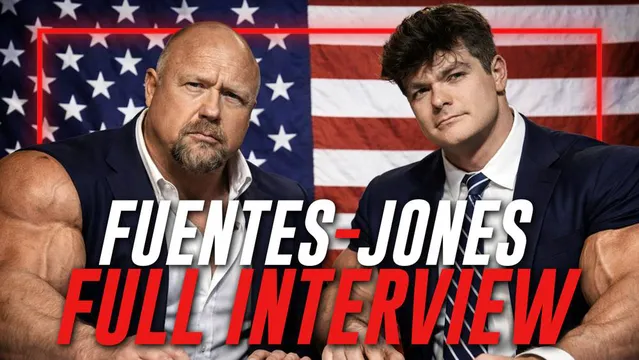
FULL FUENTES-JONES INTERVIEW 3/3/26: Trump Admin Pushes Ground Invasion Of Iran To Ensure Regime Change
1:20:23 - 1:23:55

FULL FUENTES-JONES INTERVIEW 3/3/26: Trump Admin Pushes Ground Invasion Of Iran To Ensure Regime Change

Forever War Rhetoric and the Betrayal of the Escalator Speech

Donald Trump's recent rhetoric is compared to the "forever war" concept from George Orwell's 1984. Despite his 2015 campaign being built on the rejection of the Iraq War, his current administration is accused of pursuing an identical path in Iran. Critics argue that even if Trump's "forever war" comments are mere bluffing, the Pentagon will use the opening to establish a 20-year conflict similar to Afghanistan.

A Vietnam veteran who worked in supply during the Iran-Iraq War recalls how the U.S. backed Saddam Hussein to bleed out the Iranian population. He notes that the war of attrition left Iran with few men over the age of 30 and warns that the "Project for a New American Century" plan is still in play. The caller emphasizes that the U.S. military often destroys infrastructure without a plan for who will take over, leading to long-term instability.

Callers, including a congressional candidate from Missouri and a Marine veteran, debate the necessity of attacking Iran. While some argue for immediate kinetic action to stop state-sponsored terrorism, others warn of the CIA's history of "double-crossing" regional leaders. The discussion explores the potential use of non-nuclear, space-based "decapitation" weapons to target Iranian leadership without causing mass civilian casualties.

The current push for war with Iran is compared to the 2003 invasion of Iraq, which was heavily influenced by neoconservatives like Richard Perle. John Kiriakou recalls how Perle advocated for attacking Iraq immediately after 9/11, despite a lack of evidence linking Saddam Hussein to the attacks. This pattern of "existential threats" is seen as a recurring strategy to use the US military to eliminate regional rivals of Israel.

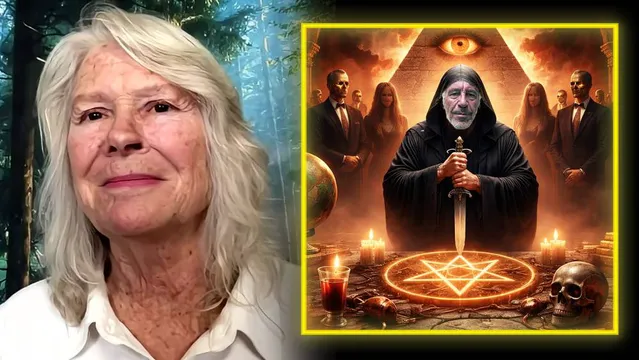
A review of the "lore" surrounding Zorro Ranch highlights its long-standing connection to elite blackmail operations. The term "predator class" is proposed as a more accurate description than "elite" for the individuals involved. The segment notes that despite Epstein's 2008 conviction, the state of New Mexico continued to lease him public land for years without investigation.

Jones draws a historical parallel between the Venezuelan raid and the German invasion of France, where much of the opposition was allegedly bought off before the fighting began. He argues that the Venezuelan military's "stand-down" on Saturday morning was likely the result of similar pre-arranged deals. The primary resistance came from Maduro's "Praetorian Guard" of Cuban intelligence officers who refused to let him leave.

An anecdotal account describes the "Cuneo Tunnel," a secret facility where linguists allegedly monitor "otherworldly communications." The Iraq War is framed as a mission to recover ancient artifacts from God-like civilizations that predated modern history. This "fourth civilization" theory suggests that humanity has reached this level of technological advancement multiple times in the past but faced destruction.

The segment reflects on Tucker Carlson's transition from a "propagandist" for the Iraq War to a leading voice against the New World Order. Alex Jones is described as a "spirit guide" who planted the seeds of this awakening decades ago. This shift in the media paradigm is framed as a major success for the "information war" and the defense of human liberty.

Iran is described as a historical trap for foreign armies, from the Romans to modern forces. Matt Bracken emphasizes that Iran's ability to close the Strait of Hormuz gives them significant leverage over the global oil supply. He argues that getting America involved in a land war in Iran would be a catastrophic mistake that would wreck what remains of the country's military and economic power.

Tucker Carlson is praised for his "humility" in admitting he was wrong about the Iraq War and for his subsequent shift toward anti-war positions. Alex Jones is described as a "spirit guide" who planted the seeds of awakening in figures like Carlson and Joe Rogan decades ago. This shift is framed as a successful "weaponization" of truth against the New World Order following the "false flag" of 9-11.

Alex Jones plays a clip of Tucker Carlson calling Laura Loomer the "world's creepiest human" and lumping her in with Mark Levin. Carlson argues that these figures represent the same "unbroken track record of failure" as John Bolton and Bill Kristol. Carlson expresses a desire to avoid "reliving Iraq" and views Loomer and Levin as "morons" who don't understand the complexities of the Middle East.

The "awakening" of mainstream figures like Tucker Carlson and Joe Rogan is attributed to the long-term influence of Alex Jones. Carlson, who previously promoted the Iraq War, has reportedly admitted his past mistakes and now works to prevent future Middle East conflicts. Jones is described as a "spirit guide" who pulled back the curtain on the New World Order, leading to a shift in the media paradigm and a growing populist resistance.