Topic: Great Society

9 chapters across the catalog

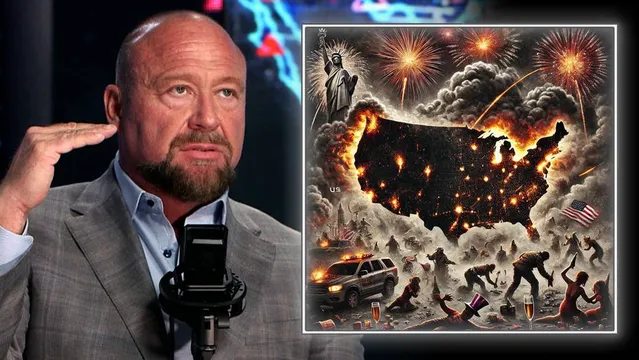
Lyndon B. Johnson's "Great Society" programs are characterized as a deliberate effort to destroy the Black nuclear family and create government dependency. Reference is made to letters in the LBJ Library at UT Austin allegedly detailing a racist long-term political strategy. The segment claims the CIA funded gangster rap in the 1980s and 90s to further destabilize urban culture and promote crime.
Globalist policy via the Council on Foreign Relations (CFR) aims to deindustrialize the United States through carbon controls while exempting China. Chinese interests have invested $6 billion into American universities to influence academia and have acquired significant stakes in Hollywood production houses. Recent droughts in China have accelerated their overseas investments in food logistics and producers like Smithfield Foods to secure resources for 1.4 billion citizens.

The broadcast outlines a perceived globalist destabilization campaign involving war escalations, cyber attacks, and disinformation targeting figures like RFK Jr. and Elon Musk. Jones expresses optimism regarding Donald Trump's cabinet selections while warning that operatives remain embedded in government and corporate structures. He references the historical warnings of the John Birch Society and Barry Goldwater as blueprints for understanding current geopolitical shifts.

Alex Jones discusses his ability to predict current events by studying the globalist model and historical warnings from figures like Barry Goldwater and the John Birch Society. He references Elon Musk's warnings at the World Government Summit regarding resource scarcity and global collapse. Jones argues that the "New World Order" can be defeated if the public overcomes decadence and laziness, framing the struggle as an "inside job" of moral awakening.

The historical origins of modern globalism are traced back to the 19th-century British "intelligentsia" and the Royal Society. Figures like Francis Galton and the Huxleys are credited with developing the concepts of biometrics and social control to manage the British Empire. The current global conflict is framed as a battle between this 180-year-old project of total control and the enduring spirit of the Renaissance.

Lyndon B. Johnson's Great Society programs are framed as a deliberate attempt to break up the Black family unit to ensure long-term Democratic voting blocks. By incentivizing single-parent households through welfare, the state gained absolute control over the population. This historical precedent is used to explain current efforts to destabilize all American families.

The rollout of a global cashless society is being accelerated through the implementation of Central Bank Digital Currencies (CBDCs). Financial institutions like the Bank of International Settlements and countries including Brazil, Israel, and the United Kingdom are preparing digital currency launches for 2024. Technologies such as Hedera and Quant are identified as key components of the Federal Reserve's digital infrastructure, which critics argue will allow total government control over individual purchasing power and personal savings.

The globalist agenda is described as a transition toward a cashless society and a social credit score model managed by a uniparty. While the shadow puppeteer system attempts to establish a technocracy through the Great Reset, the counter-strategy involves building better systems in homes, churches, and businesses. The goal is to expose the intellectual and spiritual corruption of the old order while returning to traditional values.

White House Doctor Calls For Biden To Take Cognition Test After Sloppy G7 & Putin Summit FULL SHOW 6-20-21
1:26:34 - 1:28:21

White House Doctor Calls For Biden To Take Cognition Test After Sloppy G7 & Putin Summit FULL SHOW 6-20-21

Building Parallel Communities to Counter the Great Reset

A caller named Ian suggests that the best way to counter the "Great Reset" is for patriots to act as modern pioneers by founding new towns and self-sufficient communities. Owen Shroyer agrees with the sentiment but points out the difficulty of escaping the influence of central banks and the need for large-scale investment to build a parallel society.