Topic: Biometrics

129 chapters across the catalog

Jason Bermas discusses Sam Altman's "World ID" and "Worldcoin" projects, which aim to create a blockchain-based biometric identification system for humanity. The project uses "The Orb" to scan irises, a process Bermas describes as the "biometricification of humanity." He warns that these "AI agents" will eventually be used to verify human identity in a world flooded with AI-generated content.
The conversation shifts to the rapid advancement of transhumanism and robotics, including the use of humanoid robots in mainstream media like the "Jackass" movies. Bermas highlights how AI tools like GPT can now perform biometric "palm readings," potentially leading to identity theft and financial scams. He argues that the public is being "bombarded" with robotic technology to normalize its integration into daily life.

Serafin reads from a congressional report stating that 51 phone numbers were excluded from the pipe bomber investigation because they belonged to law enforcement. He argues that "gate analysis" is a standard biometric tool used by the government and that the FBI's refusal to use it in this case is suspicious. The suspect identified by Steve Baker reportedly has a distinct gait consistent with a known injury.

Alex Jones and Stuart Rhodes express distrust of Peter Thiel and the "technocrat" influence within the Trump administration via JD Vance. They argue that Thiel's company, Palantir, is being used to implement a "Minority Report" style police state involving biometric IDs and facial recognition. Rhodes warns that the elite may allow terror attacks to occur specifically to offer "Terminator land" surveillance as the only solution for public safety.

Stuart Rhodes discusses the identification of a Capitol Police officer as a CIA asset using gait analysis and biometric systems. He claims the FBI and Todd Blanch have been sitting on this evidence for months. Rhodes asserts that the Trump administration's current intelligence capabilities are more robust than eight years ago, allowing them to map out "deep state" networks.

Serafin describes being personally targeted by his former FBI supervisor, who allegedly writes "nasty hit pieces" claiming Serafin is a Russian or Chinese asset. He provides more detail on "gait analysis," explaining it as a biometric measure of how a person moves through space. He claims this analysis was used to track the pipe bomb suspect through degraded FBI footage.

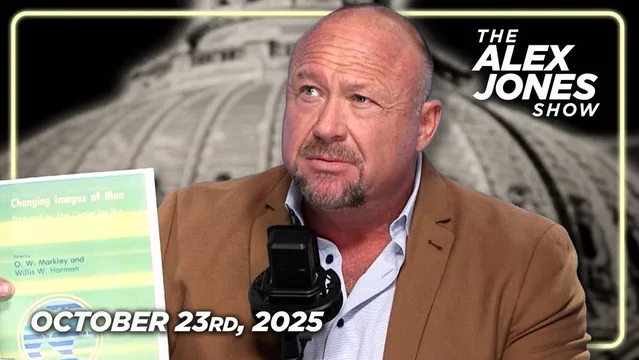
The SRI textbook cites Julian Huxley, the founder of UNESCO, and his plans to rebrand eugenics as biometrics. The document argues that population growth is the primary global problem and that a world government is necessary to manage limited resources on "Spaceship Earth." This model demands a move away from individual rights toward a collective evolutionary process.

The TSA is transitioning to AI-driven biometric checkpoints that use facial recognition instead of traditional security measures. While the DHS promotes these as a convenience, critics warn they are the foundation for a China-style social credit score. Travelers are reminded that they have the legal right to opt out of facial recognition scans at the airport, though few citizens exercise this right.

A caller proposes a grassroots effort to impeach local politicians who fail to follow the law. The conversation briefly touches on 5G and biometric manipulation before Jones previews upcoming segments on the "auto pen" scandal and polling data from Rasmussen Reports regarding the Epstein firestorm's impact on Donald Trump.

A caller expresses concern that the Iran conflict could be used to normalize advanced surveillance technologies, such as facial recognition and biometric tracking. There is a fear that Donald Trump could be "duped" into implementing tyrannical measures similar to the post-9/11 Patriot Act. The discussion highlights the potential for Starlink and other tech to be integrated into a global security apparatus.

The implementation of Real ID is described as a move toward a biometric surveillance state that could eventually lead to a social credit score in the United States. While marketed as a tool to prevent fraud, critics argue it allows the government to collect sensitive data on every citizen. Homeland Security Secretary Kristi Noem is currently overseeing a $200 million advertising campaign to promote the program, which many conservatives view as unconstitutional.

The discussion continues on the vulnerabilities of electronic health records and the lack of privacy under HIPAA. Twyla Brase argues that REAL ID is built on biometrics, effectively allowing the government to claim ownership of body parts for tracking purposes. She calls on states to reclaim their 10th Amendment rights and refuse to issue REAL IDs to prevent a "digital gulag."

The Real ID Act is criticized as a tool for a UN-coordinated global technocracy that mirrors digital ID systems being implemented in Europe and Australia. While the policy is sold as a way to track illegal immigrants, it is argued that it will eventually enforce a social credit score and a cashless society. Bill Gates and his foundations are identified as primary architects of this digital surveillance infrastructure.

A personal account describes refusing a voluntary face scan at an airport, highlighting the gradual integration of AI tracking into daily life. Meanwhile, Judicial Watch President Tom Fitton filed a lawsuit against the Trump Justice Department to compel the release of new Jeffrey Epstein documents. There is growing pressure on the administration to provide transparency regarding the Epstein files.

The ADL and other groups are accused of pushing for a social credit score and biometric identity markers to track citizens "from cradle to grave." Tucker Carlson is defended against ADL claims that he promotes "The Great Replacement Theory," which the ADL labels as extremist. Critics argue that these labels are used to silence dissent and implement a "brutal authoritarian system" through digital IDs.

Alex Jones warns of a transition toward a global social credit system and digital IDs that track individuals from birth to death. The discussion highlights a letter from the ADL to Elon Musk regarding the reinstatement of Donald Trump on Twitter. Claims are made that biometric markers will be used to connect all human activity to a centralized state database.

Warren Buffett's sale of over $7 billion in Bank of America stock is highlighted as a sign of trouble in the banking sector. Dr. Elliott also reports on Kuwait's move to freeze bank accounts for citizens who refuse to provide biometric fingerprints. He warns that this technology will be used to enforce social credit scores and urges listeners to move assets into physical gold and silver via KEPM.com.

Australia is reportedly implementing a Digital Identity Bill and misinformation laws that allow the government to define and punish "harmful" speech. Senator Malcolm Roberts describes these measures as the foundation for a Chinese-style social credit system involving biometric surveillance. The legislation is seen as a coordinated global effort to eliminate privacy and centralize control over individual data.

Reports from Kuwait indicate that the government is freezing the bank accounts of citizens who refuse to register their biometric fingerprints. This is presented as a precursor to a global "unified ledger" system where access to money is tied to a social credit score. The segment warns that once banking is fully digitized and biometric, the state will have the power to "flip a switch" and disconnect dissenters from the economy.