Topic: Federal Taxes

44 chapters across the catalog

Donald Trump stated that the federal government cannot afford to fund daycare, suggesting that individual states should raise taxes to cover these costs. He argued that the federal government must prioritize military protection over social programs like Medicaid and Medicare. These comments signal a potential shift toward a wartime economy where federal social spending is significantly reduced.
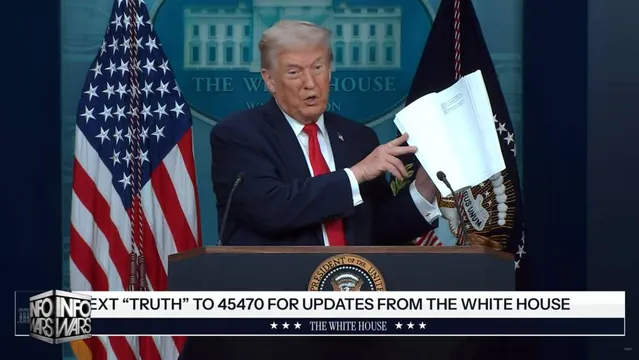
Donald Trump details tax policy changes, including the elimination of taxes on tips, Social Security, and overtime. He introduces a tax deduction for interest on car loans, specifically for vehicles built within the United States to encourage domestic manufacturing. Trump also claims to have slashed the federal budget deficit by 27% in a single year.

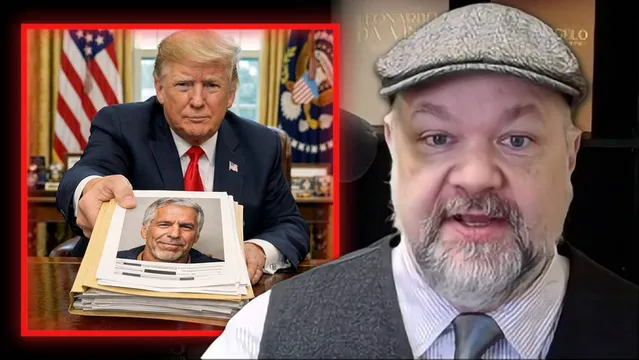
🚨JEFFREY EPSTEIN WORKED FOR THE CIA!!! 🚨
45:00 - 48:39

🚨JEFFREY EPSTEIN WORKED FOR THE CIA!!! 🚨

Antitrust Enforcement, IRS Reform, Tax on Tips

Harmeet Dhillon is proposed as a potential Attorney General to lead aggressive antitrust actions against Big Tech, Big Pharma, and Big Ag. The Trump administration is encouraged to bypass the IRS by directing employers to stop collecting taxes on tips and overtime pay immediately. This strategy aims to put more money into workers' paychecks while challenging the authority of the Federal Reserve.

Alex Jones provides a B-plus grade for Donald Trump's recent national address, praising its accuracy regarding energy price cuts and inflation but criticizing it for being too technical for the average citizen. He argues that Trump must create a sense of existential threat from globalist NGOs and the Chinese to energize the base. The discussion highlights the need for "straight shooting" about the headwinds faced by the administration, including judicial blocks on policies like "no tax on tips."

El Salvador President Nayib Bukele, speaking at CPAC, argued that the U.S. government is funded by money printing rather than income taxes. He asserted that taxes exist primarily to maintain the "illusion" of funding and as a tool for social engineering and population control. Bukele warned that this "bubble" of paper-backed currency will inevitably burst unless structural changes are made to the Western financial civilization.

A federal court recently struck down Donald Trump's reciprocal tariffs as illegal, a decision that has been appealed to the Supreme Court. These tariffs are designed to force other countries to pay for American infrastructure and reduce the domestic tax burden on citizens earning under $200,000. Proponents argue that tariffs have been an unmitigated success in curbing China's military and economic expansion.

The U.S. experienced a 10% average growth rate between 1789 and 1913, prior to the creation of the Federal Reserve and the IRS. The progressive income tax is identified as one of the ten planks of the Communist Manifesto, designed to drive business incentive away. Gold, silver, and stablecoins are currently thriving as investors seek alternatives to the centralized banking system.

Roger Stone and the host call for the repeal of the Federal Reserve Act and the 17th Amendment to restore state checks on federal power. They criticize "Rhino" Republicans for failing to support America First policies and the abolition of the federal income tax. Dr. Ron Paul is credited for his long-standing advocacy against the central banking system.

Congress is criticized for using "hostage negotiations" by bundling essential policies like border security and tax cuts into massive, complex bills. Principled conservatives express frustration that they must vote for bloated legislation to avoid tax increases or open borders. There is a call for a shift toward single-item reconciliation bills to prevent the government from holding citizens' interests over their heads like an anvil.

Roger Stone concludes his remarks by discussing upcoming "rescission bills" aimed at cutting $98.4 billion from USAID. He acknowledges that while these cuts are smaller than what DOGE identified, they represent a start in "turning around an ocean liner." Stone reiterates that Speaker Mike Johnson has a difficult task managing a slim majority and that the BBB's tax cuts are essential.

Donald Trump's financial advisor Howard Lutnick discusses plans to balance the budget and potentially waive income tax for those earning under $150,000. The administration is moving to dismantle the Department of Education by cutting funding and returning administrative power to the states. There is a broader push to abolish the Federal Reserve and the IRS, reversing policies established in 1913.

Dr. Kirk Elliott envisions an "American Renaissance" where the country moves away from the central banking system established in 1913. He discusses Donald Trump's potential plan to replace the federal income tax with revenue from tariffs and a fair consumption tax. Florida Governor Ron DeSantis's efforts to eliminate property taxes are cited as a model for this new economic approach.

Stephen Miller provided a civics lesson on Article 2 of the Constitution, emphasizing that executive power is vested solely in the President. He explained that the administration is removing federal bureaucrats who fail to implement lawful orders regarding energy and DEI policies. The administration is also working with Congress on a reconciliation process to deliver major tax and price relief to the working class.

The Trump administration is exploring the possibility of a $5,000 "DOGE Dividend" for taxpayers, funded by the trillions of dollars identified in government waste. Commerce Secretary Howard Lutnick is also advocating for the total elimination of the federal income tax, suggesting the government return to a tariff-based funding model. This economic shift aims to stimulate domestic investment while bypassing the Federal Reserve's control over interest rates.

The populist movement is repudiating the globalist plan for a carbon tax and social credit system managed by AI. Trump and Musk are focused on cutting energy costs and expanding domestic industry to grow the country out of debt. The administration seeks to restore a feedback loop between the public and the government, dismantling the "fourth unconstitutional branch" of unelected bureaucrats.

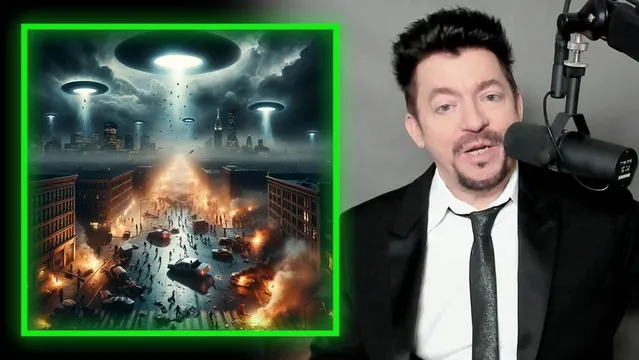
COG Expert Warns Record Level UAP Activity Tied To Shadow Governments' Plans For A Nuclear World War III Scenario
1:11:22 - 1:13:44

COG Expert Warns Record Level UAP Activity Tied To Shadow Governments' Plans For A Nuclear World War III Scenario

Financial Resistance, Nuclear War Brinkmanship, Underground Shelters

Listeners are encouraged to seek out caves or underground shelters as NATO pushes the world toward the brink of nuclear war. Financial resistance through tax avoidance and supporting independent media is proposed as a way to defund the deep state. Recent mainstream articles in publications like The Atlantic are criticized for attempting to normalize the idea of surviving a nuclear conflict.

Economist Martin Armstrong discusses his computer model's accurate prediction of a Trump trifecta and the potential abolition of the federal income tax. Armstrong argues that income tax is an obsolete tool of social engineering and that eliminating it would cause a massive influx of global capital into the United States. He explains that federal borrowing is unnecessary in a non-physical monetary system and that the tax code is primarily used by the DOJ as a weapon against political opponents.

The history of the U.S. income tax is discussed, with claims that it was established in 1913 for social engineering rather than funding the country. The segment argues that the Federal Reserve monetizes debt to fund private banks while using ESG scores to force corporations into compliance with globalist agendas. BlackRock, Vanguard, and State Street are identified as the primary entities controlling global assets and pushing anti-family propaganda.

A discussion on cartel violence in Mexico and Central America transitions into a critique of the American financial system. The Federal Reserve Act of 1913 and the implementation of the income tax are described as tools for globalist control. The segment argues that the IRS uses AI to extort the working class while large corporations and the "power structure" evade taxes.