

Topic: Terminal Ballistics

3 chapters across the catalog

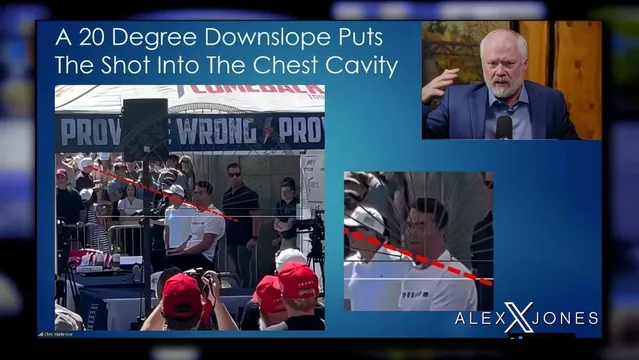
Dr. Chris Martinson, a pathologist and toxicologist from Duke University, joins the program to analyze the physical evidence of the shooting. Martinson argues that a .30-06 round at 200 yards possesses over 2,000 foot-pounds of energy and would not "bounce" off a neck vertebra as suggested by hearsay reports. He asserts that high-velocity rounds only exhibit erratic behavior at the terminal end of their trajectory, not upon initial impact with soft tissue.

The hosts compare the power of .30-06 rounds to smaller calibers like the 5.56 used in the Mini 14 rifle. They argue that while a 5.56 round is prone to tumbling and may bounce inside a body, a .30-06 magnum round would penetrate multiple targets without changing course. Reference is made to "watermelon tests" to illustrate how high-powered rounds create massive pressure waves that annihilate organic tissue.

Smashing The A.I. Threat Matrix: How Humanity Defeats Skynet
27:10 - 30:11

Smashing The A.I. Threat Matrix: How Humanity Defeats Skynet

AI Reasoning Limitations, Anti-Terminator Combat Tactics

Current AI systems lack the ability to model physical reality or human psychology, making them susceptible to traps that require anticipating future physics. In a hypothetical conflict with autonomous machines, humans would need to rely on setting physical traps rather than out-shooting robots equipped with superior ballistic software and infrared vision. This gap in AI reasoning provides a strategic window for human resistance against mechanized forces.