Topic: Suez Canal

30 chapters across the catalog

Michael Yon posits that Israel and Panama are "synthetic countries" created specifically to control global trade routes and canals. He suggests the October 7th attacks were a "staked goat" operation intended to justify clearing Gaza for the construction of the Ben Gurion Canal. This proposed waterway would compete with the Suez Canal and secure Israel's position as the most strategically important hub for the Indo-European corridor.

FULL FUENTES-JONES INTERVIEW 3/3/26: Trump Admin Pushes Ground Invasion Of Iran To Ensure Regime Change
1:01:28 - 1:05:38

FULL FUENTES-JONES INTERVIEW 3/3/26: Trump Admin Pushes Ground Invasion Of Iran To Ensure Regime Change

Escalation in the Suez Canal and Strait of Hormuz

France is reportedly sending an aircraft carrier to the Suez Canal, while the U.S. prepares to escort ships through the Strait of Hormuz. This follows the closure of the strait by insurance companies after Iranian attacks on several vessels. Senator Lindsey Graham is noted for his enthusiastic support of these escalations, which critics view as a betrayal of Trump's original non-interventionist campaign promises.

Iran has officially closed the Strait of Hormuz, halting approximately 27% of the global oil supply and threatening a massive spike in gas prices. The US military has ordered all civilian ships out of the region as Iranian naval ships and command centers are targeted. Concerns are rising that the conflict could escalate to the use of atomic weapons on ballistic missiles fired at Israel.

The era of "Pax Americana" and unrestricted free trade on the high seas is coming to an end. Bracken cites the Houthi attacks in the Red Sea as evidence that even small powers can now close critical global choke points. As the U.S. Navy's dominance is challenged, the world's sea lanes are becoming increasingly contested, threatening the global economy's reliance on open transit.

The historical origins of Israel are linked to the opening of the Suez Canal in 1869 and British imperial interests. The "Samson Option" is discussed as a nuclear deterrent that could lead to mutually assured destruction if Israel's existence is threatened. The segment explores how the British and the Rothschild family built up the Zionist movement to control vital maritime routes.

Israel is reportedly on the verge of striking Iran, a move that could trigger a nuclear exchange and a worldwide economic collapse. Such a conflict would likely seal the Strait of Hormuz and the Suez Canal, leading to a massive depression. Iran is expected to activate Hezbollah sleeper cells globally, which are described as more dangerous than Al-Qaeda.

Michael Yon discusses the vulnerability of the Panama Canal to sabotage, noting a lack of physical defenses at the locks. He references a 2020 incident where a ship hit a rail bridge in Gamboa as a potential example of how easily the canal could be blocked. Yon links the security of the Panama Canal to other global choke points, such as the Suez Canal and the Bab al-Mandab, which are currently threatened by Houthi attacks.

Michael Yon discusses the seven strategic naval choke points, including the Strait of Hormuz and the Strait of Malacca. He notes that China is working on alternative routes, such as a canal across the Kra Isthmus in Thailand and a new canal in Cambodia off the Mekong River. These projects are part of a broader Chinese strategy to bypass U.S.-controlled maritime routes and secure their own trade lines.

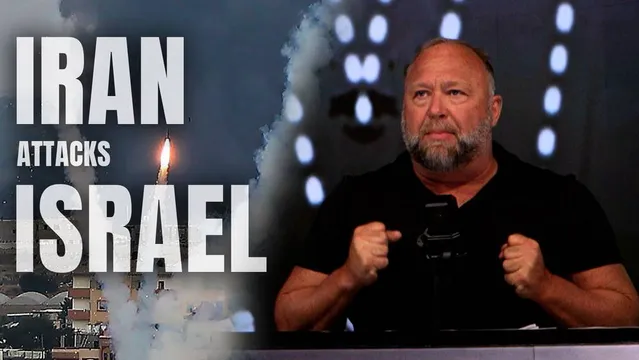
Live Coverage: Iran Attacks Israel, Putin Threatens WW3
2:34:16 - 2:40:19

Live Coverage: Iran Attacks Israel, Putin Threatens WW3

Strait of Hormuz, Suez Canal, and Global Trade Risks

Alex Jones and the Colonel discuss the potential for Iran to block the Strait of Hormuz or the Suez Canal, which would cripple global energy markets and trade. While the Colonel notes that Iran is also dependent on trade, Jones argues that sinking a single ship could effectively block these vital waterways. The panel also monitors reports of a massive Israeli counter-attack beginning in Lebanon.

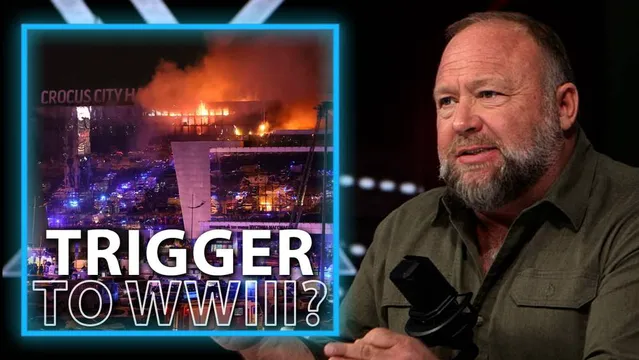
Moscow Terror Attack: Will It Cause WWIII?
36:49 - 40:22

Moscow Terror Attack: Will It Cause WWIII?

Greater Israel Project and the Ben Gurion Canal

A speaker identifies as "Truth Teller" outlines the "Greater Israel Project," claiming plans exist to expand Israeli territory into Lebanon, Syria, and Iraq. The discussion mentions the proposed David Ben-Gurion Canal as a competitor to the Suez Canal and links current military actions to messianic beliefs involving the Red Heifer and the construction of the Third Temple.

Tensions in the Middle East threaten to close the Strait of Hormuz and the Suez Canal, potentially disrupting half of global trade. Analysts warn that a direct U.S. strike on Iran could trigger the activation of thousands of Islamic sleeper cells across Europe and North America. The scenario includes the risk of nuclear escalation between Israel and Iran, potentially drawing in India and Pakistan.

Former NATO commander Admiral James Stavridis is criticized for suggesting NATO ships should ignore the Montreux Declaration and enter the Black Sea. The discussion focuses on strategic maritime choke points, including the Suez Canal and the Strait of Hormuz, as primary locations for globalist provocations. A promotional segment for "The Great Awakening" book follows, framing the political struggle as a battle against the "Great Reset."

The BRICS nations, including new members like Iran and Saudi Arabia, are positioned to challenge the US dollar's hegemony and represent half of the global GDP by 2040. China has secured control over major trade arteries like the Suez and Panama Canals while the World Economic Forum develops "Tri-State City" in Europe to serve the Great Reset agenda.

The proposed Ben-Gurion Canal would connect the Mediterranean and Red Seas, competing directly with the Suez Canal and potentially earning Israel $10 billion annually. The canal's northern terminus is located at the tip of the Gaza Strip, leading to theories that the current leveling of Gaza is intended to clear the path for this massive infrastructure project.

The Chinese Communist Party's "Belt and Road Initiative" is analyzed as a geostrategic plan to bypass U.S. influence. Flynn notes that China built a second Suez Canal and is securing resources across Africa and the Middle East. The shifting alliance of Saudi Arabia toward China and Iran is highlighted as a significant blow to the U.S. petrodollar system.