Topic: Snowden

51 chapters across the catalog

Tucker Carlson discusses a potential criminal referral from the CIA to the DOJ, alleging he acted as a foreign agent by communicating with Iranian officials. Carlson defends his actions as standard journalism and warns that the US government is becoming more authoritarian during wartime. He references Julian Assange and Edward Snowden as examples of individuals targeted for exposing government surveillance.
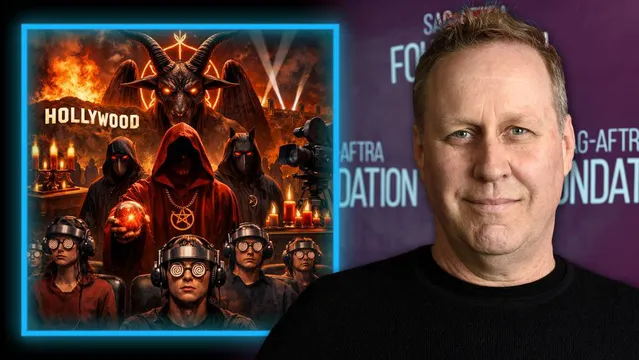
Roger Avary describes his interactions with a CIA handler who monitors his work to ensure he stays within a "predefined frame." Alex Jones shares a personal story about surveillance being used as a tool for manipulation and "soft power" control. They discuss the idea that intelligence agencies do not just spy on "bad" people, but on "interesting" people who influence public narrative.

The discussion centers on how media programming can make a portion of the population behave like "robots" who accept illogical premises. Alex Jones discusses the use of the surveillance grid to maintain the "club" of elite control. He references the Palantir as a modern-day "crystal ball" used for two-way surveillance and social engineering.

Roger Stone and the speaker discuss a potential inquiry into former Vice President Mike Pence regarding his role in the targeting of General Michael Flynn. They revisit James Clapper's past testimony about metadata collection, which was later contradicted by Edward Snowden's leaks. Donald Trump's reaction to the Bolton news is played, where he characterizes Bolton as a "bad person."

Tulsi Gabbard reportedly refused to retract her statements regarding Edward Snowden during her confirmation process, demonstrating her principles. The segment also critiques John Ratcliffe's tenure as DNI, suggesting he could have done more to declassify documents earlier, though he is credited with exposing John Brennan's knowledge of the Steele dossier fraud.

Edward Snowden's whistleblowing is cited as proof that surveillance tools created by the Patriot Act were eventually weaponized against American citizens. The "Russia collusion hoax" is described as a coordinated effort by the intelligence community to undermine Donald Trump's first term. The host further links these systemic issues to the funding of gain-of-function research and the subsequent promotion of mRNA vaccines during the pandemic.

After George W. Bush publicly denied the use of torture, John Kiriakou went on ABC News with Brian Ross to confirm that torture was official government policy authorized by the president. Kiriakou also shares an anecdote about a drone operator who was ordered to fire on a target despite seeing a child nearby; the operator's refusal led to a potential court-martial. He praises Edward Snowden for providing a national service by exposing the extent of government surveillance.
The Signal messaging app is described as being compromised by government backdoors, following a Biden administration order for federal agencies to use the platform. Reference is made to Vault 7 and Edward Snowden's revelations regarding CIA capabilities to spoof addresses and frame individuals. The recent arrest of a Telegram leader is cited as evidence of a crackdown on platforms the government cannot control.

Revelations from Edward Snowden regarding Vault 7 are used to argue that the CIA possesses tools to break into encrypted apps like Signal to plant evidence or misrepresent communications. The Biden administration's promotion of Signal is framed as a strategy to monitor users through known vulnerabilities. The host asserts that transparency and "straight shooting" are the only defenses against these clandestine operations.

Former NSA technical director William Binney is cited regarding the existence of backdoors in surveillance systems built for private contractors and politicians. An anecdote about Edward Snowden's supervisor allegedly watching him in private moments is used to illustrate the "perverted" nature of the ruling bureaucratic class. The segment argues that these systems are used for economic espionage and personal leverage by a globalist elite.

The CIA's Vault 7 hacking tools are described as the primary method for framing political enemies by planting evidence like child pornography or spoofing leaks. Similar tactics are allegedly being used against Elon Musk and Mike Waltz to portray them as foreign agents. The segment also mentions the Australian and British governments' efforts to obtain encryption keys to monitor and frame citizens.

See the Full Monday Broadcast that Was Censored for Many X Users By The Ukrainian/NATO Cyber Attack Against Musk's Free Speech Platform
1:26:40 - 1:31:37

See the Full Monday Broadcast that Was Censored for Many X Users By The Ukrainian/NATO Cyber Attack Against Musk's Free Speech Platform

Tesla Stock as a "Bet on America", Internal Sabotage and Vault 7

Despite the market dip, Jones suggests buying Tesla stock is a "bet on America." He theorizes that the cyber attacks on X originate from within U.S. Cyber Command using "backdoors" and "Vault 7" style tools. He suggests that the globalists, including MI6 and the Obama-led "shadow government" in London, are using these systems to maintain control as their international order dies.

The current wave of domestic terror and health crises is compared to the aftermath of 9/11, with the hosts predicting a "Patriot Act 2.0" focused on increased surveillance and censorship. They argue that events like the bird flu and retail theft are being used to push the public toward biometric IDs and Central Bank Digital Currencies (CBDCs). The goal is to create a "Mark of the Beast" system where citizens can no longer resist government control.

The surveillance powers granted by the Patriot Act after 9/11 are described as a permanent expansion of government overreach used to spy on American citizens and political campaigns. With the advent of quantum computing and artificial general intelligence, the deep state can now efficiently analyze massive amounts of personal data to create psychological profiles. This technology is allegedly being used to inform propaganda strategies and sway public opinion.

Donald Trump expresses a "warm spot" for TikTok due to its impact on his campaign, while Geiser argues the proposed ban is about narrative control rather than data privacy. The segment posits that the U.S. government seeks to ban the platform because it cannot control the viral spread of information on a Chinese-owned app. Geiser asserts that the deep state's goal is to maintain a monopoly on information to control public behavior.

Constitutional lawyer Robert Barnes argues that Donald Trump should use his pardon power to protect whistleblowers and political prisoners like Julian Assange, Edward Snowden, and January 6th defendants. Barnes suggests that Biden's use of pardons to protect political allies provides Trump with the necessary political cover to issue broad clemency for patriots and constitutionalists.

Predictions for the 76-day presidential transition include potential false flag operations targeting minorities, the release of new viruses, or massive cyber attacks on critical infrastructure. Reference is made to Klaus Schwab's warnings that a cyber attack could surpass the impact of COVID-19. Allegations suggest the CIA uses tools identified in the Vault 7 leaks to frame foreign adversaries for domestic disruptions.

Julian Assange's wife, Stella, reported that the Australian government is charging Assange $500,000 for the private jet used for his plea deal. Boykov suggests that if Assange faces further pressure in Australia, Russia remains an option for asylum, noting that Edward Snowden and other Western journalists currently reside in Moscow. The host declines a similar hypothetical offer, stating he must "go down with the ship" in the US.

Lara Logan argues that society must stop punishing truth-tellers and start providing financial and professional support to whistleblowers like Tariq Johnson and Stu Scheller. She mentions her work building a "Press Club" and her own platform at lara-logan.com to foster honest journalism. Jones agrees, calling for Donald Trump to pardon figures like Julian Assange and Edward Snowden.

Lara Logan Destroys The New World Order In Epic Alex Jones Interview
1:19:09 - 1:22:57

Lara Logan Destroys The New World Order In Epic Alex Jones Interview

Mobilizing for Leaders, Whistleblower Pardons, Laura Logan's Work

There is a call for the public to mobilize behind leaders and whistleblowers like Julian Assange and Edward Snowden. Laura Logan discusses her transition from 60 Minutes to independent journalism, focusing on investigations into January 6 and child trafficking. She emphasizes the need to take these subjects out of the "conspiracy" realm through rigorous, honest reporting.