Topic: Projection

571 chapters across the catalog

The segment explores the theory that Iran's recent seven-year drought was a result of U.S. and Israeli weather manipulation. Following the destruction of regional radar arrays, Iran experienced significant rainfall and overflowing dams. The host cites "Project Popeye," a declassified 1967 memorandum regarding cloud seeding in Vietnam and Laos, as historical precedent for using weather as a weapon of war.

Military contractors and analysts discuss how the war will accelerate the transition to an AI-driven economy, leading to permanent unemployment and the push for a digital currency. A caller introduces "The Quantum Hive," a blueprint for wealth creation, while another discusses the "Nation-States Project" and the need for peaceful constitutional assemblies. The host emphasizes that now is the time for "maximum effort" in local and state-level political engagement.

The "Men in Black" phenomenon is explored, with Daniel Liss suggesting these entities may be "crypto-terrestrials" or humans using advanced astral projection techniques. Actor Dan Aykroyd's reported encounter with these figures in New York is cited as a high-profile example of the reality-distorting nature of these beings. The discussion links these entities to early 20th-century occultists like Aleister Crowley and his communications with an entity named "Lam."

A caller predicts that the United States will work in the background with Arab partners to reopen the Strait of Hormuz and take control of Yemen within four weeks. The primary mission is described as degrading the Iranian Revolutionary Guard Corps' (IRGC) ability to project power and export influence. The host remains skeptical, arguing that the regime will hold on and that the conflict is a setup to destroy the U.S. economy.

The potential for an Israeli takeover of Iran is discussed in the context of the "Greater Israel Project" and control over Middle East oil reserves. Skepticism is expressed regarding the feasibility of such an occupation, citing the failed two-decade military presence in Afghanistan as a historical precedent. The conversation suggests that the United States has nothing to gain from this conflict while Israel stands to benefit significantly.

Alex Karp of Palantir is criticized for claiming to protect "conspiracy theorists" while deploying "software as a service" products that facilitate mass surveillance. A demonstration of the Maven smart system shows how data feeds are fused into a single visualization tool for targeting workflows. The host argues that these tools are being used to subvert privacy under the guise of national security.

The legacy of Project Mockingbird is discussed as the foundation for CIA involvement in music and film. Jason Hollis notes a shift in the music industry where artists are moving toward independence to avoid the "mutual blackmail" of major labels. He argues that owning one's content and brand is the only way to remain free from institutional control.

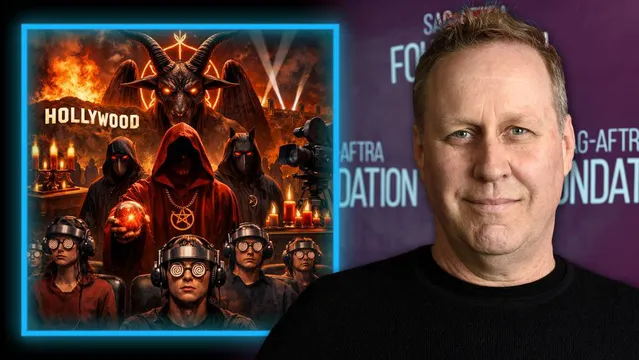
The conversation shifts to the technical differences between physical film stock and digital filmmaking. Roger Avary argues that the cost and limitations of 35mm film forced a level of discipline and "soul" into the work that is often missing in disposable digital productions. They discuss the rotoscoping process used in Waking Life and A Scanner Darkly, noting the "hand of man" present in every frame.

A Vietnam veteran who worked in supply during the Iran-Iraq War recalls how the U.S. backed Saddam Hussein to bleed out the Iranian population. He notes that the war of attrition left Iran with few men over the age of 30 and warns that the "Project for a New American Century" plan is still in play. The caller emphasizes that the U.S. military often destroys infrastructure without a plan for who will take over, leading to long-term instability.

Globalist entities are allegedly pursuing transhumanist and social Darwinist systems while their existing power structures face internal collapse. Claims suggest the CIA historically investigated covertly poisoning food and water supplies to manage the population. Additionally, the Greater Israel Project is identified as an expansionist movement seeking to establish a new superpower in the Middle East with influence over American foreign policy.