Topic: Podcast

81 chapters across the catalog

Tucker Carlson is described as more impactful and successful on X than during his tenure at Fox News, reaching an estimated 30 to 40 million viewers. Jones claims Donald Trump remains obsessed with "dinosaur" media like CNN and Fox News despite their dwindling viewership compared to top podcasts like Joe Rogan's. The discussion suggests Trump is isolated in a "bubble" created by his advisors, preventing him from understanding the shift to digital platforms.
A story is shared regarding Tucker Carlson's firing from Fox News, allegedly following a dinner where he discussed his Christian faith with Rupert Murdoch. The failure of CNN Plus, which reportedly lost $500 million in less than two weeks, is cited as evidence that corporate media cannot compete with independent podcasters. Figures like Mark Levin are described as "delusional" for downplaying the influence of independent media stars like Carlson and Megyn Kelly.

A viral clip from CPAC shows half the crowd cheering for Donald Trump's impeachment, highlighting a deep divide within the MAGA movement over the Iran war. Joe Kent argues that Trump has lost touch with his base by listening to legacy media like Fox News and CNN instead of the "podcast sphere" that originally fueled his movement. He calls for a more rigorous vetting system for future administrations to prevent foreign influence.

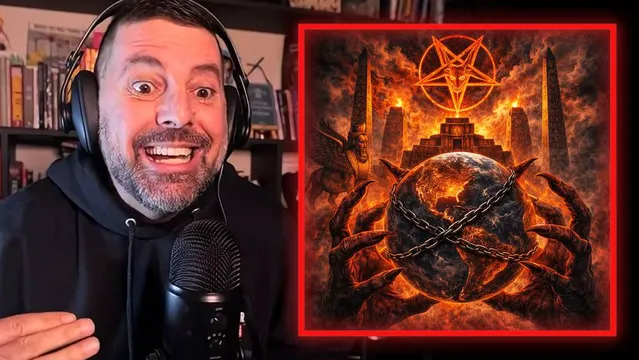
The Ancient Satanic Babylonian System Runs The World!!!
1:32:56 - 1:36:33

The Ancient Satanic Babylonian System Runs The World!!!

Podcast Influence, Algorithm Silos, Divide and Conquer

Sam Tripoli dismisses the idea that a few podcasts decided the 2024 election, noting that the top podcast charts are still dominated by progressive voices. He argues that the real issue is "algorithm silos" that keep people in different perceived realities. He suggests that Kamala Harris may have been "sent in to lose" to facilitate the next phase of the globalist plan.

Nick Shirley accuses filmmaker Andrew Callahan of "Channel 5" of using deceptive editing techniques to misrepresent an interview. Shirley recorded the full two-and-a-half-hour session, which he claims Callahan spliced together to make him look incompetent and to hide Callahan's own factual errors. The incident is presented as a warning against trusting leftist media figures who use "nerdy" personas to gain the confidence of their subjects.

Predictions are made that every major American city will be "on fire" by the summer if the Insurrection Act is not invoked to stop the current momentum of protests. Jake Lang criticizes "right-wing influencers" and podcasters who report on issues from the sidelines but refuse to engage in street-level activism. He classifies the movement into "men and boys," calling out those who live degenerate lifestyles while others put their lives on the line.

Alex Jones recalls advising elite talk radio executives years ago to transition into independent digital media to survive the "Fourth Turning." He claims most did not listen and are now struggling as the media landscape shifts toward multicasting and podcasting. Lionel credits Jones with being the "red pill" that changed his perspective on the end of civilization as currently known.

Anthony Cumia promotes his new Sunday night show on 77 WABC and his ongoing work on Censor.TV and Compound Media. The host thanks Cumia for his support as InfoWars faces a potential shutdown by a court-appointed receiver in the coming month. They conclude by affirming that despite the attacks, the populist movement is continuing to advance and gain mainstream traction.

Del Bigtree describes the "miracle" of Robert F. Kennedy Jr. becoming HHS Secretary despite intense opposition from the pharmaceutical industry and mainstream media. He notes that Kennedy's independent campaign succeeded by bypassing traditional news outlets—which only granted him two interviews in two years—in favor of new media and podcasts. This strategy is credited with pulling off a major PR coup and securing a position to protect American body sovereignty.

Savannah Hernandez expresses her gratitude to Alex Jones for his support during her career and his resilience when InfoWars was banned from major platforms in 2018. She emphasizes the value of hard work she learned at InfoWars, contrasting it with corporate media hosts who rely on teleprompters. Jones reiterates his belief in the American people and the necessity of fighting against evil despite the personal costs of censorship.

Laura Loomer expressed concern over being targeted by a new generation of radicalized online posters who promote neo-Nazi content and blame Jewish people for all societal issues. She noted that the level of death threats she receives has shifted from Islamic radicals to these domestic extremists. The segment discusses the "exhausting" nature of this hyper-focus on antisemitic tropes within the independent media landscape.

Donald Trump shares anecdotes about Charlie Kirk's persistence, often calling the President to request last-minute appearances at events. Trump credits Kirk with helping the Republican party win a majority of males under 30 for the first time in history. He notes the massive growth of Kirk's podcast and radio audience to millions of daily listeners.

Lionel and Alex Jones discuss the transformation of the media landscape since their first meeting at Talkers Magazine in 2011. They critique the decline of traditional radio and the rise of independent podcasting as the primary source of information. The conversation touches on the "illiteracy" of the general public regarding wide-spectrum knowledge and the manipulation of facts by digital gatekeepers.

Tim Dillon argues that the Trump administration has mistakenly put "failed podcasters" in charge of critical government agencies like the FBI. He suggests that Megyn Kelly should be the Attorney General and that current officials who cannot articulate clear sentences should be fired. Dillon claims these individuals are being "clotheslined" by the deep state because they lack the talent to manage complex government functions.

Comedian Tim Dillon appeared on CNN and rejected the idea that podcasters are the "new establishment." He argued that it is "crazy" to suggest that comedians like himself or Theo Von have power equal to the CIA or massive legacy media institutions. Dillon attributed Kamala Harris's election loss to her own unpopularity and weak communication strategy rather than the influence of "podcast bros."

Jones plays a clip from a recent podcast where Michelle Obama says, "it warms my heart particularly as a black man" while discussing a transgender child. Jones and Joel Gilbert debate whether this was a "verbal slip" or a revelation of her true gender. They also reference Joan Rivers' famous comments about the Obamas before her death.

The decline of corporate media is contrasted with the success of independent broadcasters and populist figures. Historical examples like the firing of Lou Dobbs, Glenn Beck, and Tucker Carlson are cited as evidence that the establishment fears popular truth. Trump's interview with Elon Musk on X Spaces, which garnered over a billion clicks, is presented as proof that legacy media is no longer relevant.

The Trump White House is opening press credentials to podcasters, social media influencers, and independent journalists to bypass legacy media. Karoline Leavitt announced that 240 journalists previously banned by the Biden administration will have their passes restored. Additionally, a statement from the President clarified that the mysterious New Jersey drones were authorized FAA research flights and hobbyists, not a foreign threat.