Topic: Persian

11 chapters across the catalog

The resilience of the Iranian military is highlighted, noting their ability to produce inexpensive drones and ballistic missiles in underground facilities. Robert Barnes argues that 90% of Iran is Shia and largely supports the existing Islamic Republic, contrary to "fake polls" from Western NGOs. He emphasizes the power of "Persian Pride" and nationalism, noting that historically, invaders of Persia have often been culturally absorbed rather than successful in conquest.

The Vice President and Secretary of State are reportedly preparing for imminent military action against Iran, citing threats from ballistic missiles and naval assets in the Persian Gulf. While the administration claims to prefer diplomacy, negotiators have been sent to address Iran's alleged attempts to rebuild its nuclear program. US bases in Qatar, Bahrain, and the UAE are on high alert for potential conventional or asymmetric retaliation.

The historical transition of Iran from a Western-aligned nation under the Shah to a theocracy under the Mullahs is discussed. Savage argues that the Shah, while a dictator, oversaw an advanced society where women had rights, whereas the current regime enforces 13th-century restrictions. He blames the Jimmy Carter administration for undermining the Shah and allowing the rise of radical Islamic governance.

Israel Attempts To Sabotage Trump's Ceasefire, And US Braces For False Flag Attacks As Netanyahu Demands Regime Change In Iran
31:28 - 34:01

Israel Attempts To Sabotage Trump's Ceasefire, And US Braces For False Flag Attacks As Netanyahu Demands Regime Change In Iran

False Flag Narratives, Narrative Control, Mass Casualty Preprogramming

Intelligence agencies are accused of "pre-programming" the public to ignore warnings of false flag operations by preemptively labeling such claims as enemy disinformation. Figures like Mark Levin have telegraphed that terror attacks by Iranian sleeper cells are imminent, while simultaneously warning the public not to listen to "traitors" who might claim the attacks are staged. This strategy is viewed as a way to secure narrative control ahead of a potential mass casualty event designed to drag the U.S. into a full-scale war.

Rabbi Shmuley Boteach discussed his personal connection to Iran, noting that his father was born in Isfahan, the ancient imperial capital and a UNESCO World Heritage site. While Boteach expressed love for Persian culture and music, he argued that the threat of a nuclear Manhattan outweighs the desire to preserve Iranian cities. He criticized the "cowardice" of those who prioritize low gas prices over the elimination of a genocidal regime.

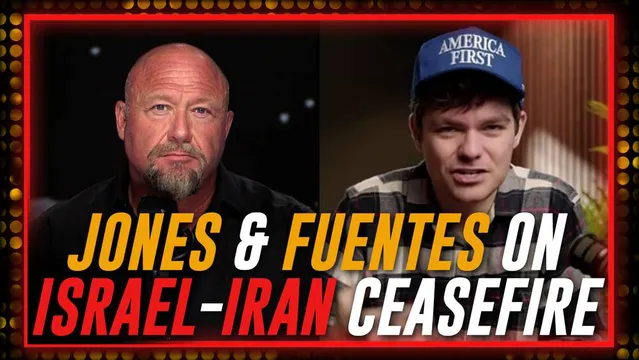
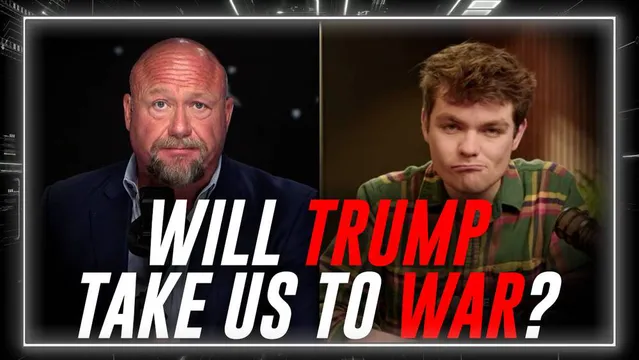
FULL MUST-WATCH INTERVIEW: Nick Fuentes & Alex Jones Debate / Wargame Trump's Plan To Officially Go To War With Iran

FULL MUST-WATCH INTERVIEW: Nick Fuentes & Alex Jones Debate / Wargame Trump's Plan To Officially Go To War With Iran

Israel Strategic Objectives, Iran Regime Change and Trump Brinksmanship

Donald Trump's maximum pressure strategy and brinksmanship regarding Iran's denuclearization face challenges as Israel pursues its own strategic timeline. Reports indicate Israel carried out unilateral strikes against Iran outside of a 60-day deadline set by the United States, potentially forcing American military intervention. A significant U.S. military buildup is currently underway in the Middle East, including the rerouting of aircraft carriers and destroyers to the Persian Gulf.

The use of "false flag" events to initiate wars is discussed, citing the USS Liberty incident, the Gulf of Tonkin, and the sinking of the Maine in 1898. Current efforts to remove Bashar al-Assad in Syria are viewed as a continuation of this policy, which replaces stable leaders with radical groups like Al-Qaeda. Additionally, a distinction is made between the Persian people and the ruling Mullahs, who are described as a "genetic dynasty" not representative of the broader population.

The world is realigning into two major blocs: the United States and Israel against the BRICS nations, including Russia, China, and Iran. Russia has refused to condemn Iran's actions, citing the West's silence on the Nord Stream pipeline sabotage and the Crocus City Hall attack. A three-front war is envisioned where China moves on Taiwan while Russia and Iran secure the Persian Gulf, effectively ending Western naval dominance in the region.

Tensions in the Persian Gulf are framed as a potential site for a "preparatory operation" involving oil tanker catastrophes blamed on Iran. Bennett warns that Iran will not fire first but will "fire last," utilizing Hezbollah and sleeper cells worldwide if provoked. He challenges the mainstream media's portrayal of Iran, claiming the country is more culturally open and less hostile to Americans than reported.