Topic: Persia

6 chapters across the catalog

Historical analysis suggests that bombing campaigns often increase civilian support for a war effort rather than forcing a surrender, as seen in Britain during World War II. The current conflict with Iran is compared to the Vietnam War, where massive aerial bombardment failed to defeat a resilient population. The Persian military is described as a formidable force that has historically resisted outside intervention, regardless of the ideology of its leadership.


Michael Savage provides a historical overview of Islamic expansion beginning in 632 AD, describing the Quran as a "battle manual" for world domination. He details the conquest of Persia, Egypt, and Spain, and the eventual halt of the Arab advance at the Battle of Poitiers in 732 AD. Savage argues that understanding this history is essential to comprehending the modern goal of a worldwide caliphate.

The resilience of the Persian people is compared to that of post-WWII Germany and Japan, noting their ability to rebuild quickly. Matt Bracken argues that while Persia was conquered by Islam in the 600s, the underlying "extremely smart" Persian culture remains, much like East Germans remained Germans under communism. This cultural depth makes Iran a much more formidable opponent than other Middle Eastern nations.

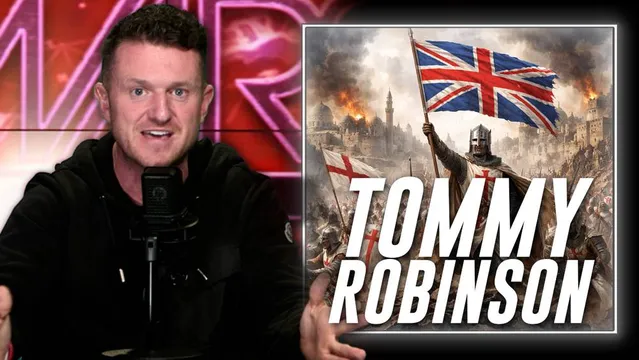
The potential liberation of the Persian people is discussed, with Robinson suggesting that Iranians would welcome the removal of the Ayatollah and become a Western ally. He links the conflict in Iran to a broader geopolitical struggle against China, noting that cutting off Iranian oil would significantly impact the Chinese economy. Robinson defends the use of force to remove a regime that he characterizes as a "sponsor of world terrorism" similar to ISIS.

The 2nd Great Crusade Has Begun!!!
1:19:18 - 1:22:56

The 2nd Great Crusade Has Begun!!!

Persian Freedom, Donald Trump and China Strategy

The potential for a free Persia is discussed, with Robinson predicting that Donald Trump will one day have statues in Iran for helping liberate the people. He argues that taking out the Iranian leadership is a matter of U.S. national security that also serves to weaken China's global influence. Robinson contrasts the Persian people's desire for freedom with the "enslavery" imposed by the current Islamic Revolutionary Guard.