Topic: Malinformation

5 chapters across the catalog

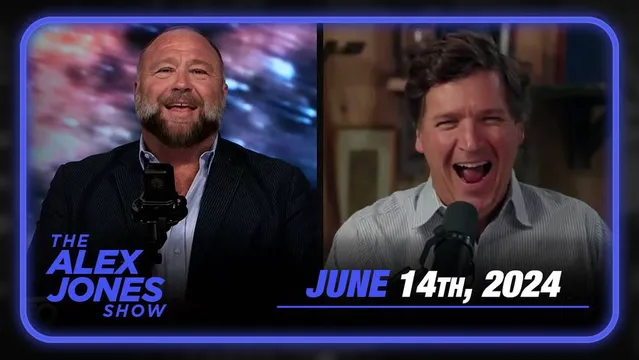
Tucker Carlson, Russell Brand Join Alex Jones! MUST-WATCH Potential LAST Broadcast! — FULL SHOW 6/14/24
2:06:34 - 2:10:36

Tucker Carlson, Russell Brand Join Alex Jones! MUST-WATCH Potential LAST Broadcast! — FULL SHOW 6/14/24

Legal Warfare, Promiscuity, Media Cooperation in Smears

Russell Brand discusses the use of lawsuits to target individuals, quoting the phrase "show me the man and I'll show you the lawsuit." He admits his past promiscuous behavior was reckless but argues that the media's concern for "safety" is a facade for maintaining centralized authority. Brand expresses skepticism that media organizations actually care about protecting ordinary people from misinformation.
The European Union is increasing pressure on Elon Musk's X platform to comply with strict content moderation laws. Amy Peikoff notes that the government often uses "malinformation"—true information that goes against official narratives—as a pretext for censorship. She cites the deplatforming of Parler after January 6th as a primary example of using false narratives to shut down competitors.

Warren Thornton describes being arrested by British police while live on a broadcast for alleged "malinformation." He defines malinformation as truthful information that the government wants to keep out of the public sphere. Thornton refused to accept a police caution, demanding they either charge him or release him. He views the arrest as an attempt to suppress his reporting on the Canadian Nazi scandal.

Robert F. Kennedy Jr. describes "malinformation" as true information that is inconvenient to the government and used as a pretext for censorship. The discussion shifts to the coordinated media "barrage" targeting figures like Tucker Carlson and Donald Trump, comparing it to previous campaigns against InfoWars. Claims are made that the establishment uses labels like "anti-Semitic" to protect corporate interests, such as the continued use of glyphosate despite health risks.

The concept of "malinformation"—factual information shared with "harmful intent"—is discussed as a new tool for government and big tech censorship. Jason Bermas shares his personal experience with demonetization on YouTube and argues that the ability to debate and disagree is being criminalized. The segment frames the current era as a "post-truth world" where the government defines what information is harmful to US interests.