Topic: Israel Policy

28 chapters across the catalog

The use of scepters by Nazi field marshals is compared to Lindsey Graham's recent appearance with a toy princess wand. Graham is accused of acting as a "demonic zombie" and an Israeli operative who dictates Donald Trump's foreign policy. The host expresses disbelief that a man with such influence would spend his time alone at a theme park with children's toys.

Joe Kent, former head of the National Counterterrorism Center, begins his interview by stating he resigned to alert Donald Trump that he has been "deceived" by his advisors. Kent argues that Israel has effectively staged a "foreign policy coup" in America, pushing for a regime change war that does not serve U.S. interests. He emphasizes that his resignation is an effort to save Trump's legacy and the "no more endless wars" movement.

Israel is accused of manipulating United States foreign policy to draw the American military into a conflict with Iran against the wishes of the Pentagon. Recent reports and interviews by Tucker Carlson suggest that Benjamin Netanyahu admitted to supporting Hamas as a strategic move to prevent Palestinian peace and leadership. Furthermore, congressional hearings have alleged that groups like ISIS and Al-Qaeda have received funding through channels involving U.S. and Israeli interests.

Harrison Smith reports on the resignation of Joe Kent, the second-highest member of the American intelligence community, who claims Israel has carried out a coup of the U.S. executive branch. Kent appeared on Tucker Carlson's program to allege that foreign interlopers now dictate American foreign policy, specifically pushing for war with Iran. Smith emphasizes the historical significance of these revelations, comparing them to Watergate and the Pentagon Papers.

The narrative explores the theory that Israeli intelligence targeted Charlie Kirk because his influence over Donald Trump threatened their goal of starting a war with Iran. Analysts suggest Israel viewed Kirk as an existential threat after he turned against Zionist interests following the October 7th attacks. The segment posits that Israel is attempting to become a hegemonic power in the Middle East by dragging the United States into a regional conflict.

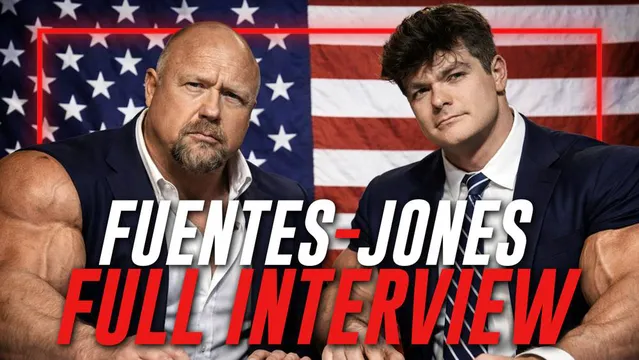
A recent interview with Nick Fuentes sparked debate regarding the extent of Israeli influence over U.S. foreign policy. Claims are made that the Israel lobby now exerts unprecedented control, potentially jeopardizing Donald Trump's domestic agenda and efforts to reindustrialize the country. Despite warnings from the Joint Chiefs of Staff, the administration remains entangled in Middle Eastern escalations.

FULL FUENTES-JONES INTERVIEW 3/3/26: Trump Admin Pushes Ground Invasion Of Iran To Ensure Regime Change
1:37:12 - 1:40:11

FULL FUENTES-JONES INTERVIEW 3/3/26: Trump Admin Pushes Ground Invasion Of Iran To Ensure Regime Change

Trump as an "Errand Boy" and the Midterm Strategy

Donald Trump is accused of being an "errand boy" for Israel, with his current foreign policy described as "schizophrenic" due to internal firestorms at the White House. If Trump has forfeited his "America First" mandate, critics argue his government must be impeded through a Democratic victory in the midterms. This would lead to a cycle of investigations and subpoenas that could halt the march toward war.

The speaker discusses the history of US involvement in the Middle East, focusing on Iran's nuclear capabilities, potential for conflict, and the broader implications for US foreign policy, including the speaker's skepticism about interventionist approaches.

Reports suggest the Joint Chiefs of Staff have privately warned President Trump against a full-scale war with Iran. The discussion attributes the push for conflict to the influence of AIPAC and the Israel lobby, arguing that U.S. foreign policy should not be dictated by the interests of Tel Aviv. The speaker advocates for focusing on domestic issues rather than Middle Eastern regime change.

The host examines theories regarding whether Donald Trump was being blackmailed by the Epstein files to support Israeli military interests. Smith suggests that rather than being a victim of blackmail, Trump may have taken possession of the files to force concessions from the Israeli lobby. This segment explores the cognitive dissonance of critics who view Trump as both a participant in and a target of the Epstein network.

The host evaluates Israel's shift from a traditional ally to a potential threat due to its influence over U.S. foreign policy. Specific concern is raised regarding efforts to draw the United States into a war with Iran, which the host argues could escalate into a global nuclear conflict involving Russia and China.

JD Vance is accused of strategically signaling loyalty to the Israel lobby while simultaneously grooming the "dissident right" and "Groyper" aligned youth. Despite his anti-war rhetoric at the Quincy Institute, Vance has reportedly justified the U.S.-Israel relationship as a way to integrate Israel into a regional alliance against Iran. This "calculated" approach is seen as an attempt to navigate the growing public sentiment against Middle Eastern interventions while maintaining establishment support.

Colonel McGregor criticizes the ongoing conflict in Gaza, characterizing it as mass murder funded by U.S. taxpayers rather than a conventional war. He warns that Benjamin Netanyahu is attempting to draw the United States into a dangerous conflict with Iran, which he describes as more united than ever. McGregor calls for the suspension of lethal aid to Israel until a peace agreement is reached.

The Israel lobby and AIPAC are reportedly moving to fill a power vacuum in Washington as the Democratic Party faces internal struggles. Claims suggest that Israeli interests, alongside MI6 and corporate lobbyists, are exerting unprecedented influence over American domestic and foreign policy. This shift has led to increased scrutiny of Prime Minister Benjamin Netanyahu's role in shaping the Trump administration's agenda to the potential detriment of U.S. interests.

Tucker Carlson's speech at the Turning Point USA Student Action Summit acted as an "icebreaker" for discussing non-interventionist foreign policy. Sortor, who was in the room, reports that the younger Gen Z audience was highly receptive to Carlson's critique of foreign military service and aid. They argue that the "boomer" era of unconditional support for Israel is ending as younger conservatives prioritize domestic issues and economic survival.

Senator Ted Cruz and Tucker Carlson engaged in a heated debate regarding the influence of foreign governments on United States policy. Carlson questioned the extent of Israeli influence over American military decisions, while Cruz accused Carlson of using anti-Semitic tropes to derail the conversation. The exchange highlighted growing tensions within the Republican party over neoconservative interventionism versus populist isolationism.

Donald Trump is facing criticism for his current stance on Iran, which some observers attribute to the significant control Israel exerts over American foreign policy. Despite this criticism, new "smoking gun" information from the FBI regarding the 2020 election is cited as a reason to continue supporting the administration's broader agenda. Reports indicate that nuclear launch codes were sent to B-52 bombers and submarines three days ago, raising the DEFCON level significantly.