Topic: Gen Z

47 chapters across the catalog

There is a reported backlash among Gen Z and millennials against social media, with many joining physical clubs for activities like running and pickleball. Mark Dice critiques the "epidemic" of women filming themselves in cars to dump their "bad date scenarios" online. He also notes the strange trend of "boomer men" reportedly leaving their wives for AI fembots on Instagram, highlighting a growing disconnect between digital and real-life relationships.
AI is expected to eliminate many white-collar jobs in marketing and graphics, making blue-collar trades like plumbing and electrical engineering the new "rockstars" of the economy. Jason Hollis notes that his 19-year-old daughter and other Gen Z students are now seeking "AI-proof" careers. The segment suggests that anything requiring manual labor will see a significant increase in value.

In response to digital saturation, Gen Z and Gen Alpha are reportedly pivoting back to tangible media like vinyl records. "Listening rooms," which started in Japan, are becoming popular in New York and Los Angeles as spaces for face-to-face social experiences. This trend is framed as a rejection of the "meta digital" landscape in favor of sacred, focused music consumption.

Elijah Schaefer argues that America has entered a "post-partisanship" era where both the left and right are united by an inability to achieve the American Dream. He highlights the housing crisis and the lack of purpose among young men as primary drivers of social instability. The government is accused of moving toward automation and AI weaponry because citizens no longer have a reason to fight for the nation.

Donald Trump is urged to stop listening to the donor class and return to the populist policies that secured his original base. Elijah Schaefer warns that young millennials and Gen Z patriots are losing hope in the Republican Party due to perceived compromises on labor and immigration. There is a call for mass deportations and the shutdown of H1B programs to prove the administration's commitment to the American people.

Mark Mitchell highlights a massive disconnect between Trump and his younger supporters, noting that 700,000 voters in New Jersey who supported Trump did not turn out for Republican Jack Chiarelli. Millennials and Gen Z supporters are reportedly burning their MAGA hats due to a lack of accountability in the government. Mitchell cites a lack of action against the CIA and FBI as a primary reason for the collapse in trust among the "hero generation."

The historical influence of Dr. Spock's child psychology is criticized for allowing the state to take over the values of American children. While older generations still rely on the high production value of Fox News, Gen Z is described as moving toward an avant-garde, anti-establishment perspective. The goal of the current movement is to accelerate the education of a public that is already waking up to civilizational collapse.

The traditional "unquestioning support" for Israel among evangelicals is reportedly collapsing among those under 40. Jay Dyer warns that governments are attempting to counter this awakening by rolling out "Digital ID" verification under the guise of protecting youth. The host expresses concern that the pendulum is swinging from status quo liberalism toward radical extremes, including a resurgence of interest in figures like Hitler.

The discussion highlights the difference between "logician" debaters and those who merely regurgitate talking points. Andrew Wilson observes that Gen Z is the most "sexually confused" generation due to the breakdown of traditional interpersonal dynamics. The segment concludes with a final push for the InfoWars Store sale, featuring Methylene Blue and Shilajit to fund the broadcast.

Gen Z is characterized as a generation struggling with nihilism, economic hopelessness, and a lack of traditional masculine guidance. Owen Benjamin and the host discuss how modern social engineering, including "woke" advertising, has made men fearful and awkward. They argue that a return to "Spartan" resilience and the ability to handle physical and emotional stress is necessary for personal and societal health.

Despite political messaging about a "golden era," many Americans are struggling with unaffordable housing and rising gas prices. Data from Zero Hedge indicates that new housing is now cheaper than existing homes, creating a stagnant market. However, a shift toward "rationality" is noted among Gen Z, who are increasingly favoring trade schools over expensive, ideologically driven college degrees.

Tucker Carlson's speech at the Turning Point USA Student Action Summit acted as an "icebreaker" for discussing non-interventionist foreign policy. Sortor, who was in the room, reports that the younger Gen Z audience was highly receptive to Carlson's critique of foreign military service and aid. They argue that the "boomer" era of unconditional support for Israel is ending as younger conservatives prioritize domestic issues and economic survival.

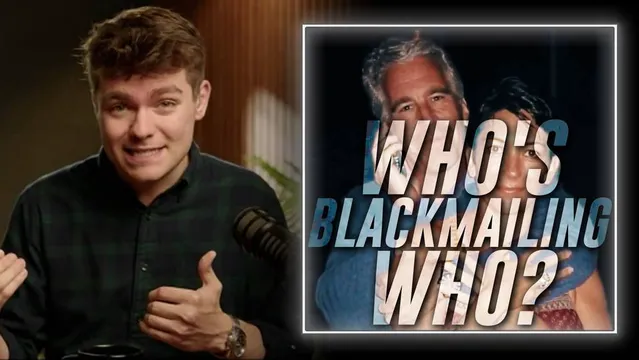
Nick Fuentes argued that the core appeal of Donald Trump in 2015 was his perceived invulnerability to corruption due to his personal wealth. The current refusal to release Epstein documents is described as the "final nail in the coffin" for the mythological faith supporters placed in Trump as a systemic disruptor. This perceived betrayal is compared to historical scandals like Benghazi or the 9/11 investigation.

A Fox News segment on "stay-at-home sons" prompts a discussion on the economic challenges facing young men, including inflation and high interest rates. The host argues that the inability to buy a house or start a family leads to bitterness and a reliance on "hookup culture." The crisis is framed as a result of Democratic policies and cultural brainwashing.

A generational divide is emerging in politics, with Baby Boomers remaining more aligned with the establishment while younger generations shift toward populism. High levels of distrust are reported, with 64% of voters believing the media receives talking points from the CIA and a majority viewing the FBI as a political tool. This distrust has led to a massive audience shift from traditional media to independent podcasters like Joe Rogan.

Mainstream media outlets like MSNBC are reportedly acknowledging Kamala Harris's poor performance with Black and Gen Z male voters. Hernandez mocks Harris's appearances on the "Call Her Daddy" podcast and "The View," calling them "T-ball questions" that she still managed to "bomb." He argues that Harris's inability to separate herself from Joe Biden's policies is a fatal flaw in her campaign.

Republican Senate candidate Royce White discusses the economic plight of Gen Z and Millennials, who face high rents and insurmountable debt. He describes the current system as "neo-feudalism," where the working class pays for the bailouts of the elite while owning no assets. White argues that the Democratic establishment uses cultural wedge issues to distract young voters from the intentional design of their economic disenfranchisement.

Jay Dyer examines the generational impact of psychological warfare, specifically targeting the Baby Boomer generation through the 1960s counterculture. He introduces the concept of the "womb state," where the population is kept in a state of "neoteny" or arrested development. Dyer argues that mass media and television have been used to kill creativity and foster a docile, childlike public.