Topic: Independents

332 chapters across the catalog

Harrison Smith defends the legitimacy of InfoWars, noting that the organization's finances have been thoroughly vetted by federal bankruptcy courts. He argues that because no evidence of illicit funding was found during these proceedings, it proves the network is entirely supported by its audience. Smith highlights the difficulty of operating under such intense legal and financial scrutiny.

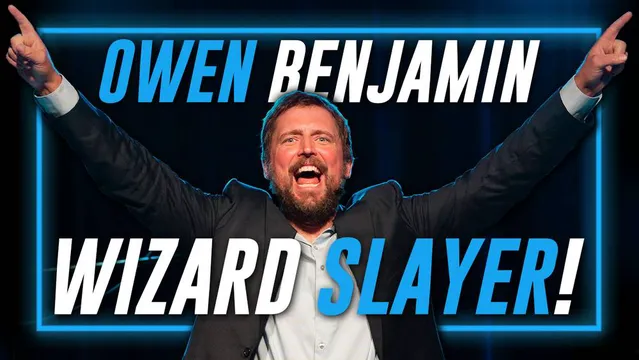
A caller from Ohio discusses mushroom hunting and the "WWE" nature of modern politics, suggesting that the attacks on Trump were staged to build "hopium." Benjamin agrees that the political system is a "vacuum cleaner of attention" and encourages the caller to focus on productivity and independent thought. They discuss the importance of alternative media supporting independent candidates to break the two-party "good old boys club."

Callers discuss the "nominative determinism" of General Petraeus (interpreted as "Betray-us") and the need for independent political candidates to break the "WWE show" of the two-party system. One caller from Ohio mentions hunting morel mushrooms, which Benjamin uses as a metaphor for finding "authentic" things in the world. They agree that the goal of the establishment is to provoke a civil war, and the best defense is productivity and self-reliance.

The legacy of Project Mockingbird is discussed as the foundation for CIA involvement in music and film. Jason Hollis notes a shift in the music industry where artists are moving toward independence to avoid the "mutual blackmail" of major labels. He argues that owning one's content and brand is the only way to remain free from institutional control.

Roger Avary praises filmmaker Richard Linklater as one of the best of his generation, highlighting his willingness to take artistic risks. The discussion focuses on Linklater's film Waking Life and his commitment to personal storytelling outside the traditional Hollywood system. Avary notes that Linklater represents a "classic liberal" approach to cinema that prioritizes humanism over corporate propaganda.

Roger Avary concludes that national borders are an illusion, with global corporations like BlackRock and Vanguard controlling the narrative. He describes money as a "confidence system" or faith, using Milton Friedman's "Island of Stone Money" as an example. Avary predicts a renaissance in independent filmmaking as the old Hollywood system collapses due to its own stagnation and fear.

James Woods clarified his political position, stating he has never spoken with Nick Fuentes and remains a devout follower of Donald Trump despite registering as an independent. Woods criticized the "RINO" elements of the Republican Party for failing to protect election integrity. He emphasized that while he is disgusted with the party leadership, he will never vote for a Democrat.

British activist and journalist Tommy Robinson has arrived in the United States and was spotted in Washington, D.C. His arrival is celebrated as a win for independent journalism, given his history of legal battles in the UK over his reporting on migrant issues. Meanwhile, the US has committed $10 billion to a "Board of Peace" involving Jared Kushner, a move criticized for prioritizing foreign reconstruction in Gaza over American infrastructure.

Mark Mitchell, VP of Rasmussen Reports, discusses a significant drop in Donald Trump's job approval rating to 41%, which correlates with a massive spike in Google searches for "Epstein." Mitchell notes that the Democrat lead on the generic ballot has grown to six points as voters, particularly those under 40, feel a sense of betrayal. The polling suggests that Trump's perceived attempt to move on from the Epstein files is damaging his support among independents and low-propensity voters.

Ian Carroll describes his use of 40 automated bots to scrape the DOJ website for over a million files from the Epstein dump. He suggests the DOJ intentionally made the documents difficult to access by not providing a bulk download option. Carroll notes that the speed at which some journalists published stories suggests they may have had advanced knowledge of the release.

Donald Trump's speech at Davos is characterized as a declaration that the globalist experiment has failed. The report emphasizes Trump's focus on borders, tariffs, and energy independence, while warning that European cities are becoming "unrecognizable" due to demographic transformation without public consent.

Investigative journalist Nick Shirley has reported from Greenland, claiming that many local residents, particularly the youth, are open to U.S. involvement to gain independence from Denmark. The push for Greenland is compared to historical "Manifest Destiny" and the acquisitions of Hawaii and Alaska. Supporters argue that without this move, the U.S. will lose its status as the global reserve currency and face economic implosion.

Jake Lang reflects on his 900 days in solitary confinement following the events of January 6th and his subsequent release by President Trump. He frames his current activism as a fight for the "posterity" mentioned in the Declaration of Independence, aiming to preserve the suburban America he grew up in. Lang expresses shock at the demographic changes in Minnesota preschools, where he claims children are now predominantly wearing burkas.

Gary Melton warns that the proliferation of hoaxes will eventually lead to the discrediting of all independent media, forcing people back to mainstream outlets. He identifies a coordinated orbit of podcasters, including Ryan Mata and Ian Carroll, who continue to push the debunked Fort Huachuca narrative. The segment concludes with a call for conservatives to reject "mental illness" and return to fact-based reporting.