Topic: Hassan

8 chapters across the catalog

Fraudulent activities targeted Medicaid's autism services, where providers allegedly inflated diagnoses among Somali children to drive up billing. Spending on these services jumped from $3 million in 2018 to nearly $400 million by 2023. Charging documents suggest recruiters paid monthly kickbacks to families, ranging from $300 to $1,500 per child, regardless of whether the children actually had autism.


The difficulty of "cleaning out the stables" at the FBI and DOJ is discussed, with Hernandez noting that the process of removing deep state rot takes significant time. She recounts hostility from media figures like Mehdi Hassan and the impact of the assassination of Charlie Kirk on the conservative movement. Despite these challenges, she maintains that the populist movement has successfully overpowered lawfare and election fraud to take the country back.

Savannah Hernandez reports from St. Paul, Minnesota, regarding a Somali immigrant convicted of abducting and raping a 12-year-old girl. She highlights a letter of support from the Al-Hassan Islamic Center, which asked for leniency by citing the perpetrator's "cultural challenges." The judge reportedly gave the lightest possible sentence, sparking outrage over the lack of assimilation and the prioritization of foreign cultural interests over American safety.

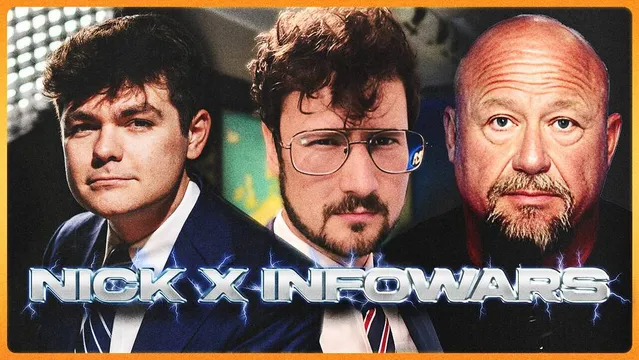
Zoran Mamdani and Hassan Piker are identified as prominent figures in the "communist Islamist" movement within the U.S. The host criticizes Pam Bondi for failing to prosecute leftists who incite violence against Christians and white men. Nick Fuentes is again discussed, with the host suggesting that mainstream media outlets like GQ and the New York Times are "pushing" Fuentes to drive a wedge into the Trump coalition.

Fuentes reflects on his failed attempt to find common ground with the anti-Israel left, noting that figures like Hassan Piker have totally rejected his outreach. He concludes that the far-left's vision for America is fundamentally incompatible with his "right-wing, Christian, pro-white" nationalism. Smith agrees that the left's opposition to Israel stems from an "oppressor vs. oppressed" framework rather than genuine national interest.

The history of state-sponsored terror is traced back to the 11th-century "Hashashim" or Order of Assassins in Persia. Dyer compares this Islamic sect's use of strategic assassination to the later development of standing armies by the papacy. He argues that these historical examples represent the overstepping of boundaries between religious and political power.

Gaines expresses concern that Israel's recent high-level assassinations of leaders like Hassan Nasrallah and Ismail Haniyeh are a prelude to dragging the U.S. into a war with Iran. While he voted for Trump on an "anti-war" platform, he acknowledges the influence of donors like Miriam Adelson. The discussion emphasizes that Iran is currently at its "weakest" point, which may tempt the Netanyahu administration to strike now.

Gerald Celente criticizes Kamala Harris for her statement celebrating the death of Hezbollah leader Hassan Nasrallah. He provides a historical critique of the conflict, mentioning the 1917 Balfour Declaration and the 1982 Israeli invasion of Lebanon. Celente argues that the term "terrorist" is used selectively by the U.S. and its allies to delegitimize those who fight against their interests.